
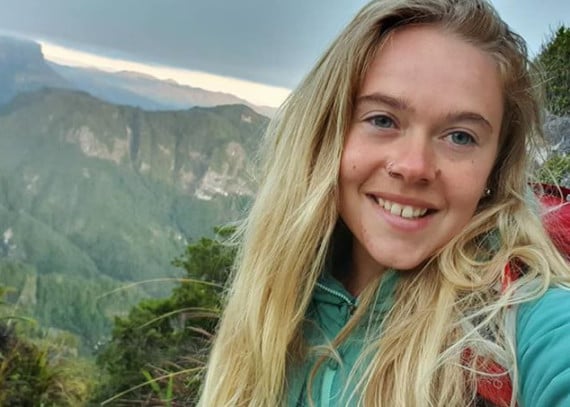
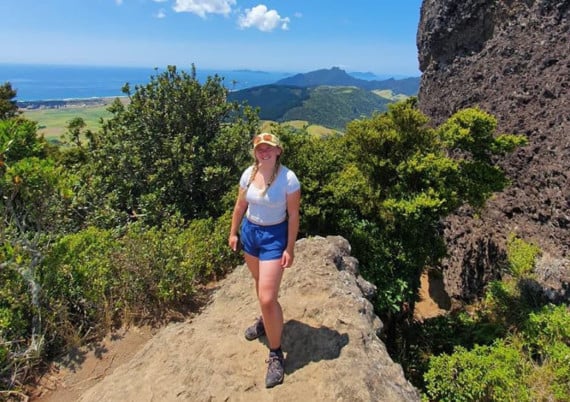
A 21-year-old Port St Mary resident has made it safely back to Manx soil after being repatriated from the other side of the world. Becky Bateson Lewis tells reporter Jess Ward about her trip from New Zealand (NZ) and being escorted to Comis Hotel by police.
It was a big home sweet home moment for Becky on Wednesday (April 29) when she sailed into the familiar port in Douglas bay with a bright rainbow welcoming her back.
Weeks of waiting to see Douglas Promenade once again had gone by in Hunua, in the north island of NZ, and then in Leeds where she stayed with her cousin until it was confirmed that she could return.
However, real home with her parents down in the south of the island would be another two weeks wait as government measures on repatriated residents mean returning Manx residents go into quarantine for 14 days at secure accommodation at the Mount Murray hotel.
.jpeg?width=209&height=140&crop=209:145,smart&quality=75)
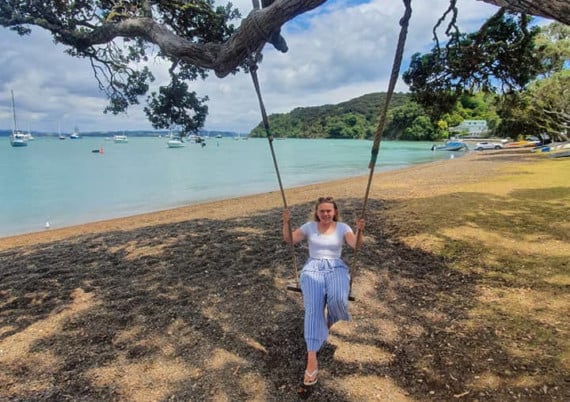
All of this was something she never dreamed of happening when heading out on her big adventure to the land of the long white cloud on November 9 for some sightseeing while working part-time as an outdoor instructor.
’It’s an absolutely amazing place, but my time there was cut short for Covid-19 reasons,’ she said.
’I wasn’t sure when I was coming back as I was thinking of doing a winter season in Wanaka, but the pandemic pushed me to come back as it’s taken its toll on the tourism industry.’
She said the country seemed ’quite relaxed’ when the situation of coronavirus first broke with Prime Minister Jacinda Ardern assuring the nation that everything would be under control.
’Everyone took it seriously with no one trying to break the rules. I felt safe going out to the shops and being in isolation at an outdoor centre wasn’t too bad. I was in one of the best places to be in isolation in Hunua near Auckland,’ she said.
It was when the nation went into level four of its lockdown, which included severe restrictions on travelling, that things became difficult as her booked flight to the UK was cancelled.
Becky said: ’I tried to get home, but it wasn’t doable. I had to stay an extra month.’
However, the British Embassy stepped in to ensure UK residents could return home. When trying to rebook a ticket she was left in a rut, as the island’s borders had closed and repatriation plans had yet to be revealed.
’I had to wait until I heard about repatriation and then found out I had to be in the UK to apply,’ she said.
Paying ’quite a bit of money’ to get back with good communication from the British Embassy, the former health care assistant was able to apply as a key worker for repatriation as soon as she touched down in Heathrow only 22 hours after departing NZ with six hours spent in Los Angeles airport.
From there she was picked up by her cousin who took her to Leeds while she waited to hear back from the Isle of Man Government.
’It was a week before I heard that I could come back,’ she said.
Another week passed and she was on her way to Heysham where she would board the Manannan with 24 others. She said: ’We were told not to turn up if we thought we had any symptoms and were given a quick temperature test.
’It was really nice seeing Douglas and there was a rainbow over the bay, which made it feel like a big weight was lifted off your shoulders - I was almost home.’
From there she boarded a coach with other repatriated residents who were escorted by police on motorbikes.
’The whole process of getting to the Comis Hotel wasn’t bad, but I don’t think it’s entirely necessary. The coaches stop in the courtyard at the hotel and you’re taken off one by one and everyone has to sign a contract. They say if you don’t agree, you’ll be taken to Jurby prison,’ she said.
’You then go straight to your rooms.’
She believes the measures for repatriated residents are ’quite strict’, while also understanding the need for protecting residents.
She said she fails to see how it is fair that people who have tested positive with coronavirus are told to isolate at home while repatriated persons cannot do the same.
This could yet change with Chief Minister Howard Quayle telling Tynwald’s Public Accounts Committee on Friday (May 1) that repatriated residents may be allowed to self-isolate rather than go into enforced quarantine in future.
One of Becky’s concerns about repatriated residents in quarantine is mental health: ’Being alone for 23 hours a day and not being able to talk to people for two weeks is not going to be good for people, especially for single people like me. There’s only so much telly I can watch and crosswords I can do!’ She thinks the allotted time of one hour to be outside on the premises is not enough.
She said: ’They have alarms on doors. I can open my door, reach out and get my tray and by the time I’ve done that the alarm will have gone off because I had the door open for too long.’
There had been some mixed communication, she said, about people being allowed to drop off bags to repatriated residents. Her dad was able to drop off a bag full of chocolate and coke. In a normal hotel you can bring your own food,’ she said.
Repatriated residents are required to pay a maximum of £1,000. On this issue, she said: ’I had no choice. It was either this or I stay in Leeds and wait it out, but how long will the borders be shut for?
’The hotel has got to make a living and there are people still working here 24 hours who need payment.’
She added: ’I don’t see any help in constantly being angry. I’m nearly home. I partly don’t agree with this system, but hey ho.’
Becky is looking to return to health care as soon as possible to help the community facing the pandemic. She also hopes to complete her NZ adventure in the future.