
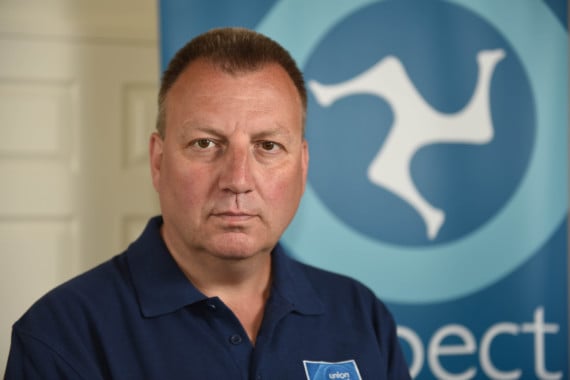
The new man at the helm of Prospect wants to combat how employers use flexible working hours to effectively obtain unpaid overtime from staff.
Mick Hewer has taken over from Angela Moffatt, who has moved to Northern Ireland to set up a Prospect office there.
He said one of his major concerns was how workers would build up time off owed, in lieu of extra hours worked, but very often never got all those hours back.
’They are not getting paid overtime, they are banking the hours at a flat rate, but they cannot take the hours back when they want to because of staffing issues,’ he said.




’It would be interesting to see how much is banked across the civil service.
’That, in effect, is pay that should be in the back pockets of workers, who would be then spending it in the local economy.’
Zero hours contracts were another area of great concern, he said. He is determined to keep a close eye on how much the government attempts to use such methods, as well as see whether the living wage, as opposed to the, lower, statutory minimum wage, becomes the norm.
Mr Hewer said the other major challenge to face Prospect’s membership was the Brexit effect. He expressed concern about how the government was preparing to deal with its impact on the Isle of Man.
’There doesn’t seem to be any urgency,’ he said.
With the kind of synchronicity that the Isle of Man often throws up, before he was at Unite, Mr Hewer was at another union, the T & G, where he succeeded Ms Moffatt’s father, Bernard Moffatt.
However, since his last union role, Mr Hewer had instead been lending an ear to customers, as the landlord of the Marine pub in Peel.
Once the vacancy at Prospect became available, he decided it was time for a return to union work.
He is determined to hit the ground running and, after two weeks working alongside Ms Moffatt, has now taken over fully.
Workers’ pay and protection of their terms and conditions are key areas, he said.
’We don’t want to be going backwards,’ he said. ’The way policies are now shaping up, we are finding it very difficult to maintain what we have got.’
There is concern about the government’s quest to cut costs and how schemes like the SAVE initiative might make things worse for the public sector workforce.
’We have spent years and years improving pay and conditions for the low paid and the bottom end of pay scales,’ he said.
Mr Hewer said he would not shy away from confrontation if it was necessary but was happy to use more conciliatory approaches when appropriate.
’It is always better to be able to negotiate and compromise, but I am well aware that sometimes that is not going to work.’
Not surprisingly, he also sees similarities between his previous job in the licensing trade and the union role he has now returned to.
’Behind the bar, you have got to be a psychologist, a social worker, you have got to be a nurse, you have to be a union rep,’ he said.
’You do get people pouring their hearts out and asking for advice. You get a real feel for what people are thinking, what their work is like and how fed up a lot of people are.’
The past nine years working in the leisure industry had also given a clue to changes in the economic climate.
’Certainly, in the pub trade, the numbers of people coming through the door are dropping, especially on week nights.
’The disposable income they have got, the spending over the bar, is not what it used to be.’
Comments
This article has no comments yet. Be the first to leave a comment.