
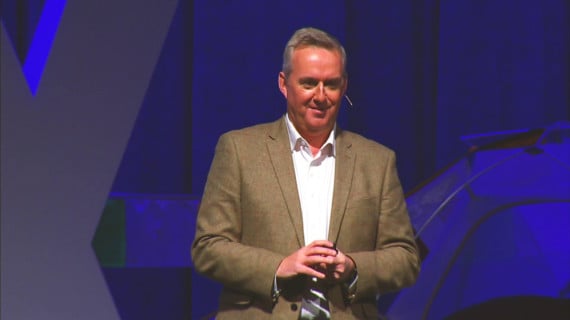
A talk that focused on the shift in people’s expectations of workplaces took place in the latest Future Works event.
The event, titled Leading In A Digital World and hosted at Tanner’s Loft in 1886 Bar in Douglas, was led by Steven Cockram, co-founder of GiANT Worldwide, author of The 100X Leader, and consultant to a number of business chiefs.
It looked at transitional challenges faced by a move into the digital age.
Mr Cockram concentrated on the changes digital technology are bringing to work.
.png?width=209&height=140&crop=209:145,smart&quality=75)

.jpeg?width=209&height=140&crop=209:145,smart&quality=75)

Until relatively recently, the fundamental skills needed to lead an organisation and become a leader had barely changed over the course of the 20th century, the event heard.
Mr Cockram said: ’Either you must have enough knowledge and experience of the business area you lead that you can dictate to your team or the ability to manage upwards.’
In the Digital Age, he suggested people no longer want to be managed. They need to be ’enabled’. Directives are no longer the correct tools for jobs.
Of the shift in what being a leader in the Digital Age means, Mr Cockram said: ’Leaders are having to learn to lead through influence more than positional power. By 2025, 60% of the workforce will be made up of millennials who want a coach or mentor, not a boss.
’They want someone who is committed to developing them to help them fulfil their potential.
’Traditional leadership qualities are changing, and leaders in the digital age need to harness new skills, such as emotional intelligence and relational connectivity.’
Mr Cockram said that bosses in the future needed a new set of skills.
Leaders must be comfortable not being omniscient, but know what questions to ask of their team so they can ’trial and error (sic) solutions’.
The event ended with a short question and answer session, with the audience looking to clarify on points raised during the talk.
Mr Cockram ended the evening by saying: ’If a confident leader is liberating those on their team, then the atmosphere of that team is one of empowerment and progression.
’Conversely, if there’s a manager who tends to dominate those they lead, then they are creating a culture of fear and manipulation.
’Ultimately, a workforce wants to be engaged, but instead will be compliant to do what it takes to keep their jobs and protect themselves and each other.’
Future Works is a series of talks about business practices.
Comments
This article has no comments yet. Be the first to leave a comment.