
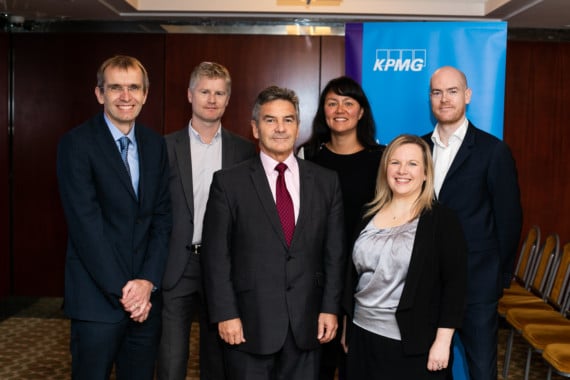
A constantly evolving tax environment was the backdrop for a seminar organised by one of the ’Big Four’ accountancy firms.
Justine Howard, senior tax manager for KPMG, started proceedings by commenting on how the UK tax landscape for non-resident owners of UK land and property has been changing almost annually since April 2013.
She then considered the changes that came into force on April 6, 2019 focusing on the new indirect disposal rules and the impact these now have on non-resident individuals, trustees and corporate owners with interests in UK land with particular reference to reporting and payment obligations and the special rules that apply to investors in collective investment ’vehicles’.
An investment vehicle is a product used by investors to gain positive returns. Investment vehicles can be low risk, such as certificates of deposit (CDs) or bonds, or they can carry a greater degree of risk, such as stocks, options, and futures. Other types of investment vehicles include annuities; collectibles, such as art or coins; mutual funds; and exchange-traded funds.



.jpeg?width=209&height=140&crop=209:145,smart&quality=75)
Next up was Robert Rotherham, tax director, who broached the tricky subject of the taxation of the ’digital economy’. Despite the pace of change in many other areas of international tax, this is an area in which the OECD (Organisation for Economic Co-operation and Development) has as yet failed to reach a consensus, which has led to some countries introducing their own unilateral measures, for example the UK’s proposed digital services tax.
Mr Rotherham concluded by wondering whether the way forward lies in moving more towards taxing consumption rather than the often difficult-to-pin-down concept of profit.
Katie Kneale, senior tax manager, highlighted the increased activity KPMG is seeing in relation to Isle of Man employment taxes, partly driven by growing interest from the Income Tax Division, as well as increasingly diverse benefits packages offered by employers.
She focused in particular on the Isle of Man tax implications of employer share schemes, highlighting the application of various Isle of Man anti-avoidance pensions and the potential implications for Isle of Man resident employees, before moving on to discuss some of the issues employers face when dealing with globally mobile employees.
Paul Cawley, head of indirect tax, updated delegates on HMRC’s ’Making Tax Digital’ programme which requires UK VAT registered businesses to submit electronic information to support their declarations and also HMRC’s recent decision to postpone until October 1, 2020 a VAT anti-fraud measure targeted at the construction sector.
Mr Cawley then moved on to the matter of Brexit, explaining some of the VAT and Customs implications that businesses might face in the event of a ’no-deal’ Brexit and possible planning opportunities that those businesses might consider.
David Parsons, KPMG’s head of tax, provided an overview in relation to various exchange of information initiatives, including in particular the mandatory disclosure regimes that are being driven by the EU and OECD.
The event was closed by Russell Kelly, senior partner at KPMG Isle of Man.
It marked Greg Jones’ final tax seminar with KPMG ahead of his retirement from the firm. Mr Kelly thanked Mr Jones for his contribution in leading KPMG’s tax practice over the last 30 years. He also reflected on the strength of the team with tax partner David Parsons and tax director Robert Rotherham at the helm.
Comments
This article has no comments yet. Be the first to leave a comment.