
Tourism bosses aim to get 500,000 visitors to come to the island every year by 2030.
On the way to that figure, they have a goal of 340,000 in 2023.
The number of visitors in 2018 - the last year for which figures are available - was 308,000.
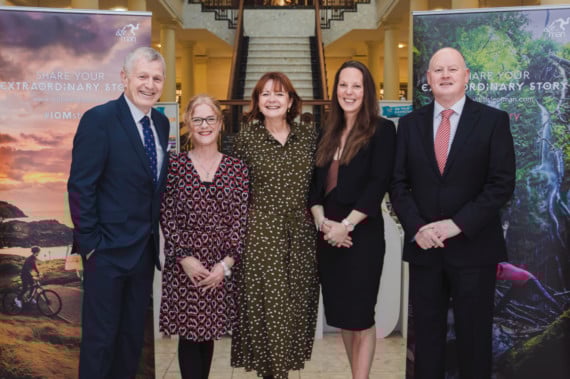
Visit Isle of Man, a government agency made up of representatives of the public and private sectors that fulfils many of the functions of the old Tourist Board, this week unveiled a three-year plan at its ninth annual industry tourism day at the Villa Marina in Douglas.


-(1).jpeg?width=209&height=140&crop=209:145,smart&quality=75)
More than 100 representatives with an interest in tourism heard about its aims.
If 340,000 people visit the island in 2023, the agency says they’ll spend £159 million and support more than 3,500 jobs.
So how is the agency going to achieve this?
It wants to improve visitors’ experiences when they get here.
The agency says service levels, accommodation and food and drink must get better.
It is also going to train businesses to use the internet for marketing and booking.
In a heading of ’partnerships’, the agency says it’s going to work more closely with the government, the Chamber of Commerce and tourism businesses.
In terms of trying to entice more people to the island with innovation, the agency says: ’We will develop packaged products that meet the trend towards high-intensity breaks centred on breathtaking experiences and look to capture the "wellness"and "me-time" market through out-of-season "multi-activity" weekends.’
It also says it wants to develop more things for tourists to do when it’s raining.
The agency wants to target marketing on transport hubs in the UK and Ireland and advertise online, although it won’t stop advertising in traditional media.
In a section entitled ’policy development’, the agency says it wants to make it easier for investors to identify sites to develop and make it easier to close public roads for specific events.
The strategy document identifies a big snag in attracting more tourists.
There would need to be more places to stay if all the visitors came in the summer season.
It says that with current levels of accommodation, growth would be ’somewhat constrained’.
That’s one reason why the agency wants to lure more tourists out of season, which was also a persistent ambition of the old Tourist Board decades ago.
The agency says that half of overnight visitors to the island come again. Many of those are people who stay with families or friends.
It suggests there is potential growth in adventure, walking and golfing holidays and in breaks for people who are interested in nature, especially those who have learned about the island’s Unesco Biosphere status.
Rob Callister MHK, the politician with responsibility for Visit Isle of Man and motorsport, said: ’There are considerable opportunities across the UK and Ireland, with the UK staycation market currently worth £14 billion to the UK economy. Amid economic uncertainties, this market shows no sign of slowing and we must therefore look to capture a representative share.’
Speaking at the industry day, Ranald Caldwell, the non-executive chair of Visit Isle of Man, added: ’While today outlines our strategy to 2023, the agency has recently started work on an enhanced 10-year strategy which looks at the work and commitment required if we want to achieve 500,000 visitors per annum by 2030.
’Our industry partners will all have the opportunity to take part in this exciting journey that has the potential to transform the industry and the quality of island life.’
The need to improve the service provided was underlined by a speaker, Linda Moir, an expert in human resources and customer service.
The target groups identified in a Visit Isle of Man campaign in September were described as clans. They were ’Discoverers’, ’Artisans’, ’Explorers’, ’Believers’, ’Movers’ and ’Adventurers’.
However, this seems to have been dropped.
Now there are different groups.
Traditional travellers:
Empty nesters and older couples: They are conservative and traditional, sticking to what they know. They like local, British quality and enjoy holidays which allow them to take things at a leisurely pace.
Curious explorers: They are open-minded and they like to use their free time to explore the world and new things, often off the beaten track. They have a broad array of interests and enjoy being challenged intellectually as well as being outdoors.
Experience seekers: This group live life at full speed and are always on the go. They want to do well in their careers and work hard, so relaxation time is limited and is spent reconnecting with what matters. They love outdoor activities which give them a new perspective and seek out new exciting experiences.
Comments
This article has no comments yet. Be the first to leave a comment.