
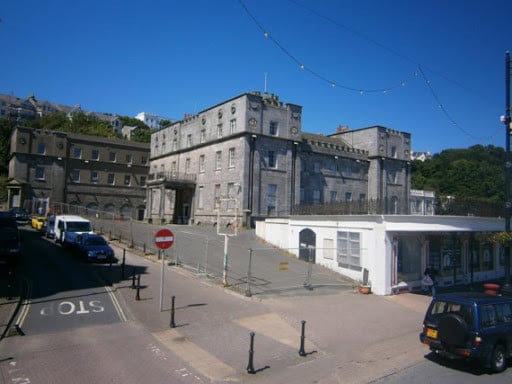
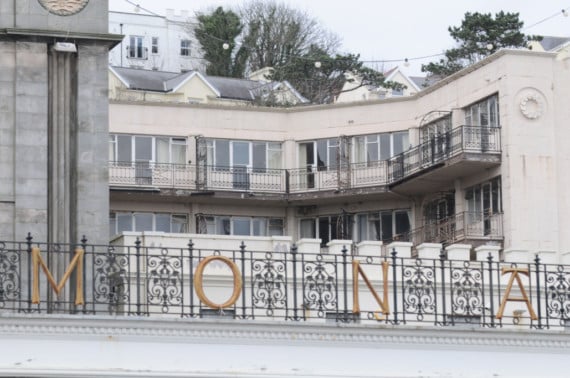
The owner of the Castle Mona has made a planning application to restore the Douglas landmark.
But it won’t yet say what it plans to do with the building in the future.
The Tevir Group last week submitted plans for the first phase of restoration of the hotel.
Ciaran Doherty, the managing director of the Tevir Group, said: ’We are keenly aware that the Castle Mona is a key heritage asset for the Isle of Man and extremely mindful of the great interest that the Manx public have in the property.




’These proposals will necessitate significant investment but will enable us to rectify core issues that have compromised the integrity of the building in recent years, such as significant water ingress.
’We are not yet in a position to announce plans for the future use of the building.
’However, we would point to our impressive track record over the past 18 months in delivering major refurbishment projects, and securing quality tenants, at other properties in our ownership, namely 55 Athol Street and Villiers House in Douglas.’
Tevir Group is working with local architects, Horncastle Thomas, on the Castle Mona project. The architects’ work on the Market Hall in Douglas was shortlisted for a RIBA Award in 2019.
Remedial works on the Castle Mona to date have been done in conjunction and with the agreement of government’s Registered Building Officer.
The planning application includes:
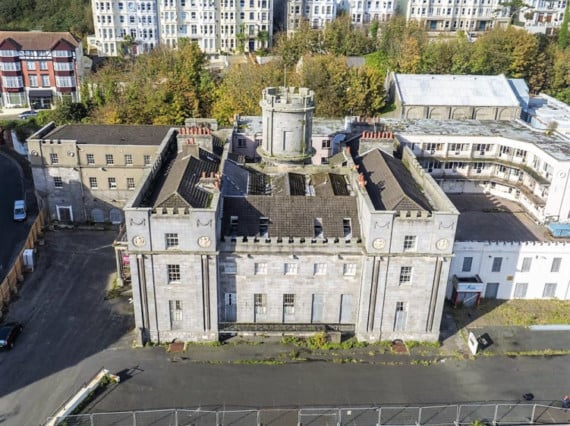
Replacement of roof coverings with slate and repair of the roof structure
Parts of the roof are composed of a concrete roof tile so replacement with natural slate and careful repair of the structure where required will enable a major cause of the water ingress to be rectified.
The Castle Mona has had roofing works undertaken in the past. These included replacing the roof finish with a concrete roof tile and subsequent repairs to the flashings, generally in fibreglass.
Following the acquisition of the building by Tevir Group in 2018 some repair works were undertaken to the roof. Further work is required to stop water getting in to protect the interior.
Interior works to remove modern interventions
This is the removal of modern interventions like the bathrooms, hotel fittings, former reception area.
The building has been subject to many changes over the years, which have detracted from the building’s original features.
These include the proposed removal of:
Modern ceilings;
Modern bathroom en-suites and finishes;
Modern partitions and fixtures;
The rear single-storey store/toilets extensions;
The single-storey flat roof infill and associated office/toilets to the inner courtyard.
Any remaining, but obscured, historic detailing will be revealed along with problem issues, such as areas of water ingress.
Removal of the later additions/extensions to the building: the former bowling alley and the north-east bedroom/dining wing and provision of a temporary protective rain screen
The south west wing and north east extensions do not form part of the registered part of the building, though they do fall within a conservation area.
It is proposed to remove the north-east bedroom and dining wing together with the former bowling alley, which are later additions (1960s and 1990s) and don’t match the rest of the building.
This will improve access to the main core of the building for the re-roofing and maintenance. The extensions are in poor condition.
The lower floor of the south west wing is part of the original building. The upper floor was added when the building was converted into an hotel. This wing will remain intact.
If planners give the go-ahead, work should start in the late summer of this year.
Comments
This article has no comments yet. Be the first to leave a comment.