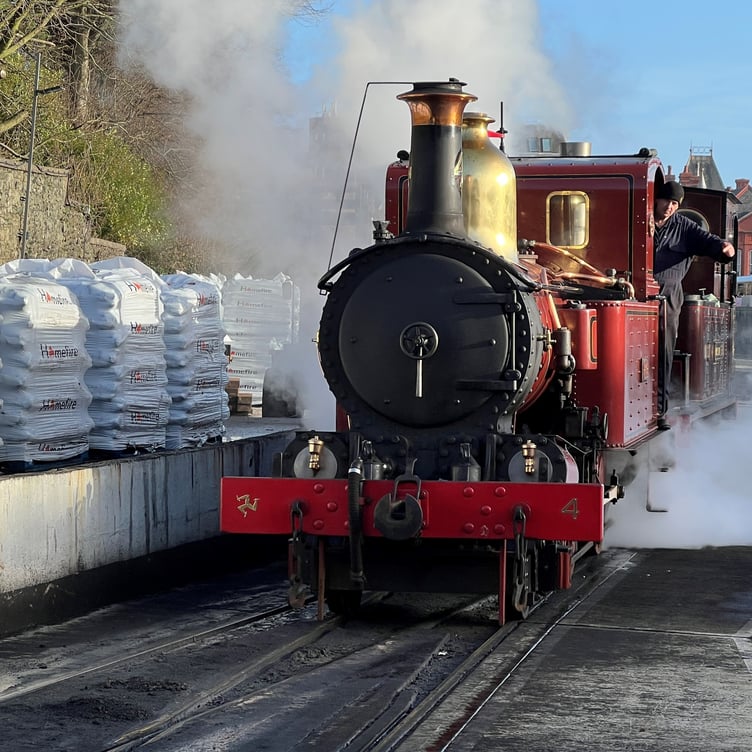
But when the last Welsh coal mine closed two years ago, supplies dried up.
Now having tried various alternatives, the Steam Railway has turned to an artificial coal which is proving cleaner, easier to handle and reduces the risk of lineside fires.
Chief engineer Andy Cowie said it has safeguarded the line’s future for the foreseeable future.




He said: ‘A lot of heritage railways have been trying to source alternative coal from places such as Russia, Australia, Colombia, Kazakhstan and Poland with varying degrees of success.
‘We were sourcing coal from anywhere we could get it. There wasn’t a problem getting hold of coal but the right quality was the important thing.
‘The coal from Colombia was perhaps the worst. It was extremely good value but it didn’t burn cleanly and wasn’t great for the locos either. But it was a case of “needs must”.’
With heritage railways all facing similar problems, suppliers worked to develop artificial coals that mimicked the properties of Welsh steam coal.
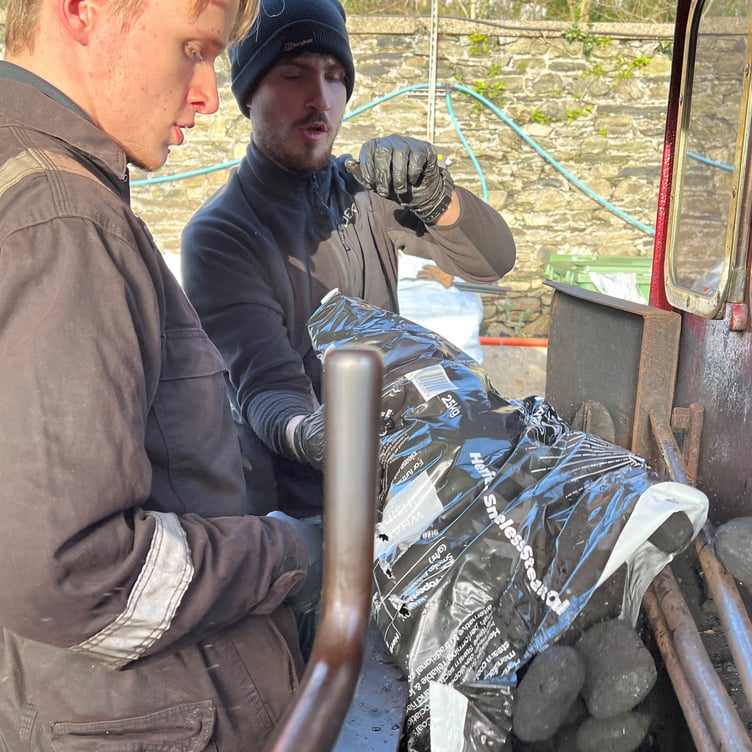
‘We experimented with a couple but they weren’t a perfect substitute,’ said Mr Cowie.
‘But we’ve now settled on a revised version which is working extremely well. It duplicates the properties of Welsh steam coal to a great degree.’
CPL Homefire’s smokeless steam coal has been developed specifically for the heritage sector.
Manufactured in the UK and bought from a local supplier, it is blend of anthracite, bituminous coal, petcoke and a binder, and is claimed to produce 80% less smoke than traditional coal.
‘It’s very consistent and does have much lower emissions,’ said Mr Cowie. ‘We’re very pleased with it.
‘While it costs us a little more to buy it in bags, it’s eliminated the waste and it’s also better for manual handling.’
The new fuel is good for the engines too - and comes with another major benefit.
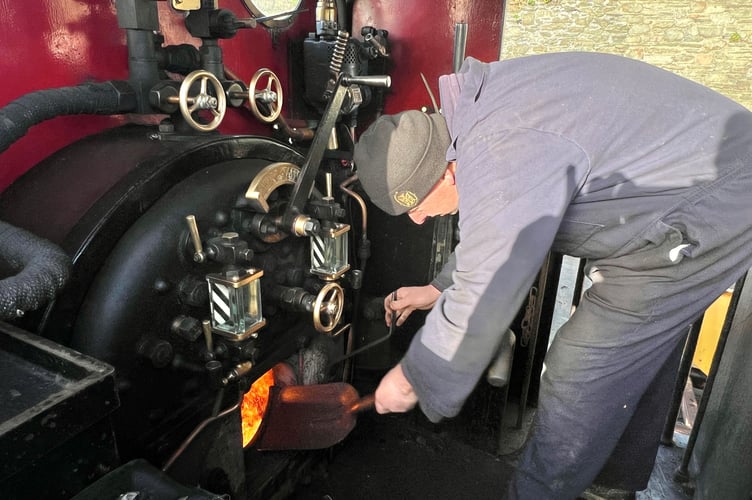
Mr Cowie explained: ‘There is very little residue in the boiler tubes and firebox. The ash is very fine. With traditional coal you get lumps of char coming out of the chimney which despite our best efforts creates a fire risk.
‘We’ve now reduced our lineside fires to an almost negligible level. In the UK some heritage railways weren’t able to run because it was so dry but we could keep operating.’
Mr Cowie said it is more expensive at around £510 a tonne compared to £450 for traditional Welsh steam coal.
Mr Cowie said when it came to carbon emissions Manx railways are generally very clean - even the steam trains actually produce less CO2 per mile per passengers than a small diesel car.
The railways have had a good season with passenger numbers up 4-4.5% across all the lines.
Mr Cowie. ‘It’s fantastic. Passenger numbers are up, income is up and costs are down.’