
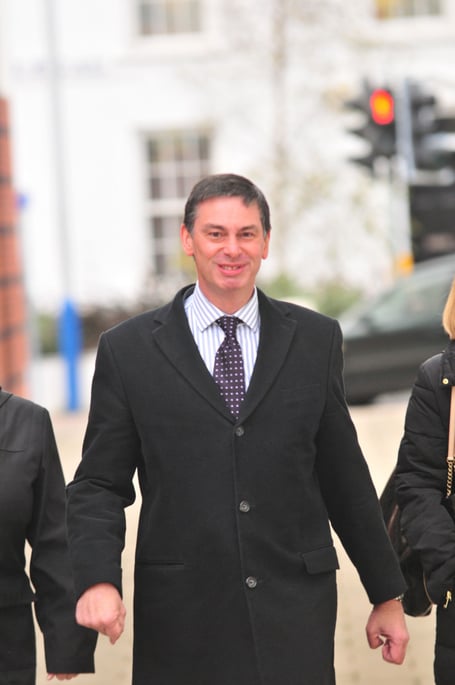
Former Attorney General Stephen Harding has lost a doleance claim seeking to quash a decision by the Advocates’ Disciplinary Tribunal - and delay a final hearing.
It’s the latest twist in the long-running saga that began with the winding up of Peel-based development company Street Heritage in February 2010 over tax arrears.
Mr Harding was government advocate representing the Treasury at the winding up hearing. He went on to be appointed Attorney General but was suspended pending criminal charges of perjury and perverting the course of justice.
Acquitted in February 2014 after juries in two criminal trials failed to reach a verdict, he resigned in June 2016 on ground of ill health.
.jpg?width=209&height=140&crop=209:145,smart&quality=75)


.jpg?width=209&height=140&crop=209:145,smart&quality=75)
In January this year, the Peel businessmen behind Street Heritage, Jonathan and Jamie Irving, were disqualified from acting as directors for eight and seven years respectively.
They have been ordered to pay costs of £155,000 plus VAT to the regulator, the Financial Services Authority but are appealing that ruling.
Mr Harding lodged a petition of doleance seeking to quash a decision by the Advocates’ Disciplinary Tribunal (ADT) not to stay a 2015 complaint by the Irvings and remit it to a freshly constituted tribunal. Deemster Rosen QC said the ADT proceedings had a ’long and unsettling history’.
In 2010, Mr Harding was reprimanded by the tribunal for failing to inform the high court that Street Heritage was legally represented and was in negotiations to reach a settlement.
At that hearing he produced a purported note of a telephone conversation with Street Heritage’s advocate and gave evidence about whether he was expecting him to attend the next day’s hearing to seek an adjournment.
The Irvings’ complaint of 2015 alleged Mr Harding had misled the ADT by producing a false attendance note and evidence.
And now his latest claim has been rejected - despite Deemster concluding the ADT had erred in law and been unreasonable in its handling of the former Attorney General’s case.
In his judgment, Deemster Rosen said: ’Justice in the present case has already been severely compromised by the length of the proceedings and the continuous disruption.
’Whilst Mr Harding seeks to blame the complainants (the Irvings) and the ADT itself for that, I have considerable doubt as to whether that is entirely right.’
The Deemster criticised repeated attempts to put off a resolution and said an ’absolutely key consideration’ was the importance of not having these proceedings hanging over the head of the complainants, Mr Harding, the legal profession and the community indefinitely.
He said: ’The delays are bad for everyone, cannot be blamed on any one party, and poring over them at great length will just exacerbate the damage done.’
The Deemster said if Mr Harding is indeed suffering from severe depression, it would do him more harm to keep on fighting to delay the tribunal’s final hearing.
He added: ’So too would further adjournments by the ADT of its own volition, and the making and reversal of directions with more outings to the high court for doleance.’
Dismissing the petition, he said: ’I am not prepared to see the high court endorse or lend any encouragement whatsoever to a continuation of these processes.’
But the Deemster said submissions on behalf of Mr Harding had been ’well-founded’ and that the ADT had ’erred in law’.
He said the tribunal’s decision of November 2017 to refuse to stay the proceedings was ’fatally flawed’ and the reasons given were ’erroneous’.
Mr Harding told iomtoday that Deemster Rosen’s ’perverse and inconsistent’ judgment was ’unjust and unfair’.
A final hearing date had been fixed for May but was then undone by the Advocates’ Disciplinary Tribunal .