
There are many traditions, stories and customs in the Isle of Man, some of which are still enacted and recognised today, and some of which have vanished into the mists of time.
There’s more to Tynwald Day than big hats, politicians on the hill and a good day out.
It’s also about fairies, fertility and appeasing the Celtic gods.
It isn’t by chance that the Isle of Man’s most important day falls on July 5. This is Midsummer’s Day, by the old calendar.

.jpeg?width=209&height=140&crop=209:145,smart&quality=75)

.jpeg?width=209&height=140&crop=209:145,smart&quality=75)
With the slippage of 11 days when the calendars shifted in 1752 (about which people rioted elsewhere in the British Isles) the island’s Midsummer event found itself in July instead of June 24.
Further obscured by becoming known as ’St John’s Feast Day,’ July 5 would have been an important day in pre-Christian times, which shows in some of the traditions.
Bollan bane, the beautiful green plant worn on people’s breasts at the fair, is just one example of where folklore creeps into the day.
This plant is thought to have the power to ward off evil, or the influence of the ’Lil’ Fellas’, who are reputed to be particularly troublesome at this time of year.
One of the Isle of Man’s most lively tunes was collected on the hills of Kirk Michael thanks to bollan bane.
Bill Pherick was returning home late one night when he came across ’Themselves’ playing a fabulous tune.
He learnt it by ear, but each time he left the Lil’ Fellas behind he lost the tune.
So, Bill put on some bollan bane and so overcame the jeel on him, to make away with the tune which is still played today.
That tune, aptly enough, is called ’Bollan Bane’, and a version, played by Phil Gawne and Annie Kissack, can be heard on the Culture Vannin website.
Be careful when out collecting your own bollan bane before the fair though.
If you step on Lus y Chialg (St John’s Wort) on the evening of July 4, a fairy horse will rise out of the ground and keep you captive, riding you around until sunrise!
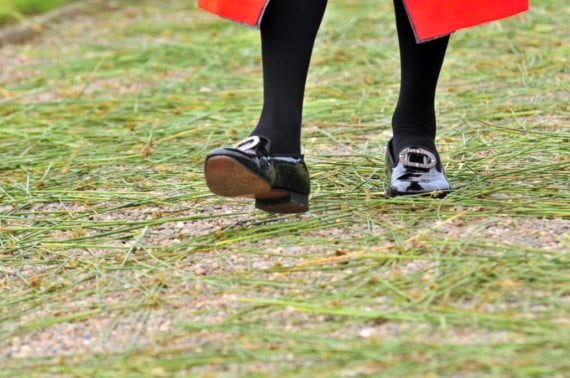
Another very visible piece of folklore at Tynwald Day is the rushes on the path between the hill and church.
These represent the rushes which were once taken up South Barrule on the eve of Midsummer by a member of each Manx household.
This was the year’s rent owed to Manannan, for living on his island.
A bundle of rushes is not a bad annual rent. No wonder it is a tradition beginning to revitalise amongst people today.
Perhaps less likely to revive are the visits to a holy well in Marown where the practice was to walk clockwise around the well whilst holding some of its water in your mouth, with which you would wet a piece of cloth torn from your dress.
This piece of cloth would then be left there, tied to a tree.
The belief was that this would bring fertility.
The well is called ’Chibbyr Unjin’, and unfortunately for those wanting to try the ritual out for themselves, is on private property.
But, however you choose to mark the occasion, we hope you have a wonderful Tynwald Day.
by James Franklin
Online and educational resources officer
www. culturevannin.im
Comments
This article has no comments yet. Be the first to leave a comment.