
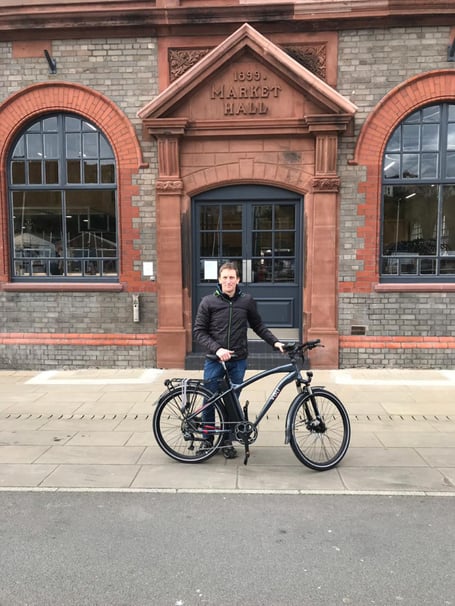
A cycling association is urging the government to introduce a 20mph limit in urban areas.
The Isle of Man Cycling Association is calling for the speed limit to be introduced in villages and towns across the island as well as a 30mph limit on narrow rural roads.
In an open letter to MHKs, Rob Holden of the association referred to recommendations by the World Health Organisation, British Cycling and other organisations to highlight that speed limits are the most common reason why people don’t walk or cycle.
The former professional road racer wrote: ’Road harm remains the most likely cause of death under the age of 40 in the Isle of Man whilst the estimated financial impact of all injury collisions on the island from 2015 - 2016 was £8.5m.’
.jpeg?width=209&height=140&crop=209:145,smart&quality=75)

.jpeg?width=209&height=140&crop=209:145,smart&quality=75)

He said that the island has witnessed a ’real life social experiment’ in people’s behaviours during the Covid-19 lockdown with the 40mph speed limit being introduced temporarily.
He wrote: ’Demand has far outstripped supply in bike shops on the island with lots of people clearly new or returning to cycling emboldened by the perception of safety with the introduction of a 40mph maximum speed limit and reduced vehicles on our roads.’
He added: ’Rightfully we should do all we can to enable people that have embraced using their bikes, whether for leisure or as transport.’
The government unveiled plans in 2018 to get more than 20% of people travelling actively to work by 2021 as part of its ’Active Travel’ strategy.
In March 2019, then Infrastructure Minister Ray Harmer backed the idea of improving road safety, including reducing the speed limit in urban areas to 20mph.
He said the DoI was working to increase and improve 20mph zones in towns and villages.
The first would be Castletown, Peel and Port St Mary. Others would follow.
Chief Minister Howard Quayle told the House of Keys on Tuesday that he agreed that a debate was needed on a World Health Organisation recommendation for 20mph speed limits in urban areas.
’There’s been a significant increase in cycling and walking which is a good thing to see,’ he said.
In response to a question from Douglas East MHK Clare Barber, Mr Quayle said the island had fewer than five serious car crashes during the two-month lockdown period when speed limits were reduced.
The average number of significant car crashes that normally occur during this time period is 30, he said.
A nation-wide maximum limit of 40mph was introduced on March 27 in a bid to reduce demand for emergency services during the lockdown. The limit was increased to 60mph on June 15 before returning to normal on Monday.
Mr Quayle said the 40mph speed limit decision was in result of a recommendation by the road safety team.
It was not based on data, but rather ’common sense’, he said.
’It is known that if you have an accident at 70mph it would be more traumatic than one at 40mph,’ he said.
He said the decision to bring in a temporary 60mph limit was based on advice by the chief constable and was to give time to motorists to adjust to higher speeds.
Comments
This article has no comments yet. Be the first to leave a comment.