

Every year on July 5, thousands gather in St John’s to celebrate Tynwald Day by watching an open air meeting of the island’s parliament gather on the iconic four-tiered hill.
The proceedings are spoken in both English and Manx as all bills that have received Royal Assent in the proceeding 12 months are promulgated.
Just across the road from this one of the island’s most distinctive landmarks, is another slice of history, where the Manx language comes alive every day of the year
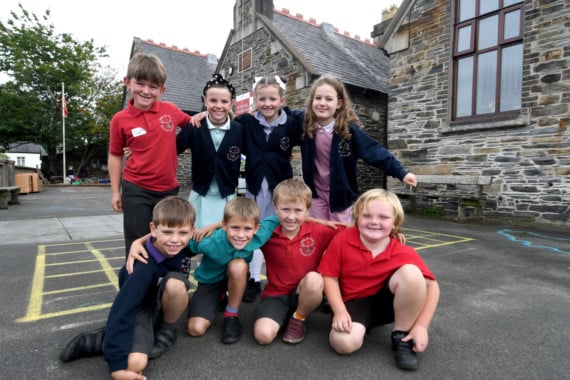
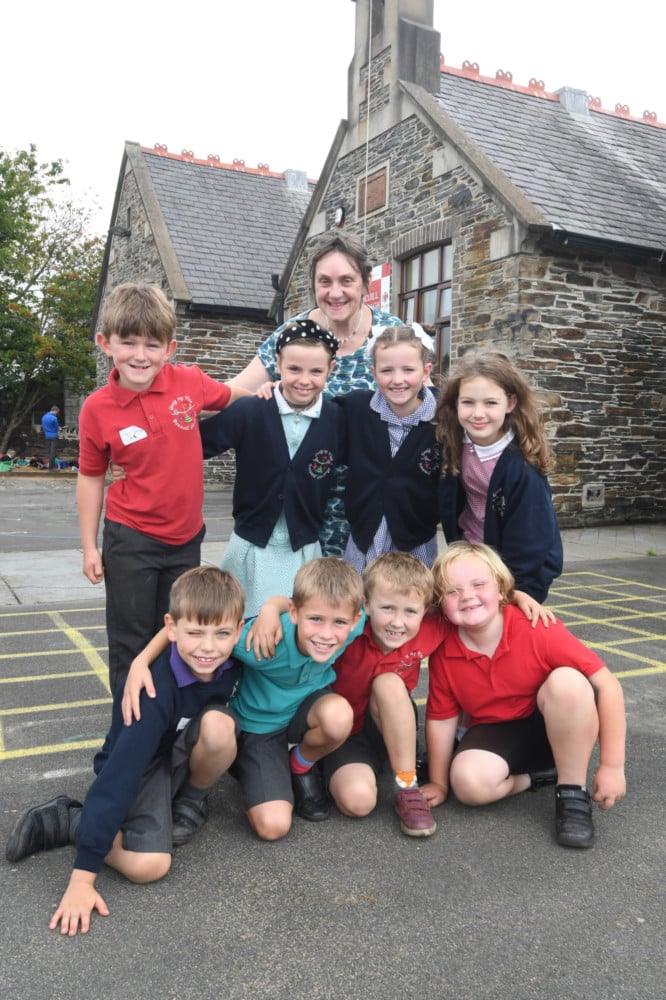
The Bunscoill Ghaelgagh last week celebrated 20 years since it opened its doors.
-(2).jpeg?width=209&height=140&crop=209:145,smart&quality=75)
The school is the only one in the world where children are taught their lessons solely in Manx.
The aim is that children who attend the school are able to learn the language fluently, something which continues to be a success.
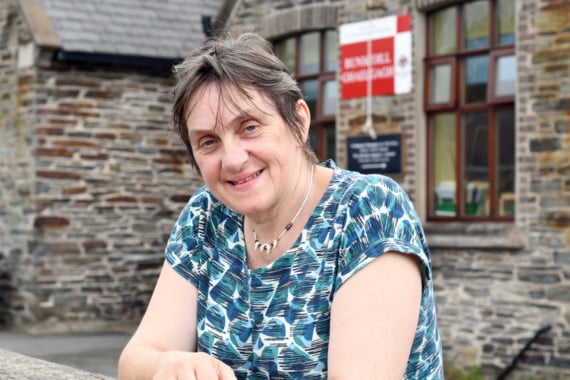
The Examiner spoke to head teacher Julie Matthews about the anniversary, and why the language revival is alive and well within the school’s walls.
She said: ’We are really excited to be celebrating our 20th year as the Bunscoill Ghaelgagh.
’The Manx language is so important to our culture and identity and it’s wonderful to see how it has enriched the lives of a succession of pupils and their families as they followed their primary curriculum through Manx.
’We are in a lovely situation now where former pupils regularly come back and help current students in the classroom.’
The history of the Bunscoill Ghaelgagh really starts with the Manx-language pre-school playgroup, Mooinjer Veggey.
They developed out of an interest in the possibilities of reviving the fortunes of Manx Gaelic from the grass roots and took its initial inspiration and guidance from those working within Scottish Gaelic-medium play-groups during the late 1980s and early 1990s.
The Mooinjer Veggey play-groups proved successful and gradually led to a demand for continued Manx-medium education at primary school level.
In response to parental demand the first Manx-medium class was established in September 2001 by the Department of Education in partnership with Mooinjer Veggey and Sheshaght ny Parentyn, the parent’s organisation.
The Manx-medium class initially operated within a mainstream primary school, Ballacottier School in Douglas.
Nine children attended the first Manx-medium class and were taught by a teacher assisted by a nursery nurse.
Mooinjer Veggey play-groups continued to provide the great majority of pupils for the Manx-medium class over the next few years.
In 2001, the school officially opened, but it was not until January 2003, that it found its permanent home in the village of St John’s, in an old school building which was recently vacated.
The Bunscoill Ghaelgagh was officially established there with 25 children divided into two classes.
At this point, they were still the ultimate responsibility of the head teacher of St John’s Primary School.
However, by 2006 the Bunscoill Ghaelgagh became a ’stand alone’ separate primary school with its own head teacher, Bnr Matthews.
Since then it has gradually increased in numbers to its current four classes ranging across the primary age-groups.
It is now officially managed by the Department of Education, Sport and Culture.
Mrs Matthews said: ’Having started off under the auspices of the Manx language education charity, Mooinjer Veggey, we are now a fully-fledged part of DESC, while still working closely with Mooinjer Veggey to develop Manx teaching and learning resources.’
Children moving ’up’ from the Mooinjer Veggy playgroups encounter familiar songs, rhymes and routines, and in some cases, familiar staff, so a degree of continuity is ensured.
A spokesperson for Mooinjer Veggy highlighted the charity’s historic links with the school and said: ’We are delighted that the Bunscoill has been running for 20 years and we look forward to the next 20 to see it’s further development.’
The school’s role in the revival of the Manx language cannot be overstated.
In 2009, UNESCO listed the Manx language as extinct, which led to pupils writing letters asking: ’If our language is extinct then what language are we writing in?’
The classification was later changed to ’critically endangered’.
As recently as late last year, the pupils of the school produced their own special edition of BBC North West Tonight.
In terms of celebrating this significant anniversary, head teacher Julie Matthews stressed the importance of marking the occasion.
She said: ’We would love to encourage all members of the Gaelic speaking community, and anyone interested in taking part, to join us in our celebrations during the year.
’Over the years we have had many visitors from around the world interested in our little language and how the island has brought it back from the brink of extinction, with the school playing a key part.
’Other minority languages are greatly interested our story as they seek to learn from our success.
’In the words of Manx language activist Leslie Quirk: " The difference with the language revival now is that it has children."’
Comments
This article has no comments yet. Be the first to leave a comment.