

Education chiefs have come under fire for a lack of foreign languages teaching in primary schools.
In 2012, the peripatetic primary modern languages services was disbanded due to budget cuts at the department - it was the same year that state-run preschools were axed due to a lack of funds.
Daphne Caine (Garff) raised the issue in Tynwald last week, complaining: ’I wonder how getting rid of foreign language teaching, and French particularly, in primary schools as standard fits in with the world class education system that we boast the Isle of Man has and has enjoyed for many years?’
Some schools have arranged for a French language instructor from the private sector to teach in lunch breaks, Tynwald heard.
.jpeg?width=209&height=140&crop=209:145,smart&quality=75)

.jpeg?width=209&height=140&crop=209:145,smart&quality=75)
.jpg?width=209&height=140&crop=209:145,smart&quality=75)
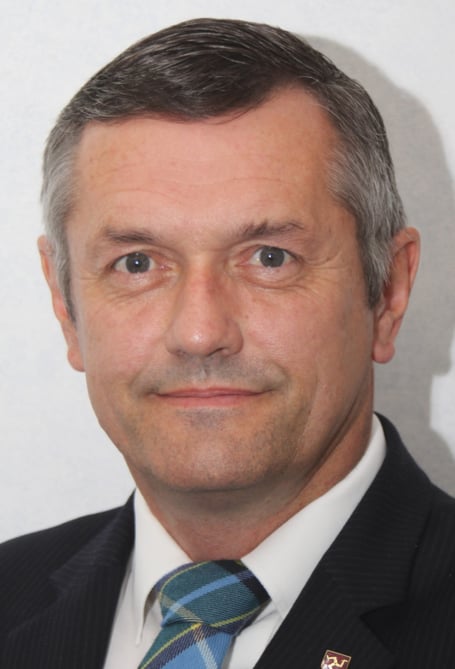
Responsibility for languages provision was delegated to head teachers, said Education Minister Graham Cregeen, who revealed talks were taking place with the Confucius Institute about providing a Mandarin teacher for primary schools.
’In reality, primary schools have continued to offer language teaching, including Manx Gaelic in all schools as an option, and in some cases, other languages such as French and Mandarin,’ he said.
’I think most people will realise that French, many years ago - probably at the start of the EU - was being pushed out to schools. I think more modern languages, such as Spanish, Mandarin and German have overtaken that.’
Meanwhile, Mr Cregeen revealed, in a written answer, that 6.7% of primary school children were classed as having English as an additional language (EAL). But he stressed that a proportion of those children were effectively bilingual.
There are four different stages on the scale for EAL pupils:
Level 1: new arrival in an Isle of Man School and new to English, absolute beginner;
Level 2: has some basic social language, likely to be following a ’Newton English’ programme;
Level 3: has acquired basic social language but needs support to access full curriculum;
Level 4: fully bilingual, no EAL support needed.
The figures he provided did not differentiate between the different levels.
They showed that there were 424 EAL pupils out of a primary school population across the island of 6,309.
The school with the highest proportion was Henry Bloom Noble Primary School in central Douglas - 102 of its 362 pupils are classed as EAL (28.9%). Several schools had no EAL pupils at all, including Andreas, Ballaugh, Dhoon, Foxdale, Jurby, Manor Park and Michael.
In secondary schools, 266 of the 4,284 pupils are classed as EAL (6.2%). Ballakermeen High School, in Douglas, has the highest percent, at 11.1%.
The figures were given in response to a question tabled by Mrs Caine.
She also asked how many schools offered Manx Gaelic and how many took GCSE and A-level in the subject in the last school year.
Mr Cregeen said all state schools offered Manx lessons from the age of seven onwards.
Nineteen pupils took the Manx TCG, which is the GCSE equivalent, and two pupils took the A-level, obtaining an A and an A* grade.
Comments
This article has no comments yet. Be the first to leave a comment.