
Each month, Breesha Maddrell, director of Culture Vannin, looks at the journey of Manx culture and its importance to our sense of identity and belonging.
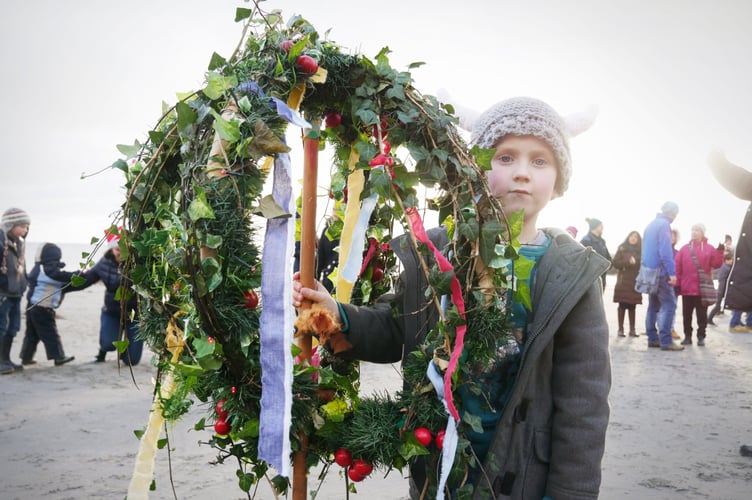
I first heard ‘Hunt the Wren’ being sung by my grandfather’s friend, Tommy Mylchreest.
He knew more verses than I could count on my fingers, and he gave the performance of his life, even though he was sat on a wooden chair in my grandmother’s kitchen with only three of us watching and listening.
I best remember his face folded up in laughter at a silly story of their past that they had just shared, or something ridiculous that was going on.
.jpg?width=209&height=140&crop=209:145,smart&quality=75)
.jpeg?width=209&height=140&crop=209:145,smart&quality=75)

Both of them carried so much culture with them without ever having to name it as such.
They knew the names of vast networks of families, and could recall them as easily as you would look up your contacts on your phone.
I am lucky to have recordings of my grandfather, and somewhere, just somewhere, there might be a cassette with Tommy on it.
How we pass on culture without even thinking about it is, as often as not, through songs, stories, poems and rhymes.
They give us a means to remember, to recall and repeat.
Many songs and stories are linked to feasts and festivities, because they are times when we gather together as communities in celebration.
Christmas is no exception. I always think that the Manx loved Christmas so much they had two of them.
I’m not joking – there’s a little Christmas and a big Christmas, an Old Christmas as well as a new one.
What we know of the whole Foolish Fortnight is that it was a time when there was lots of music, dance and merriment, a time when fiddlers appeared to rule the roost.
Mind you, the thought of hiring a fiddler to wake people up on Christmas Morn would be a wicked one these days!
Traditions are, of course, captured in various books describing folklore and folklife, but songs tell you things without you perhaps realising.
The Manx Christmas customs I recall most easily are the ones that newer storytellers have shaped into songs and poems.
Teacher and Manx dance enthusiast, Leighton Stowell, wrote ‘The Stranger’, a song which describes the myrrh coming into bloom, and the cattle falling on their knees to welcome the Christ child. I don’t sing Leighton’s version, because the song has been carried to me through the hands of Colin Jerry, who translated it into Manx, and Annie Kissack, who arranged that translation for her unaccompanied choir, Caarjyn Cooidjagh.
Culture is about what is carried forward, what is shaped and re-shaped, what is enjoyed.
There are so many ways to make this Christmas a Manx one – from attending special services in chapels and churches, to larger open-air gatherings, street theatre, concerts and fairs.
If you don’t want to hire a fiddler to annoy your neighbours, then perhaps hanging a Nollick Ghennal ‘Happy Christmas’ decoration on your tree or sending a beautiful hand-made card is the way to go.
But don’t forget there are wrens to be hunted, saints to dramatically die and be resurrected courtesy of the Doctor’s prixum and praxum, homemade cammag sticks to be wielded in the battle between the North and the South, and much more in between.
And if any of that sparks your interest, you’ll find more on www.culturevannin.im/manxfolklore/
Comments
This article has no comments yet. Be the first to leave a comment.