
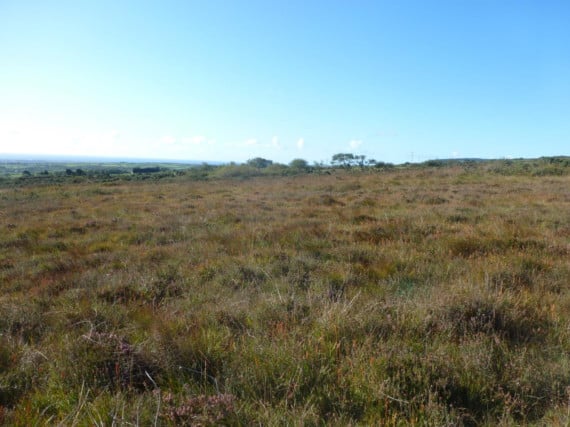
The recent announcement that Grenaby Garey has become the latest officially designated Area of Special Scientific Interest (ASSI) in the Isle of Man has highlighted the work being done on conservation and biodiversity, and the role that farmers play.
It takes a special balance to maintain a precious, species-rich environment like a wetland or the untouched willdness of the Manx hills and livestock is an important element.
’The last thing we want is for these areas not to be grazed,’ says Aline Thomas, senior biodiversity officer at DEFA.
Garey is a Manx word for marshy grassland.


.jpeg?width=209&height=140&crop=209:145,smart&quality=75)
Grenaby Garey is 75hectares and is the largest remaining area of its kind in the south of the island.
Aline goes on to explained why an area like this needs grazing at the right levels to maintain its diversity:
She adds: ’What we want to do is open up the sward so it’s not grass dominated to let the other species through and get a much better diversity and prevent the willow scrub encroaching - we do want the willow as it is an important habitat for breeding birds, but we don’t want it to take over.
’As they eat their way through a wet meadow all these little micro habitats are created with warm areas which are really good for flowers and butterflies.’
The type of livestock is important as different animals have different grazing habits.
’Because of the nature of the habitat cattle grazing would be most appropriate for that area because they can handle the wet ground better [than sheep].’
Grenaby Garey would be unsuitable for dairy cattle who need much richer grazing but would be perfect for Highland cattle, for example.
Aline also remembers that this area was occasionally grazed by horses in the past.
John Harrison, head of agriculture at the DEFA, recalls that, when they first started designating Sites of Special Scientific Interest (SSSI) in the UK, Natural England simply fenced some off and left them to nature.
He says: ’When they went back a few years later what they were trying to protect had disappeared because the way they had been managed in the past was what had created it.
’What is here is because of the way we have been managing it in the past so what we need to do is actually say: "that management system’s working" and helping to maintain that.
’A managed habitat is better than an abandoned habitat.’
The designation of ASSIs in the island started in 1996 following a habitat survey of the whole island carried out a few years earlier which identified 100 sites of high interest. .
Aline explains: ’Initially we started designating department land, such as the Ayres.
’Now we have 22 sites and they’re a mix of private land and public land, some owned by Manx National Heritage, some by the Manx Wildlife Trust and others by a whole range of private owners.
’The process we follow is that we compile information for a site and select an appropriate boundary.
’Then we collate the information we have for that site from various sources such as [the charity] Manx Birdlife.
’It has to meet certain criteria before it can be designated.’
If a designated area would benefit from grazing the department works with the landowner, offering incentives to encourage the right level of stocking at the right time of year and in some instances they are able to fund new fencing.
Once a management agreement is set up there are follow ups to see how well it is doing.
Aline explains: ’We get data mainly from the landowner who we meet with as regularly as we can, when we have a walkover of the land and note positives and any issues.
’And we have some absolutely excellent landowners who strive to maintain these sites.
’A lot of them are very proud of their land.’
Maintaining the island’s landscapes and biodiversity are also of course integral to our UNESCO Biosphere status.
There are other, practical reasons for maintaining them: for example, wet habitats like Grenaby Garey also hold water and prevent flooding further downstream.
Aline says: ’These sites are safeguarding a whole range of habitats.’
John Harrison agrees: ’What we’ve got is great and we want to keep it that way - it’s easier to keep it that way that to lose it and try to build it back again.
Comments
This article has no comments yet. Be the first to leave a comment.