
The future of agricultural subsidies post-Brexit was the focus of an extraordinary general meeting of the Manx National Farmers’ Union.
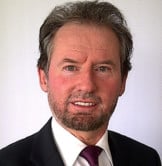
Environment, Food and Agriculture Minister Geoffrey Boot outlined his vision for the future direction of agricultural support at the meeting held last week at the Vagabonds Rugby Club in Douglas.
Mr Boot spoke about the farming model ’Ballawhatnot’ created by the UK-based Andersons Centre which warns of the long shadow cast by Brexit on British agriculture.
A period of upheaval will see farm support change and trade arrangements almost certain to alter.
Ballawhatnot, an imagined 200-acre mixed lowland Manx farm with beef, sheep and spring barley, makes a £12 per hectare loss after subsidy.
But this loss could rise to £121 with good access to European markets after Brexit but to as much as £273 with a ’hard Brexit’.
The farming model confirms that the majority of Manx farms would not survive without support unless the price of food in the shops went up threefold.
Current government policy, just as it is in the UK and EU, is to keep paying farm support to keep the cost of food down.
Andrew Cooper, general secretary of the Manx National Farmers’ Union, said: ’Mr Boot asked us to lobby our members and get him feedback on which type of schemes could work within the industry to increase profitable farming.
’He also asked if we should be changing now ahead of Brexit or whether we should be waiting to see how the UK changes in the future before we make any changes.’
The MNFU says only schemes that benefit ’active farmers’ are acceptable. This policy was introduced a few years ago, after intense lobbying by the MNFU, to stop land owners claiming support for owning land.
Some 88% of the land mass on the Isle of Man is farmed or managed by farmers and the island would look very different if the farming practices changed to intensive units with large fields.
Our average field size is five acres but in the UK it’s over 10 times that size.
UK farmers are paid under the Agri-environment scheme to add hedgerows and make fields smaller.
There is no such scheme here.
For every £1 spent in the industry it returns on average £7.40 to the local economy while also directly employing more than 1,300 people in the island, the EGM heard.
Mr Boot acknowledged our farmers receive in real terms 25% less farm support than UK and EU farmers as well as not having access to the same green schemes. But they are still trading and competing into the same markets.
Comments
This article has no comments yet. Be the first to leave a comment.