
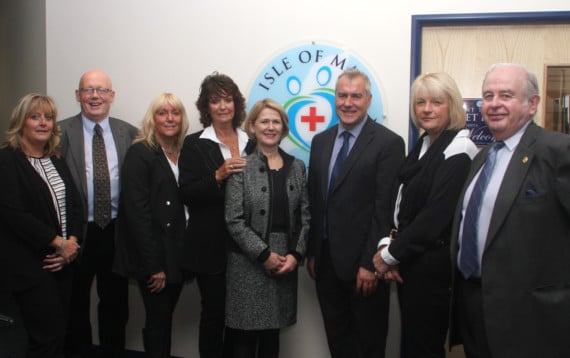
A ’quiet room’ for travellers using the Isle of Man Patient Transfer Service was opened on Monday by Minister for Infrastructure Ray Harmer.
Local charity Manx Breast Cancer Support Group have been responsible for initiating the project, working with officials at the airport and a number of other organisations to bring it to fruition.
Julie Stokes, chairman of Manx Breast Cancer Support, explained: ’In January this year we approached Ann Reynolds, director of ports and asked her if it would be possible to make some space available at Ronaldsway where the charity might furnish and equip a Quiet Room that all patients using the island’s Patient Transfer Service could use. She offered us a fantastic area right next to security.’
The charity then took on the task of furnishing and equipping the room to the highest standard with a TV and comfortable chairs and sofas.

-(2).jpeg?width=209&height=140&crop=209:145,smart&quality=75)

.jpeg?width=209&height=140&crop=209:145,smart&quality=75)
There is also a giant play cube sponsored by Dreamcatcher. In keeping with the charity’s ethos of spending funds raised on the island, all the equipment was sourced locally.
Julie said: ’We were lucky to have MAS Real Estate Inc sponsor the room and we also received additional sponsorship from Rotary Club of Rushen and Western Mann.
’We would also like to thank Tracey Leahy from MannVend for supplying a drinks machine.’
She added: ’We would like to say a massive thank you to Ray Harmer, for taking the time to come along to perform the official opening and for all his help with this. We would also like to thank Martyn Perkins MHK and a massive thank you to Ann Reynolds and Tony Woods for all their help with this project.’
Ray Harmer said: ’I was very honoured to open the Quiet Room at Ronaldsway, which will give patients respite during what is a very difficult time for them. I would particularly like to thank Julie Stokes for driving this forward and everyone at Manx Breast Cancer Support as well as Ann Reynolds, the staff and the charities and businesses that have supported and helped to make this happen.Â
This now means we have a Quiet Room for all patients, at both ends of the air route which is a substantial achievement.’
Comments
This article has no comments yet. Be the first to leave a comment.