


Ministers have been considering the path ahead out of Covid restrictions.
But Chief Minister Howard Quayle told this afternoon’s Covid briefing that no precise dates can yet be given for changes to our border restrictions.
He said the approach will be ’carefully considered’ as there are ’significant uncertainties’ around us.
No new cases of Covid-19 have been identified in the island in the last 24 hours.


The number of active cases stands at four with one in hospital.
Mr Quayle said Ministers are working to finalise the longer term approach on changes to our borders and this was due to be made public before the end of the month.
But he said it would give no precise dates on when changes will be made.
A key milestone will be when everyone over aged of 50 and all with underlying health conditions have been vaccinated.
Mr Quayle said: ’We hope to be able to have done this by the end of May. If we can do this, and if the UK infection rate decreases significantly, then could May be the month we see change? Possibly.
’Might we be able to make some changes before May? Maybe. But that moment where we have vaccinated our priority groups does feel like the moment when we can consider taking bolder steps.
’But I need to be clear - this is an aspiration,’ he said.
Public health director Dr Henrietta Ewart revealed two more cases of the more-transmissible Kent variant have been identified though genomic sequencing of positive test results up to the last week in January.
These were both people who have travelled here and they are both in self-isolation and there is no onward transmission.
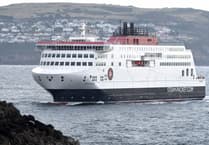
Dr Ewart said incident management was being undertaken in partnership with the Steam Packet after a UK-based crew member of the Ben-my-Chree tested positive for the virus.
Contact tracing has been completed. Five of seven identified close contacts have come back negative and test results are awaited for the other two.
Dr Ewart said there should be no more chains of transmission as the contacts were traced and went into self-isolation before they were at risk of infecting others.