
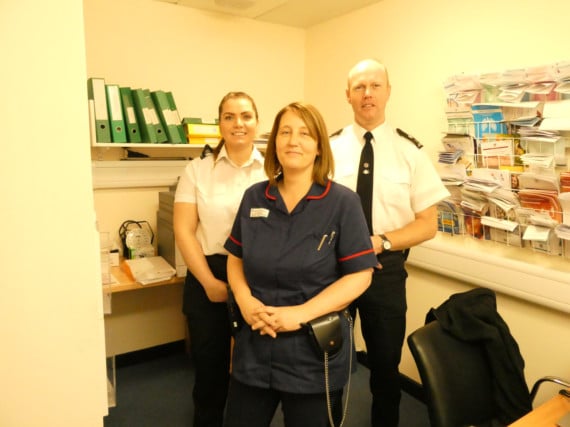
The thought of being locked in a prison for 37½ hours each week may not appeal to everyone but if variety and spontaneity are high on your list of job prerequisites - along with a desire to care for vulnerable and disadvantaged individuals - then prison healthcare may be what you’re looking for.
Jane Bloomer, who is in charge of the healthcare department inside Jurby Prison, deals with the health needs of between 100 and 120 detainees.
It is a nurse-led unit, run by six registered nurses/practitioners, with input from visiting GPs, mental health practitioners and members of the Drug and Alcohol Team.
The nurses hold their own clinics, where they provide advice and information on a number of subjects such as sexual health or giving up smoking. They also undertake comprehensive health assessments on all new prisoners to ensure their physical and mental health needs are met.
-(1).jpeg?width=209&height=140&crop=209:145,smart&quality=75)

.jpeg?width=209&height=140&crop=209:145,smart&quality=75)

Working in a custodial setting is a unique experience where nurses work closely with prison officers to deliver care to individuals who may be challenging or aggressive.
Healthcare workers are given additional training to prepare them for the environment, including breakaway techniques and the use of Tetra radios to summon help or respond to medical emergencies.
Jane, who has worked in the prison for three years, says: ’Due to the nature of the work, no two days are the same.
’Although there are routine duties, including medication rounds and GP clinics, there’s no knowing what else my working day may hold.
’Prison nurses respond to urgent radio calls within the establishment and may be called upon to deal with medical emergencies, injuries or acts of self-harm.’
There are opportunities for nurses to undertake further training in the treatment of drug or alcohol withdrawal symptoms and the management of minor illness or injury.
Prison nurses also have the option to train as non-medical prescribers to further boost the autonomous nature of their role.
Jane says: ’I genuinely love my job and the freedom that goes with working in a nurse-led environment.
’It means I can make the most of the opportunity to promote health and carry out screening for specific conditions.’
Although employed by the Department of Health and Social Care, the nurses must also work in accordance with prison regulations to help maintain good order and prevent any security breaches.
It is essential therefore, that healthcare staff are able to identify manipulative traits amongst detainees - such as drug-seeking behaviour or conditioning.
Prison governor Bob McColm explained the importance of the partnership between healthcare and prison staff, saying: ’Addressing the physical and mental health needs of those in prison is central to running a decent, safe and healthy establishment.
’At Jurby; both the healthcare staff, and prison officers, have a key role in assessing the vulnerability of prisoners on their initial reception.
’The first 24 hours are a particularly vulnerable time for offenders; and the staff work together to make sure they are safe and supported.’
The governor acknowledges that nursing in the prison environment can be challenging - but states that it is also very rewarding.
He added: ’There is a unique opportunity to deal with a wide range of health issues and to change people’s lives for the better.
’I admire and respect the work of the healthcare staff and appreciate their valuable contribution. I am proud to work with them.’
by Amanda Phillips
Comments
This article has no comments yet. Be the first to leave a comment.