

New ways of testing for coronavirus may be needed if the disease becomes widespread in the island.
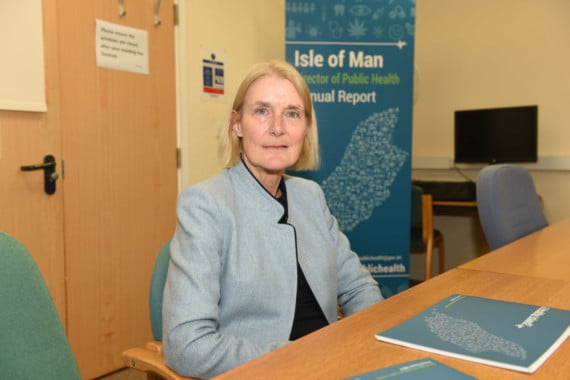
Public health director Dr Henrietta Ewart has warned that it is likely to be only a matter of time before we see our first cases here.
She said that with a spike of cases in the UK, it was probably on the cusp of an epidemic there but we are behind the curve.
Testing for Covid-19 are carried out by a UK specialist laboratory. So far 19 tests have been carried out, and no caseses have been confirmed.




In the UK, cases have topped 300 and a fourth coronavirus death has been confirmed.
If cases do emerge here and it becomes more widespread, then ’we may have to look at different ways of testing such as kits through the letterbox’, said Dr Ewart.
The public health director said: ’The thing that has led to the recent spike in cases in the UK seems to be returned travellers from Italy.
’More concerning, is that there are cases who do not have a personal travel history from one of the affected areas, neither do they have a confirmed contact with somebody who is a confirmed case.
’So that indicates there is community transmission. Once you get that you start planning for wider community transmission and to call it for what it is - that it’s probably on the cusp going epidemic in the UK.
’We are behind the curve compared with the UK.’
In terms of responding to a new communicable agent, the first phase is containment with the hope of controlling and ultimately eliminating it.
Dr Ewart said: ’I think the hope for that has now really faded, but you don’t stop your control measures.
’Because this is a new virus nobody has immunity to it. So if everyone just threw up their hands, it would go through the population like wildfire, you could get 60-80% of people infected at a given time.’
While the UK has moved into a phase of trying to delay the spread of the virus, the island is still in the containment phase, she said.
Dr Ewart said she still expected the vast majority of cases to be mild and a significant number of those to be sub-clinical, ie they wouldn’t know they’ve got the disease.
She said about 80% of people who are infected would be mild cases and about 20% more serious, of which about 5% would very seriously affected.
Government officials are planning their response based on an potential absence rate in the public services of 35 to 50%.
’With those sorts of numbers, if it all happens at once, it puts a major burden on everything, on the NHS, on public services, on society, on supply lines,’ she said.
’What we want to do is put pressure downwards of the epidemic curve so instead of it being a spike it’s a gentle curve.
’And that means at any given time there are fewer people affected, therefore your services, your economy and you society, can cope.’
Comments
This article has no comments yet. Be the first to leave a comment.