
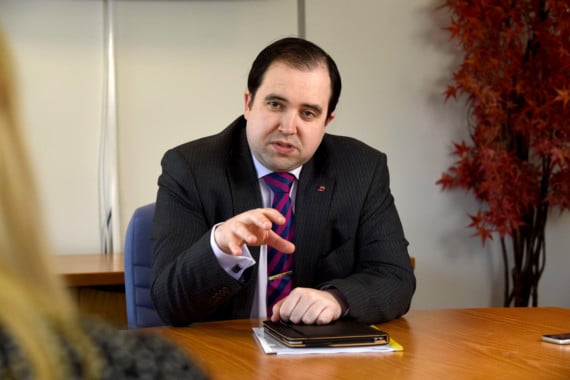
Health Minister David Ashford wants to change the way NHS dentists get paid by the government.
He is seeking to overhaul the contract system so that it is no longer based upon ’units of dental activity’, a system he believes has not helped in addressing the problem of waiting lists for places with an NHS dentist.
’We need to reform the way that it is done, currently, with units of dental activity,’ he said. ’I think we are incentivising the wrong things. If someone walks in and they have half their teeth hanging out, that is a lot of units of dental activity.
’We are incentivising the treatment rather than prevention. We need to change the dental contract and build up something that is encouraging prevention.’


.jpeg?width=209&height=140&crop=209:145,smart&quality=75)

Only about 40% of the island’s population is covered by NHS dentists.
Under the current contract system, in which dentists are paid by the government for NHS work, each treatment equates to a certain number of units of dental activity (UDAs).
In simple terms, dentists are paid for NHS work in terms of the number of procedures they carry out, which can mean that a lot of their NHS funding can be used up by a small number of patients with serious problems. The knock-on effect, under a contract that is based on performing a certain number of UDAs, is it can restrict the number of NHS patients they can take on.
’It is about getting people dentally fit,’ he said. ’If you get a set of patients that are healthy, you should only need to see them for their check-ups every six months.’
That would enable dentists to have more NHS patients on their books.
Mr Ashford said the aim was to have new contracts in place by next April.
In the summer, he told the social affairs policy review committee that talks had begun with dentists to introduce new contracts.
He also admitted that there was a lack of data on the number of patients who receive private dental treatment, which would give a clearer picture on how many people were receiving some treatment, even if not on the NHS.
Comments
This article has no comments yet. Be the first to leave a comment.