
On-island testing for coronavirus has officially begun.
Now there is the capacity to carry out about 200 tests every day.
The first samples were tested at 8.30am at the hospital on Monday and a second set in the afternoon.
This is made possible with a real time polymerase chain reaction (PCR) analyser of the same standard as Public Health England, after essential equipment was transported to the island by helicopter.


Previously, swabs were flown over to Manchester to be tested and flown back about 72 hours after.
Initially around 30 people were tested a day at the mobile testing unit at the Grandstand in Douglas.
This will now step up to around 200 tests a day with results being given by text messages within 24 hours.
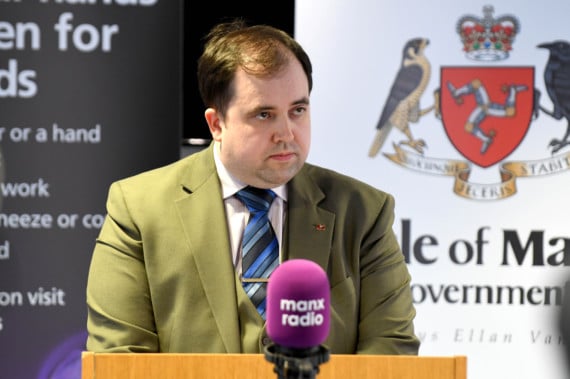
Health Minister David Ashford said: ’To be able to test for coronavirus in the island has been our long-term plan since we started our battle against this dreadful disease.
’It marks a step change from this point forward in how we will be fighting back against Covid-19 in the future.
’Our ambitions around testing come from our approach to slowing the spread of the virus in our community.
’Our premise has always been to test, trace and inform.
’With robust testing and contact tracing we can advise people to self-isolate more quickly and thereby slowing the spread and immunity.’
He added that the journey to get the PCR analyser was an ’eventful’ one.
’It began in early March when molecular scientist Dr Rachel Glover, from Taxa Genomics, reached out to ask if we could ask to collaborate our local solution,’ the Minister said.
’With our own senior scientist, Chris Helm, they identified a piece of kit at the public analysts lab that hadn’t been used for a few years, but was perfect for our needs.
’They installed it in Noble’s and have been working seven days a weeks to recommission it and work up an in-house method.’
The team has worked alongside the Manchester lab to ensure the tests reach the same results.
When asked to go into further detail of how else this will aid the island’s battle against the virus, he replied: ’What we can do is start looking at more proactive testing, so we can look at things like key worker testing. We can look wider testing in nursing homes for those in a more vulnerable setting and in the long term we can look at re-profiling how we do community testing.’
He added the quicker turnaround in getting results would help contact tracing and breaking the chain of the virus’s spread.