
It is literally a lifeline for the island.
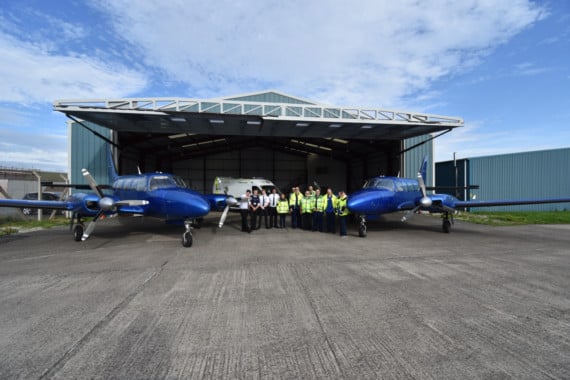
The Isle of Man Air Ambulance Service flew 420 sick or seriously injured patients off the island for treatment last year.
The oldest were in their late 90s, the youngest were tiny babies.
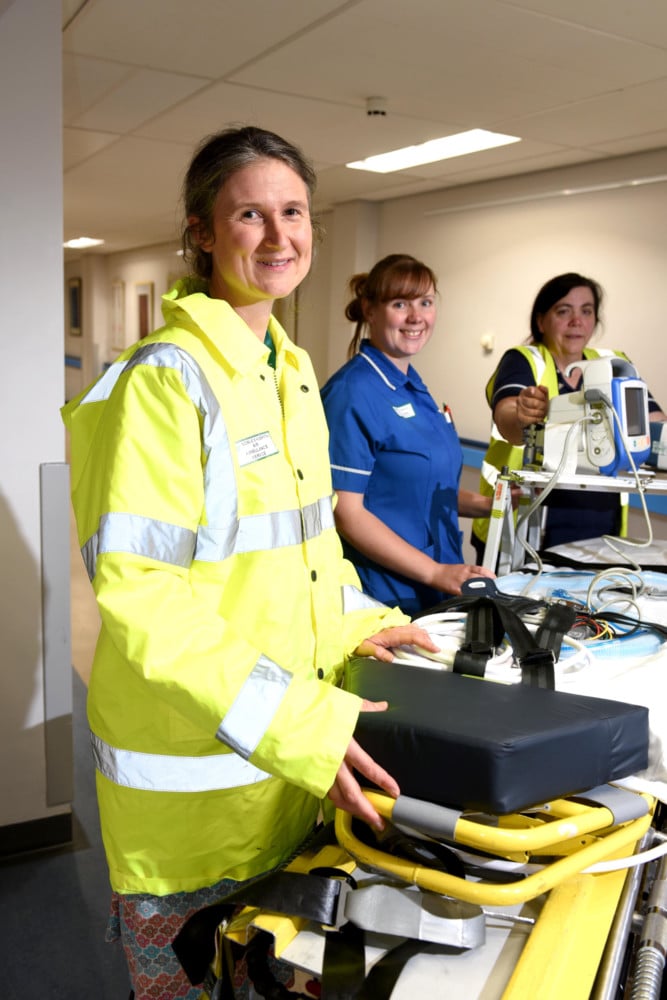
Julie Blackburn meets consultant anaesthetist Dr Kate Teare, who is medical lead for the service.
.jpeg?width=209&height=140&crop=209:145,smart&quality=75)
.jpeg?width=209&height=140&crop=209:145,smart&quality=75)
.jpeg?width=209&height=140&crop=209:145,smart&quality=75)
There is quite a big range of patients that we carry which is one of the challenges of the service she says.
They have to cope with everyone from intensive care and high dependency patients and premature babies to those who might simply have an outpatient appointment but can’t fly on a commercial airline because, for example, they might have a full length cast on their leg and be unable to fit on a standard seat.
When it comes to the more serious cases, Kate says: ’Road trauma in general, particularly motorbikes, makes up the vast majority but we have other things: we have agricultural incidents, we have falls from heights. These things happen to people and can happen at any time.’
In 2012, NHS England brought in a reorganisation of trauma care services so that the more serious injuries will go not to their local hospital but to one of the major trauma centres, which typically serves a population area of two to four million people. Here, all the services needed to treat these cases will be available.
Noble’s Hospital joined the network, with Aintree as the island’s regional trauma centre, and bosses there have worked on refining the logistics of getting urgent cases there as quickly as possible.
’This is what we’ve developed over the last five years that has reached maturity now,’ says Kate.
Like everything else in healthcare, budgets are tight. I have already been told that Kate has done an amazing job with fairly limited resources and it’s easy to see how her cheerful enthusiasm and obvious commitment might inspire those around her.
The air ambulance service is one that involves a number of people and teams at the hospital and everything must slot into place for it to run smoothly.
Kate explains this as she describes for me a typical scenario where a patient with major trauma injuries is brought into the Emergency Department at Noble’s.
’Once they come in they will be met by a waiting trauma team and one of the emergency department consultants will be designated the lead. Typically on a trauma team you’ll have 10 to 12 people from the various specialities. As a consultant anaesthetist my role would be the airway doctor.
’You pull in the team from inside Noble’s so we’ll take operating theatre staff to work with us on the trauma team and surgeons will come down from wherever they are so it’s a group effort.
’The first thing we’ll do with that person once they’ve been handed over by the paramedic crew is to do a primary survey where we’re looking for immediate life threatening injuries and get those injuries treated right away.’
’All the major trauma patients get a scan from head to pelvis and sometimes limbs and additional xrays. As soon as they’re taken those images start heading down the link to Aintree, which takes about an hour.’
One of the radiologists at Noble’s will also look at the images and provide a report which will travel with the patient.
At the same time an air ambulance coordinator will come down to the emergency department from the service’s control room to see whether the patient is likely to be flown off for treatment.
Kate says: ’If it’s for Aintree she will start planning the movement of the aircraft so that it’s lined up at the time that they’re likely to go. Sometimes we get incidents where there’s more than one person involved, or two separate incidents at the same time.
’We can fit only one person on a stretcher at a time in our aircraft so the person who’s ready to go first, or has the most urgent need of treatment, will be sent out first.
’As the plane is returning the corordinator will watch the aircraft’s movements on the air traffic control data and once it’s halfway back she’ll set off the second ambulance and team to the airport to meet the incoming plane.’
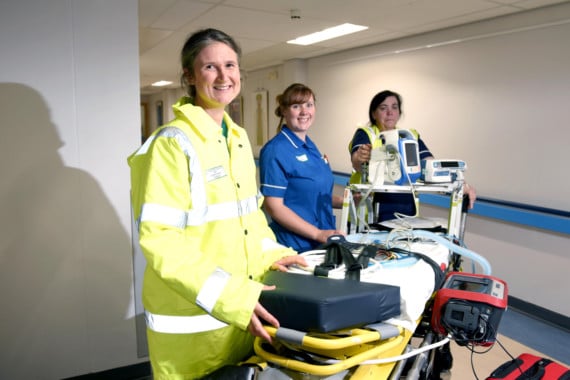
The size of the medical team that travels with the patient depends on the type and severity of the case, as does the equipment they carry with them.
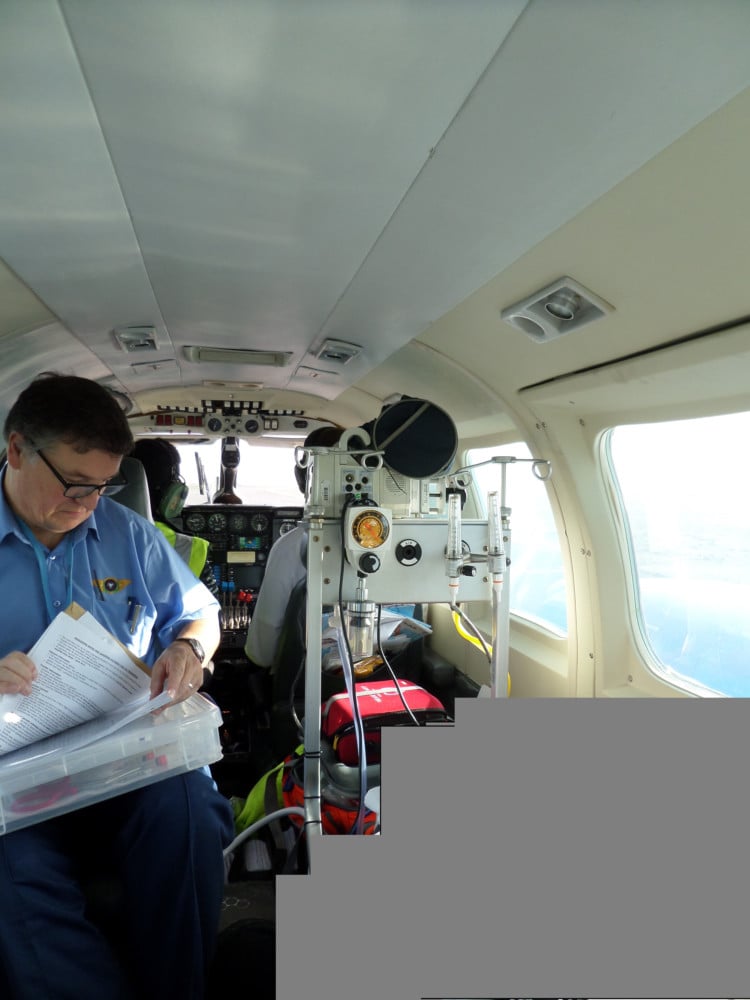
Kate says: ’Because it can be anyone from a premature baby to a cardiac or trauma patient, we have an adult intensive care bag or a more standard ward bag. We take monitoring equipment with a built-in defibrillator.’
Kate recently took a patient who had two cardiac arrests in the plane and Kate defibrillated her: she has since recovered and been flown home.
Kate adds: ’We take anaesathetisd people so we run anaesthetic drugs ongoing in the plane and we have a box of blood and other blood products that we takn so we’ll transfuse on the way. The last time I transfused somebody was someone with a pelvic fracture.
’At Noble’s we’ll do far more extensive trauma than you would expect for the size of hospital and the population because we see more trauma with all the motorbike events going on, but we don’t do ongoing pelvic bleeding.
’The last patient I took we had nine pints of blood and nine pints of frozen plasma with us in a cooling bag.’
Having blood with them that’s already cross matched also saves time when they get to Aintree and these patients can be taken straight into the operating theatre when they arrive.
Because of the urgency of these cases it’s very often a case of drop everything and run for Kate. It frequently happens that she has put a patient to sleep in theatre at Noble’s and a call comes to do an emergency transfer - she then calls another anaesthetist to take over, phones her husband to tell him she won’t be home for tea that night and is on her way to the airport.
In fact she won’t necessarily be home at all that night as Ronaldsway may have shut behind them. On one occasion, two nurses flew a patient to hospital in Newcastle and didn’t return for two and a half days because of fog.
Kate says: ’All of our staff are demonstrating that level of commitment and really the whole service relies on that. They get home late and they get called out in the middle of the night.
’The way we run it, we only two whole time equivalents on our books and the rest of the staff are bank staff. They’re doing it as extras on top of their other work and they’re fabulous all of them.
They do it because they find it interesting, they find it challenging.
’It’s the isolation of the clinical work that you don’t have when you’re on a ward. Once you’re in the air you’re completely out of communication with anyone else.
’It’s entirely your decision making if something happens to the patient. All our staff are working highly independently and they’re happy to get on and do that.’
She adds: ’We owe a big thank you to everyone involved with the service - the fire crews and security at the airport, the air traffic controllers and the pilots. And of course to all our staff for what they do, over and above their normal duties, and to their families who support them.’
Comments
This article has no comments yet. Be the first to leave a comment.