
The island is still vulnerable to a second wave of coronavirus, the Chief Minister has warned.
Howard Quayle said the risk of a resurgence made it more difficult to replace the emergency powers.
’We’ve only had a very small percentage of our population who have had coronavirus so as an island we are still vulnerable to a second wave coming along,’ he told the Public Accounts Committee.
’Hopefully all the measures we’ve put in place will reduce that threat, but that threat is still out there until a vaccine is brought forward.’




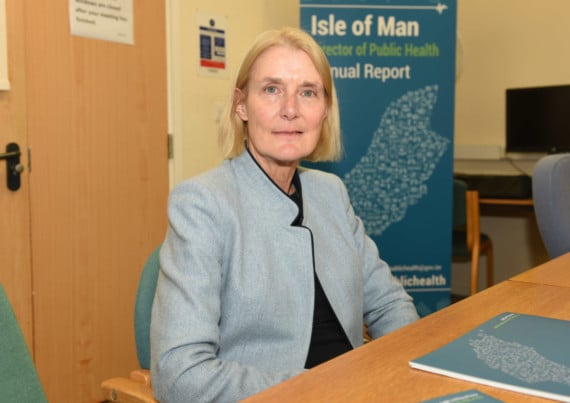
Director of public health Dr Henrietta Ewart said the low rate of infection meant there was no hope of ’herd’ immunity in the population.
She said: ’Based on the evidence we have from the number of positives and the number of deaths, we probably at most had about 3% of the population infected.
’We will be able to confirm that as we roll out the antibody testing.
’But quite clearly it’s nowhere near enough to give any kind of herd immunity even assuming antibodies do confer ongoing immunity to further infection and we don’t yet know whether that is the case.’
Dr Ewart was asked whether they were planning to deal with a resurgence.
She said it was impossible to plan definitively but the underlying approach was being ’ready to suppress, release, suppress, release’.
Dr Ewart said: ’We don’t know what will happen. We know from our current data that we either have no or very low levels of virus circulating in the community.
’It’s possible it is still on-island and for whatever reason over the last eight days whoever has been infected has been either asymptomatic or has such mild symptoms that they haven’t rung 111 and got tested. So as we release restrictions on people going about their daily life, it’s possible even without a change in the border restrictions we will see a resurgence. That’s exactly what they’ve seen in Korea where the focus was on nightclubs.
’If we only get sporadic individual cases or small clusters based on households what we would hope is that the test, trace and isolate system will be able to get those outbreaks under control very quickly without having to go back to some of the restrictive measures.’
The Chief Minister told a press briefing yesterday the continued zero number of cases since May 20 does not necessarily mean there’s no virus left in the island.
’But it does tell us that the risk of catching the virus in the island is currently exceptionally low,’ he said.
’Where we are now does give me cause for optimism. Before this week it was cautious optimism, now it is real optimism.’
He announced that the Council of Ministers this week will be looking at reducing restrictions further for public gatherings.
This includes those who are classed as clinically vulnerable or extremely vulnerable who have been told to shield themselves during the pandemic.
They will receive a letter soon inviting them to get out if they can and get some fresh air. ’If you want to invite a friend to come over for a cup of tea in the garden, then please do so,’ Mr Quayle said.
The one-metre-apart rule - set out by the World Health Organisation and in use by some other nations - could replace the current two-metre rule in the island.
Car sharing with up to two people from another household will be allowed from today (Tuesday).
Up to 10 people can attend places of worship and register offices services.
Meanwhile, Mr Quayle confirmed returning residents would be able to fly home from June 11 under certain conditions and can self-isolate at home if the whole household does so too.
He said that having spoken to easyJet, the airline has now put back its planned resumption of flights to Gatwick until later in the summer.
Mr Quayle has described emergency powers as a ’necessary evil’ which were needed to help the government move quickly and decisively on its Covid response.
He told a press briefing last week that work was at an advanced stage on a plan to take the island out of emergency powers.
He is due to set out that plan in Tynwald on Friday.
But replacing emergency powers may not be easy.
Attorney General John Quinn has written to the Public Accounts Committee detailing the problems of replacing them with the 1990 Public Health Act.
’That’s the problem we are trying to address, it really is a struggle,’ the Chief Minister said.
’We are trying to find a way out of it.’
He said he felt certain that as a result of these problems, Ministers will need to ask for an extension of measures brought in under the 1936 Emergency Powers Act.
’Hopefully, as the situation improves on the Isle of Man, it will make it easier for us to come up with a solution,’ he said.
He added: ’We need to be sure that if we do move to the Public Health Act 1990 that we are able to respond quickly should there be a second wave.’
Comments
This article has no comments yet. Be the first to leave a comment.