
More than a quarter of the island’s four- and five-year-olds are overweight or obese - and that’s higher than the proportion in England.
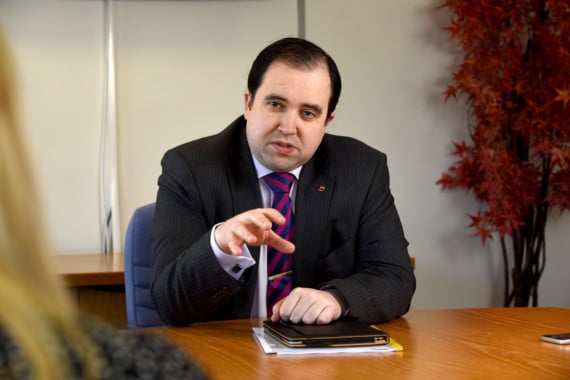
That was revealed in a written answer from the Minister of Health and Social Care David Ashford in response to a question from Garff MHK Daphne Caine.
Mrs Caine asked: ’What percentage of the current reception year children were assessed as being overweight or obese, broken down by primary school, and what the average is across the Isle of Man?’
Mr Ashford’s said that 16.3% of all reception children were overweight and 8.8% of them were obese, a total of 25.1%.




In England during 2016/17 school year that figure was 22.6% for the same year group.
He explained that children have their weight and height measured during their reception year by the school nursing service.
That data is then used to calculate the children’s Body Mass Index (BMI).
Mr Ashford said: ’Overweight and obesity in childhood is the greatest public health challenge we currently face.
’The director of public health is focussing on this in her independent annual report due to be published at the end of next month.’
However, while the results are from reception classes, the health department insist this doesn’t reflect upon the schools ’food and activity environment’.
Rather ’they reflect the home, family and community environment in which children have spent their pre-school years’.
This would suggest a greater societal cause for the children being overweight.
In the list of schools, Anagh Coar is the highest with 46.7% of the reception year class overweight or obese.
Schools with high percentages but small numbers such as Dhoon and St Thomas’s are difficult to compared as a small number can over-influence statistics.
Onchan School, for example, is listed as seeing 25.9% of reception year class being overweight or obese and Victoria Road in Castletown has 28.9%.
These schools both feature high up on the list of primary schools with the most children receiving school dinners, pointing to bigger societal issues affecting children’s early development health.
While insisting it is not the schools to blame for the weight issues, the Department for Health and Social Care pointed out that work is done across government to address the issues.
These include plans for a soft drinks levy, better known in the UK as the ’sugar tax’, the money from which will be used to fund programmes to help people lose weight.
Michelle Poyzer, senior health improvement officer, told the Examiner how the DHSC would be looking at all elements of people’s lives, not just children, in the effort to improve their health.
She said: ’It is not about blaming people or calling them lazy, it is about helping people to make better lifestyle choices, for instance active travel, walking to the shops or to work.’
Mrs Poyzer said the adoption of the ’daily mile’ by some schools was a positive step and schools needed to find what works for their pupils but most importantly children needed good nutritional dinners.
Comments
This article has no comments yet. Be the first to leave a comment.