

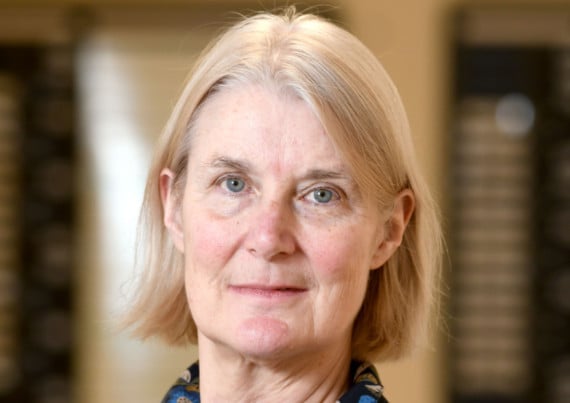
Health chief Dr Henrietta Ewart has clarified the island’s position on vaccine mixing following criticisms from a Port Erin tattoo artist.
On August 5, the government revealed that 8,000 eligible adults had not gone forward for vaccination.
In response, Iaint Nosaint tweeted the government, saying: ’I am one of the 8,000, after an allergic reaction to the first dose of AstraZeneca you have refused me a second dose of Pfizer three times and logged me as a refusal to take the vaccine. Which is worrying given the job I do.’
Mr Nosaint, owner of On The Road Tattoo, has criticised the government’s approach in refusing to mix the Pfizer and Oxford-AstraZeneca jabs, claiming the decision has been made based on a lack of knowledge regarding his medical history.


.jpeg?width=209&height=140&crop=209:145,smart&quality=75)

Mr Nosaint discovered that, due to his legal name change several years ago, the health services in the island only have access to his medical records from 2012 onwards.
He said: ’On Friday of last week, I discovered that my doctors and Manx Care doesn’t even have my complete medical records to hand.
’They have tried to force me into taking a vaccine for a second time that I am clearly allergic to, without any knowledge of my previous history of allergic reactions.
’I am now publicly requesting that I am offered a suitable vaccine.’
As a result of his previous allergic reaction to the vaccine, Mr Nosaint has been offered the option of having the second Oxford-AstraZeneca jab under supervision at Noble’s Hospital in case he goes into anaphylactic shock, something which he says is not an acceptable alternative.
’Surprisingly I have refused that offer and requested an alternative vaccine such as Pfizer.
’I have been told it is potential anaphylactic shock or nothing.
’Manx Care is refusing to vaccinate me despite several requests to receive a second dose.
’They have listed me as refusing the vaccine.’
In other countries, people have been able to mix jabs.
In the most high-profile case, German Chancellor Angela Merkel received a dose of Moderna as her second shot of coronavirus vaccine having had Oxford-AstraZeneca as her first.
The government in the province of British Columbia in Canada even allows people to opt-in for vaccine mixing as a readily available option, as their website states: ’Both the Pfizer and Moderna mRNA vaccines are effectively interchangeable and are safe to mix.’
stance
The Examiner asked the DHSC and Manx Care what the official government stance is on mixing vaccines, and whether anyone on island has been able to receive a different brand for their second dose.
In response, the director for public health, Dr Henrietta Ewart, said that the island receives its advice regarding vaccination from the Joint Committee on Vaccination and Immunisation (JCVI), which has produced detailed guidance on all aspects of Covid-19 vaccination.
This is published and available online in full as chapter 14a of the JCVI Green Book.
As the degree of Mr Nosaint’s reaction was not ascertained and presented to Dr Ewart, she could not comment directly on this case, however she did explain the guidance on the management of patients who have had a reaction to the first dose of Covid-19 vaccine.
She said: ’If an individual has an immediate reaction with systemic or anaphylaxis symptoms (sudden onset of airway, breathing or circulation problems), then specialist advice on second dose should be sought from an allergy specialist.
’Specialist advice should also be sought for people who have a delayed urticarial reaction (hives) only if this was severe enough to require medical intervention.
’People who experienced reactions to the first dose that do not fall into one of those two categories can have their second dose with the same vaccine. There is currently no routine guidance from JCVI to support switching vaccines for any group of patients.’
She clarified that patients who experienced blood clots after a first dose of Oxford-AstraZeneca should have Pfizer for their second dose.
In terms of mixing vaccines more generally Dr Ewart disputed claims that there is clear evidence on the effectiveness of this method.
She said: ’We should remember that currently there is no evidence on the effectiveness of vaccination in the situation where different vaccines are used for the two doses.
’The current trial and real-world evidence is based on using the same vaccine for both doses.
’Therefore, it is not currently possible to advise individuals what the effectiveness is likely to be if they ’swap makes’.
’Evidence on this (and whether using a different make for booster doses is appropriate) should be available from studies due to report in September.’
She added: ’So, if an individual has a reaction which does not fall within the categories defined by JCVI, they would be expected to have their second dose of the same make and we would not authorise a change to a different vaccine.
’This is less about "denial" of a different vaccine than it is about adherence to guidance and safety.
’There is an extremely small group of patients who require specialist assessment following a severe allergic reaction to a first dose and we would expect to use a different make if, and only if, advised to do so by the specialist allergist.
’Such cases would be referred to an allergy specialist in Liverpool or specialist advice sought here locally if available.’