

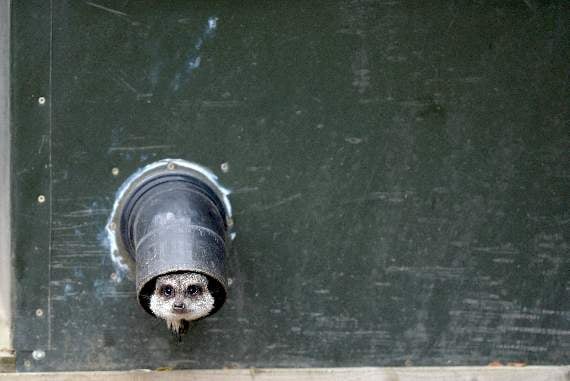
The Curraghs Wildlife Park was opened in 1965 and has since brought pleasure and adventure to islanders and tourists alike while also contributing to the crucial rehabilitation and breeding of endangered or at risk animals.
To keep up its popularity and success the ability to adapt to change and expand is crucial. This year is no exception.
In the summer the park acquired two silvery gibbons, Slamet a female aged nine and Nakula a male aged 10.
This species is the most endangered of all the gibbon species with only an estimated 2,000 remaining in the wild.
.jpeg?width=209&height=140&crop=209:145,smart&quality=75)
.jpeg?width=209&height=140&crop=209:145,smart&quality=75)
.png?width=209&height=140&crop=209:145,smart&quality=75)
If you’re willing to sit in the park’s parking area at around 8am you may even be lucky enough to hear the gibbons ‘sing’ - they’re known to ‘sing’ early morning every other day.
General manager Kathleen Graham explained that Curraghs Wildlife Park is the first small collection to have the honour of keeping this primate.
They have hopes of breeding the gibbons due to their conservation status in coordination with the Javan Primate Project who are working on breeding and rehabilitating the gibbons back into their natural environment of the tropical rainforests of Java. Though, whether any babies born at the park will have that chance is yet to be seen.
Kathleen said that they have already seen some mating behaviour so they are keeping their fingers crossed for a new arrival this year.
The new residents have their own purpose built enclosure which is the first thing you now see entering the park.
The small island behind the enclosure has been stripped down and equipped with ‘enrichment structures’ including rope swings and bridges for the gibbons to enjoy.
A new platform is also being constructed on the side of the moat so that visitors will be able to get closer to the action.
Kathleen explained: ‘This will have a new gibbon interpretation area and a little bit about the Javan Primate Project, a collection box for the project and a sound post so that you can listen to their song.’
As well as new residents moving in, including two female lynx who also have a new playground, there has been plenty of births within the wildlife park.
They include a tapir named Rio, a porcupine, two crab-eating macaques, three short clawed otter pups and a Lac Alaotra gentle lemur who was born on November 11.
Kathleen said the breeding of a gentle lemur in the park was a huge success as the species is critically endangered.
This particular species is only found around Lake Alaotra, Madagascar’s largest lake.
The park’s big project for the year will be a new residence for the lemurs which it’s hoped will be completed in time for the summer.
It will feature a large lemur walk-through area containing their entire collection of lemurs.
To complete the walk-through enclosure the park is also looking to introduce red ruffed lemurs to join the ring tailed, gentle and black-and-white lemurs.
Kathleen said that we could expect to see some ring tailed lemur babies at Easter.
This is good news for visitors and the species, which has just been flagged as endangered.
Unfortunately to make room for the large lemur enclosure they will have to say goodbye to the bats.
However Kathleen said the bats may be something they reintroduce in the future.
Not only does the park offer a fun day out for families and individuals but it’s also a great way to educate the younger generation on the impact humans have on animals and what canbe done to help.
As well as ongoing penguin enclosure improvements to try and promote breeding the team have to keep looking to the future to make plans on how the facility is going to grow and develop.
In 2018 the park hopes to acquire some smooth coated otters which are listed as vulnerable.
A Europe-wide breeding programme has just been set up to try and boost their numbers.
Kathleen said: ‘The biggest reason we need parks is education and to inspire people - there is nothing like seeing the animals there in front of you and being able to explain to people what is happening.
‘And it’s with that connection between them and the animals that people begin to understand.
‘It’s about getting people to care about the animals, our planet and the species.’
She added: ‘The breeding programmes are important because it is a back up population. There are some species that tragically only exist in zoos.’
Comments
This article has no comments yet. Be the first to leave a comment.