
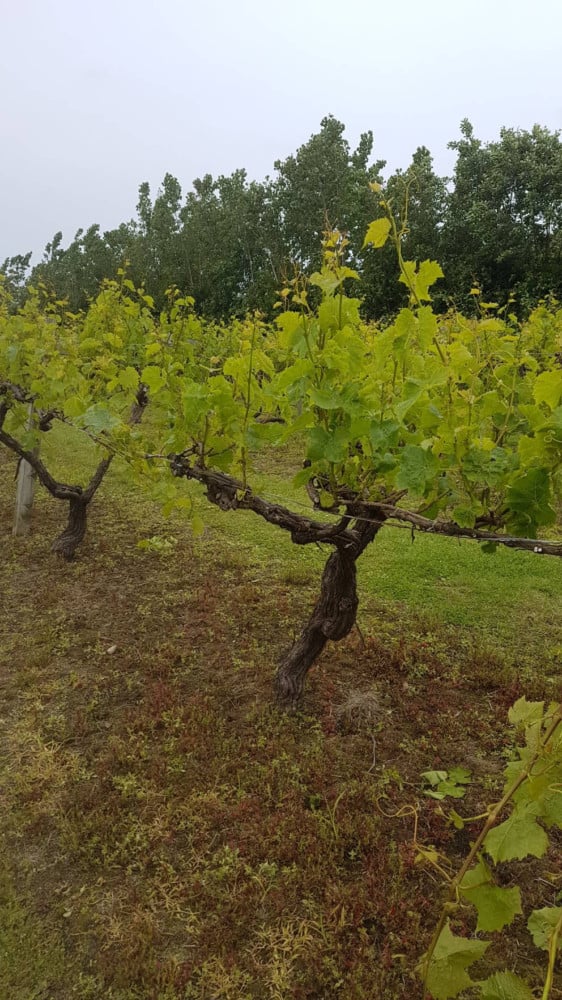
Food and Farming has been on a tour of Jersey, meeting farmers and growers and looking at some of the island’s unique products.
Jersey is the largest of the Channel Islands, a hugely wealthy jurisdiction with a kinder climate than our own island so you would imagine farming and growing would be comparatively easier there.
However, the reality is more complex than that and farmers and growers there encounter many of the problems also experienced by their counterparts here in the Isle of Man.
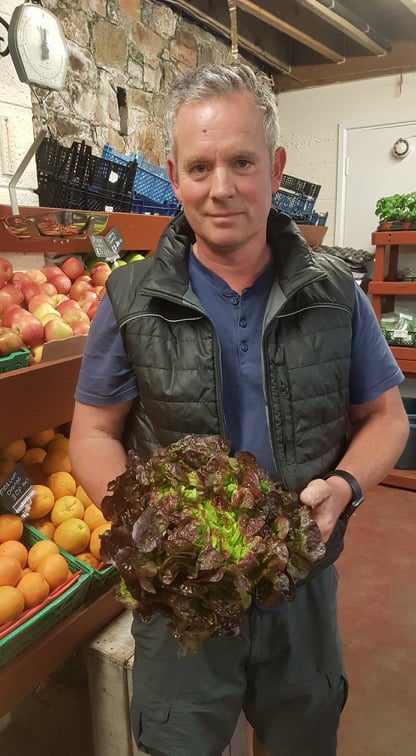
Andrew Lucas runs Lucas Brothers, the island’s largest farm shop, selling a wide range of fresh vegetables and flowers.



As you look across the wide sweep of the bay from St Aubin to the island’s capital, St Helier, the land they farm on which is part of the La Haule Manor estate, is the only stretch that remains undeveloped.
’We are now the only growers of lettuces in Jersey. Chefs used to want genuine Jersey products but now it’s all about the price,’ he says.
Tourism was already in decline in Jersey, even before the pandemic.
Hotels have been closing down and the sites sold to companies, including our own Dandara, for premium residential development.
When his elder half brother, Norman, took over the farm from his father and uncle in the 1970s, most of the flowers and produce they grew was exported to the UK but increasing transport costs were making this uneconomic.
Norman recalls: ’We were growing three quarters of a million gladioli bulbs at the time and it wasn’t getting the returns it should have done.’
He decided instead to sow his flowers and vegetables for continuity rather than one large harvest and set up the farm shop, originally on a sheet of plywood at the side of the road.
The strategy paid off and they were soon growing and selling enough to supply not only the shop but also local hotels and restaurants.
Their traditional rotation would see the planting of new potatoes, followed by a salad crop, and then winter vegetables.
It is said that the secret to growing Jersey’s renowned new potatoes is the use of seaweed to enrich the soil.
Norman remembers taking trailers down to the nearby beach to gather it after storms had brought it up onto the shore.
He says: ’If we could bring it in in September or October we could then what we call ’breeze’ it in using a very shallow plough.
’When you come to plough it in the springtime the skimmer on the plough tips it into the bottom of the furrow and it acts as a soil conditioner.’
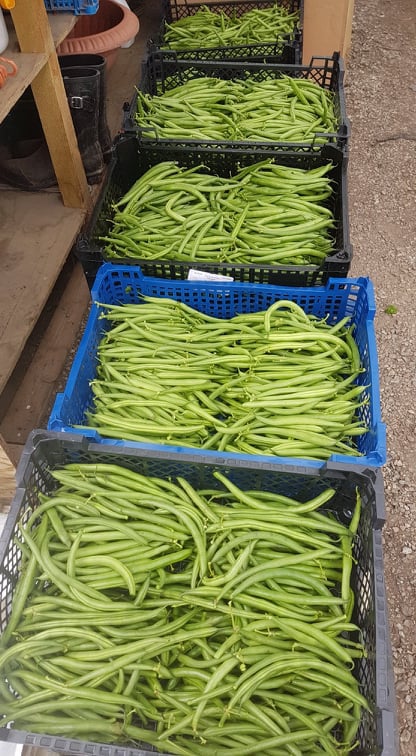
They still grow a range of vegetables on the farm including lettuces, herbs sweetcorn, green beans, courgettes, new potatoes and pumpkins.
However, since Andrew took over, the farm shop has grown its online presence and now sells a wide range of products including butchery, dairy and eggs as well as vegetables and flowers.
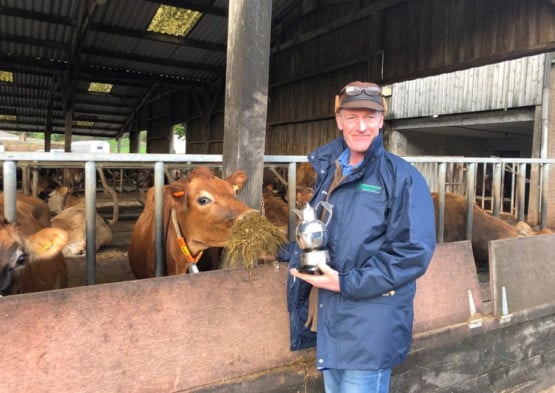
One of the newest products in stock in the shop is a range of gelatos made exclusively from milk from the Blanc Pignon Jersey cows.
The origins of this renowned dairy herd were born out of adversity. When the Germans invaded and occupied the island during the Second World War they visited the Le Cras family who own Blanc Pignon, and told them they wanted to take over their land for their own use. The family had just three cows at the time but Mrs Le Cras, being a canny woman, immediately went out and bought several more, which she put out in their fields.
When the Germans returned they were surprised to see how big the herd was and Mrs Le Cras pointed out that if she could not keep her land and her cows, how would she be able to produce milk for the troops?
The strategy worked, she was allowed to keep her land, and the Blanc Pignon herd was born. It is now 135 strong, with 60 currently being milked, and it is looked after by David Leng, who is married to Mrs Le Cras’ granddaughter.
He says: ’We’re very proud of our heritage in Jersey and our animal welfare is second to none.
’Covid has changed people’s mindsets. I think they are beginning to realise the value of what can be produced on the island.
’We always say our products are measured in food metres, not food miles: it is literally just 75 metres from the dairy to the production area, and all our packaging is recyclable.’
The farm also produces cheeses, flavoured butters, yogurt, and kefir and has a butchery unit. David came up with the idea of making small batch, artisanal gelato two years ago and has been developing the product since then. The flavours are Vanilla, Coffee, Salted Caramel, Garden Mint and Black Butter and they are delicious.
Black butter, for those who have not come across it, is a Jersey speciality and part of the traditional rural culture on the island.
Between 1600 and 1700, 20% of Jersey’s arable land was made up of orchards with the apples used to make cider. ’Black butter’, is made, not from milk, but from cider which is boiled over a fire for many hours until it is reduced by half. Then apple pulp, sugar, lemon, liquorice and spices are added so that you end up with an apple-flavoured, jam-like preserve which is actually very good.
A version made by the La Mare Wine Estate as part of their Jersey Farmhouse Provision range was the recipient of a Great Taste Award. It is available in the estate shop, along with their own wines, cider and spirits.
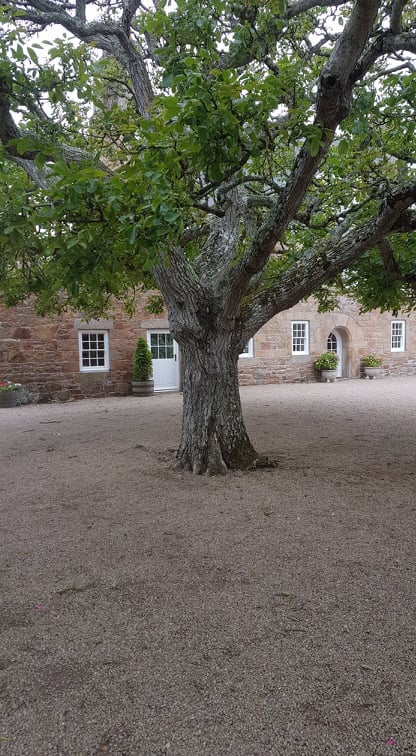
The estate dates back to 1797 when it was a working farm growing apples for cider. In 1972, Robert and Ann Blayney planted Jersey’s first commercial vineyard and developed La Mare to include not just vineyards but also the Jersey Distillery and the Jersey Farmhouse Provision range.
Their range of spirits includes Royal Gin and Royal Vodka, which is made using Jersey Royal potatoes. They also offer red, white, rosé and sparkling wines developed by their own winemaker, Daniel de Carteret, and their own Branchage Cider.
The name Branchage is taken from the strict Jersey laws regarding the trimming of hedges. It is the responsibility of landowners, including farmers, to ensure that they are cut so that no branches are encroaching onto the roads and pavements.
Each parish has a Roads Committee who send out inspectors, or Roads Police, around the parishes twice a year, to check that the work has been done.
We went out with one of the Roads Police, Tony Harris who explained that the reason for doing this is that some of the roads on Jersey are very narrow and the fire and ambulance services need to be able to gain access.
He said: ’It’s become more dangerous now because of the traffic and the buses - there’s all sorts of reasons why it’s done.’
Jersey farmers have their own union, the Jersey Farmers Union which, unlike its counterpart on the Isle of Man, is not affiliated to the UK NFU.
Jane Rueb, executive secretary of the Jersey Farmers Union explained: ’We do the same thing, representing our farmers and growers on the political scene and also helping farmers and growers source staff which is difficult at the moment.’
She went on: ’The growers who grow Jersey Royals just for export and sell into the main multiples in the UK, they’re the ones who we help to get seasonal staff.
’For growers wanting to grow anything other than Jersey Royals for export, they are competing with growers in the UK and other countries who get far more government help.’
Similarly to the Isle of Man, farm payments on Jersey are now linked to environmental works and all growers and dairy farmers on Jersey who receive subsidies must join UK-based agricultural accreditation body Leaf (Linking Environment and Farming) which is committed to sustainable food production and environmentally-friendly farming.
You can find out more about Jersey produce and products at www.genuinejersey.je.
Comments
This article has no comments yet. Be the first to leave a comment.