
Today, on the Isle of Man, you can read Manx Gaelic in many books, on signs, on the sides of buses and buildings, or hear it being spoken on the radio, in conversation groups or by children in many of the island’s schools.
Once labelled a dead language by Unesco, it could be said that the Manx language is in a reasonably healthy state.
However, it was said this week that if it wasn’t for Dr Brian Stowell, who died on Friday, aged 82, the language would have died out before the turn of the century.
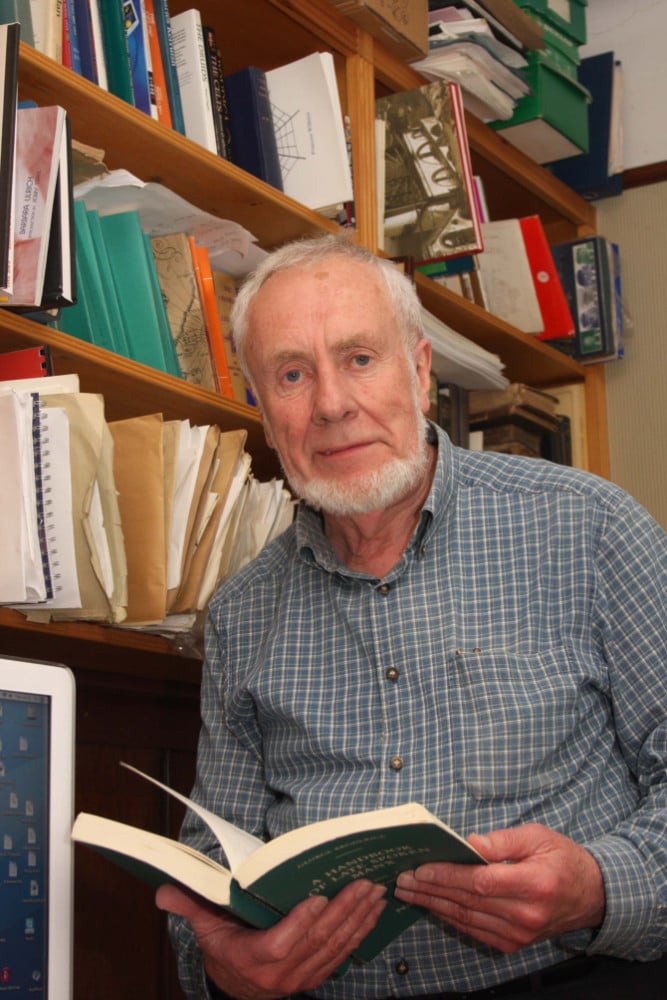
A respected teacher and nuclear physicist by trade, Brian turned his formidable intellect towards preserving the Manx language in the early 1950s, helping Douglas Faragher record the last native speakers in the island for a project backed by the Irish Folklore Commission, alongside such contemporaries as Bernard Caine RBV.
.jpeg?width=209&height=140&crop=209:145,smart&quality=75)

At the time, Manx was seen as a backward and primitive language, and one that had associations with poverty.
’He definitely helped to bridge the gap between the last native speakers and the revival,’ said his daughter Brigid. ’To do that, he had to be a strong, independent-minded person.
’People didn’t see the value in it, and they thought it was rude to speak it in front of tourists. He used to say that people just expected it to die out, and that would be that.
’So he had to fight to save the language, and also the people who didn’t want the language saving. He was quite a rebellious character, and if he set his mind to do something, he would do it, no matter what people would think or say.’
He moved off the island shortly after to study physics at Liverpool University and, although he spent more than 30 years teaching science in secondary schools, working as a nuclear physicist at the Capenhurst nuclear plant in Cheshire and ultimately as the head of his department at Liverpool Polytechnic, he never lost his interest and his love of the Manx language, culture and identity.
He continued to study the language, and constantly adapted and created new words to keep the language current and relevant.
It was at Liverpool Polytechnic in the early 80s where Phil Gawne and Adrian Cain both came across Brian, who was teaching Irish language classes in his spare time.
’We ended up learning Manx from him in one of his physics labs,’ said Phil.
’We would also have lessons in Manx culture and identity. He was responsible for creating many new words in Gaelic, and helped the language move in to more modern times.
’He especially developed scientific terms in Manx Gaelic. When he was keeping sensitive notes about his nuclear work, he would write them out in Manx Gaelic, and he would argue that they were perfectly safe, as he was the only person in the world who could understand them.’
Brian eventually returned to the island in 1991 to take up the role of the first Manx language officer, employed by the then Department of Education, and to set up the group Caarjyn ny Ghaelgagh, alongside Phil and Fiona McArdle.
He created the peripatetic teaching of Gaelic in schools, and published and translated many books, CDs and videos, creating a huge archive of material that went on to help cement the future of Manx Gaelic education.
’Brian had the ability to bring the language back from the point where there were maybe half a dozen speakers to the situation today, where we have hundreds of people talking and showing an interest in the language,’ said Phil.
’He was one of those people who was blessed with such self-belief and that helped him get his ideas across and enthuse lots of people around him. You need people like that, and you look back and see how simply and easy, and with such little fuss, that Brian got people interested, and wonder why it hadn’t been done before. But of course, it comes from seeing things and approaching things in the way that Brian did.’
Phil eventually took over as the language officer, and he himself was replaced by Adrian Cain, who was also inspired by Brian.
’He was always a big believer in just getting on and doing things,’ said Adrian.
’He always taught me when learning the language never to get caught up on the intricacies of grammar, but to make sure you use the language in everyday settings.
’It is difficult to know where the language would be without Brian today.’
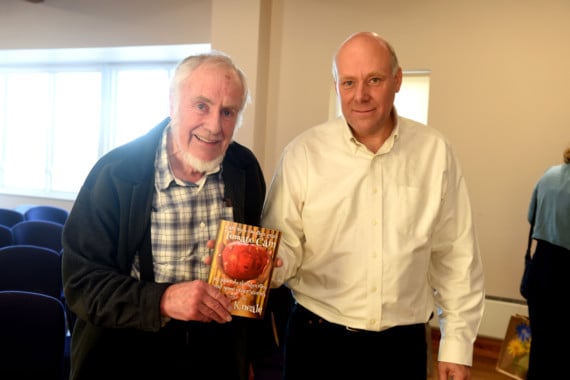
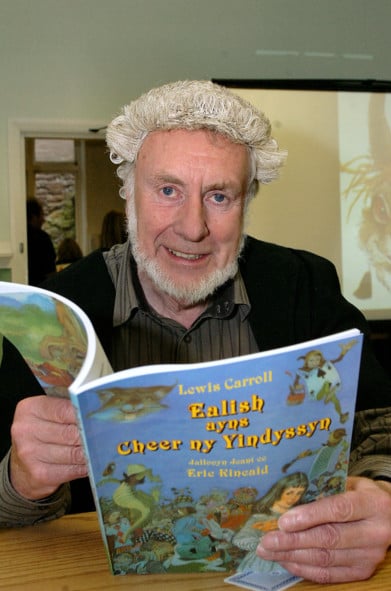
Brian is remembered by those that knew him and worked alongside him as a man with a passion to share his enthusiasm and knowledge about the Manx language and culture with as many people as possible, whether it was one-to-one lessons, creating language courses or translating well-known books, such as Alice In Wonderland in 2007, writing the educational book ’1000 words in Manx’, writing and editing dictionaries or recording CDs of Manx music and singing.
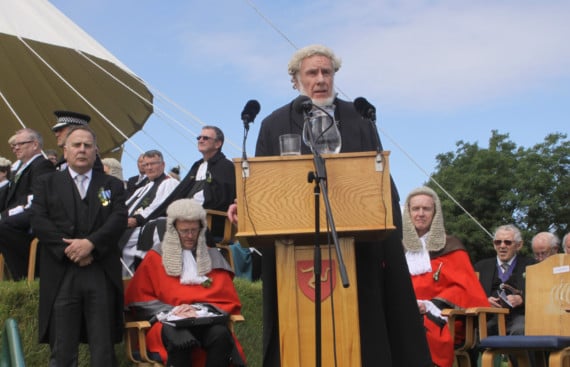
He created the long-running, bilingual Manx Radio programme Moghrey Jedoonee , 20 years ago, first presenting alongside Andy Wint, and then with Simon Clarke, before ill health forced him to hand over the reins to Phil last year. He was the driving force of the Mannin branch of the Celtic Congress , which helped to create stronger links and awareness of Manx with the other Gaelic speaking countries, and held the ceremonial post of Yn Lhaihder, the Reader, on Tynwald Day from 2001 to 2012.
His work was recognised, firstly with the award of the Reih Bleeaney Vanannan, the island’s highest cultural honour, in 2008, and in 2010 with a Tynwald Honour for his outstanding contribution to Manx life.
’To me, Brian was an inspiration and a really good friend, and he’ll be sorely missed by myself and by others,’ said Phil. ’If it wasn’t for Brian, the Manx language would have simply died out during the 80s and 90s. He kept it going.’
The family have organised a bilingual, humanist funeral service to be held in the Promenade Suite at the Villa Marina on Monday, January 28 at midday.
Following a private burial, there will be a further reception at the Colonnade Suite.
Brigid said the family have created a time during the funeral service for people to pay their own tributes to Brian, by sharing stories or memories they may have.
Comments
This article has no comments yet. Be the first to leave a comment.