
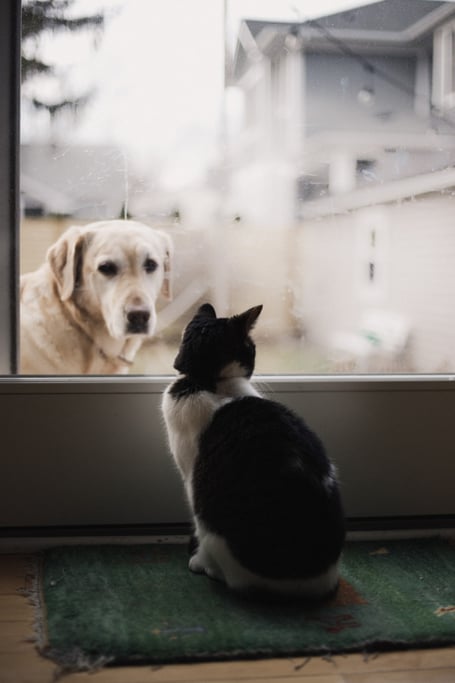
Tenants of local authority homes in Ramsey have been reminded that there is a limit on the number of pets they can keep.
The town’s commissioners reviewed their policy a few months ago and cut the number of pets that a tenant could have.
The rules affect only dogs and cats.
Before 2018, the limit was three in total (two dogs and a cat or one dog and two cats). Now it’s two of either.



.jpeg?width=209&height=140&crop=209:145,smart&quality=75)
The Examiner contacted the local authority after a woman, who didn’t want to be named, told us she feared she would have to give up one of her cats under the two-pet policy.
To have a pet, tenants must have permission from the authority and anyone who doesn’t have permission is violating their tenancy agreement.
The clerk of the commissioners, Peter Whiteway, said this was standard throughout government housing.
He added: ’When tenants sign their tenancy agreement, our officers will go through all the clauses to explain them clearly before the agreement is signed.
’This type of clause is quite common and, in private sector accommodation, you will often find that pets are not permitted at all.
’The commission reviewed its policy on pets in July 2018. Prior to this date the policy had been that one dog and two cats could be kept. In any case the landlord’s consent was always needed.
’Anyone who had consent to keep more than two pets under the previous policy can keep them.
’However, they would then need approval to replace any pet, and would be restricted by the new policy.’
The new guidance notes state that people may have two dogs or two cats or one of each. However, if residents live in a block of more than four flats, they can have only a small caged animal.
The woman who approached us was concerned that the commissioners could use inspection of properties to check on pets and afraid she may have to give up one or more of her pets.
But Mr Whiteway said: ’The commissioners do undertake regular inspection of our properties with the aim of visiting every property at least once every three years.
’This is done to check the condition of the commissioners’ assets, any repairs or improvements, and the manner in which the tenant is meeting their tenancy occupancy obligations.
’The inspections aren’t specifically aimed at checking for animals however they can and do occasionally highlight cases where animals are being kept without approval.’
Comments
This article has no comments yet. Be the first to leave a comment.