
The Isle of Man Photographic Society was delighted to have Charles Guard as our guest presenter - a passionate speaker with a love for the island, highly articulate and with great knowledge of all aspects of our history and culture.
He is, of course well known as the ’face’ for many videos of the island, but perhaps less so as a music composer and (once upon a time) as a member of the island’s planning committee.
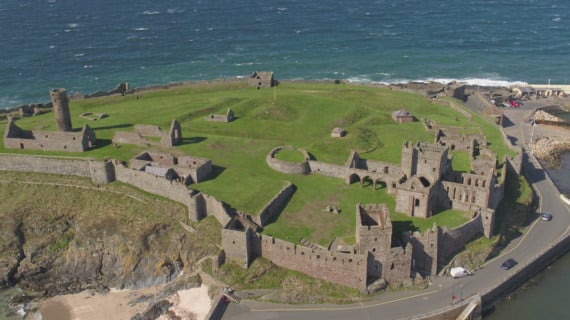
Our evening with him came in two halves - the first, an exploration of the island through drone photography and a comparison with filming via helicopter to get similar aerial images.
It was quickly evident that drones give access, ready availability and an affordability not possible with a helicopter.


.jpeg?width=209&height=140&crop=209:145,smart&quality=75)
Historic sites such as Cronk Sumark, the tholtans of the Sulby Valley, Peel Castle and Castle Rushen, the mine workings around the Laxey Valley, Bradda Head and Maughold, were all explored in great detail.
Charles’s experience in the planning committee also made a contribution - a liking for much of our urban landscape such as Douglas promenade, and the town centre of Peel, though perhaps not the tower at Peel power station.
A striking sequence of images showing coastal erosion on the island’s west coast made for a major discussion - the erosion now endangering housing in the Kirk Michael area, whilet the displacement of the gravel banks at the Point of Ayre and continuing erosion around the old Wrights Pit East tip will in the not too distant future cause severe issues for government.
The second half of our evening covered the island’s activities during World War Two - including the conscription of many workers, the cessation of tourism and resulting economic difficulties for the hotels and boarding houses, the use of the iIsland as an internment centre, the development of Jurby, Andreas and Ronaldsway airfields and their use for training of aircrews, and the four radar stations built around our coastline.
The remnants of these activities - e.g. the bunkers, pill boxes and bomb stores - are now almost unique in the British Isles, and thus well worth preservation as being of major historic significance, but need government action to protect them - which is yet to happen.
Society president Jeremy Broome-Smith gave a well-deserved vote of thanks for an excellent evening.
Our next meeting, on November 20, will be our first assignment competition of the season.
The set subject is On The Beach, with Clare Payne bringing her experience and skills to judge for us.
The society meets at the Arts Society Building (Thie Ellyn) in Worthington Road, Douglas, on Wednesday evenings, all meetings starting at 7.30pm, and all open to the public (with a modest fee for non-members).
More details of the society and its programme can be found on our website at www.iomps.com.
Chris Blyth
Comments
This article has no comments yet. Be the first to leave a comment.