
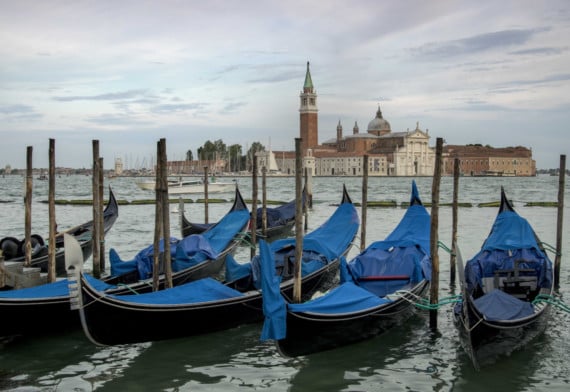
The extraordinary unique city of Venice on the Adriatic Sea was the subject of a photographic presentation by society president Chris Blyth to start 2018 in picturesque style.
Built in a shallow lagoon, the city is located on an archipelago of 118 islands formed by 177 canals, connected by more than 400 bridges.
Chris explained that, until the 15th century, Venice had been a major player in Europe, both politically and economically, and the Venetians were highly accomplished seafarers and traders.
The wide extent of their influence can be seen today with the Lion of St Mark symbol appearing on buildings in many countries, especially those bordering the Adriatic and Mediterranean.
.jpeg?width=209&height=140&crop=209:145,smart&quality=75)
.jpeg?width=209&height=140&crop=209:145,smart&quality=75)
.jpeg?width=209&height=140&crop=209:145,smart&quality=75)
.png?width=209&height=140&crop=209:145,smart&quality=75)
Chris outlined the system of government pre 1797 with the Doge, the Grand Council and the Senate which established a careful balance of power.
Now, Venice is an important tourist attraction for its celebrated art and architecture.
Well over 20 million people visit each year.
Inevitably, with an indigenous population of about 50,000 and an area of 15 square miles, this influx causes overcrowding and environmental problems for the fragile ecosystems in the lagoon, leading to calls to develop a more sustainable tourism strategy.
Unsurprisingly, the expensive gondolas, handed down from one generation to another, featured prominently in the presentation.
Their unusual construction was contrasted with the smaller Traghetto, operated by two boatmen, and flat bottomed Sandolo. With the absence of roads, the water is essential to transporting people and goods around the city.
Chris then transported us across the lagoon to visit the islands of Murano, famous for its glassware, Burano, with its intricate lacework, and the more tranquil, smaller island of Torcello with its medieval churches.
Venice is a bit like paradise to any photographer and Chris had captured the essential essence of this beautiful city and its key landmarks with considerable skill, including the splendid Doge’s Palace, St Mark’s Square, the magnificent St Mark’s Basilica, clock tower and Campanile, and the Rialto Bridge,
His vibrant images left his audience desiring to visit this truly special destination or, in several cases, to return again.
The ’Cregneash summer project’ followed with 7 sets of about 12 images taken by members during last summer. Each set had a different theme and demonstrated how photographers can see similar subjects but translate them into their own individual style. It was rather alarming, however, to see evidence of an integral heritage element in the ’Story of Man’ looking so lacking in investment and badly in need of a plan for its future maintenance and preservation.
On the January 17 at 7.30 pm at Thie Ellyn, we have our third open print competition and the entries are due in for the open digital competition.
Further information about the Society can be found on the website iomps.com.
Antony Hamilton
Comments
This article has no comments yet. Be the first to leave a comment.