
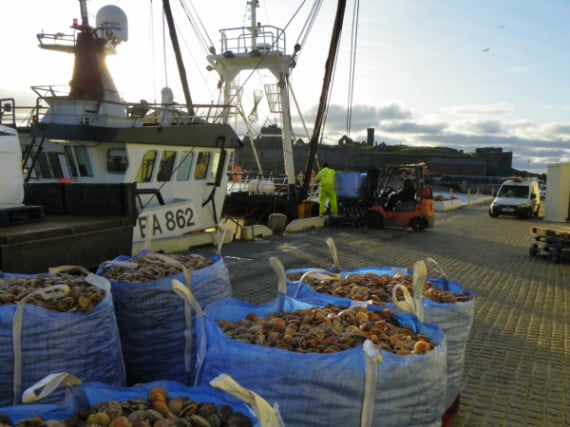
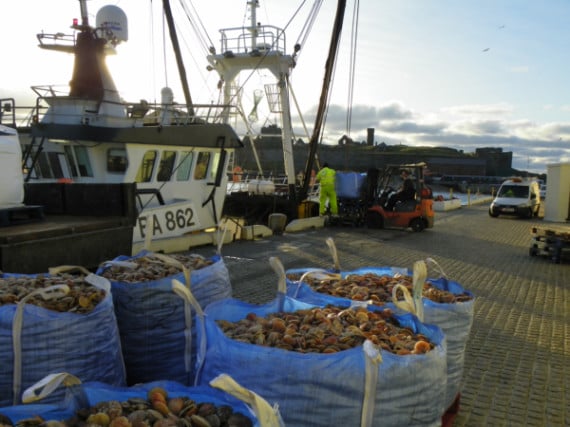
The daily catch limit for king scallops has been increased - in recognition of the lucrative pre-Christmas market for this sea food product.
A daily catch limit was set at 560kg per vessel at the start of the season on November 1.
But following a review, this has been increased temporarily to 630kg.
This will apply until December 22 when the fishery will close for the festive season, before returning to the previous level of 560kg when the fishery reopens on January 3.

.png?width=209&height=140&crop=209:145,smart&quality=75)
.jpeg?width=209&height=140&crop=209:145,smart&quality=75)
The Scallop Management Board made the recommendation to the Minister to increase the daily catch limit, having considered the catch data from the first four weeks of the king scallop fishery.
The board is made up of representatives from the catching and processing sectors from the Isle of Man, England, Scotland, Wales and Northern Ireland as well as independent scientists.
In making its recommendation, members of the board looked at feedback and a number of options were considered - with the figure of 630kg then agreed as a compromise across the range of views expressed.
Though a number vessels have not managed to land the current daily catch limit of 560kg, several have, and these vessels and local processors would likely benefit from this increase.
Environment, Food and Agriculture Minister Geoffrey Boot supported the increase after carefully considering the recommendation from the board.
Mr Boot said: ’This proposal may benefit processors and some of the larger vessels in light of the pre-Christmas market; however, this benefit needs to be carefully balanced against the potential for any increase at this point in time to affect the longevity of the fishery.
’I hope that fishers and processors that can take advantage of this pre-Christmas market do so, and that those that consume this high quality product are aware of the careful management decisions that are taken in order to ensure a sustainable and economically viable fishery for the future.’
Questions about the Manx fishing fleet were raised in Tynwald last week.
Mr Boot, in a written reply to a question from Lawrie Hooper (LibVan, Ramsey) said the local fleet has remained largely static, at 62 in 2015-17, 66 in 2017-18 and 64 in 2018-19.
In contrast, the number of non-Isle of Man vessels licensed to fish in Manx waters has gone down from 198 in 2015-17 to 127 in 2018-19.
Mr Boot said: ’This is probably largely due to the phased introduction of restrictive management measures such as the requirement to demonstrate an appropriate track record for certain key species such as king and queen scallops and whelks.’
Mr Boot said the 27 or the 39 licences issued to fish for queen scallops within Manx waters this year were to Manx vessels.
He said many of the non-Manx vessels fish for species like herring which are not routinely caught by local vessels.
Comments
This article has no comments yet. Be the first to leave a comment.