
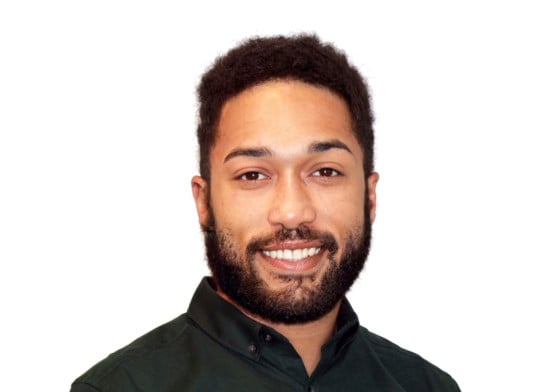
A man who is dedicated to promoting diversity and wellbeing in the workplace has been recognised for a global ethnic minorities award, writes Helen McKenna.
Luke Adebiyi, aged 29, was one of the finalists in the Future Leaders category in the EMpower Top 100 Ethnic Minority Future Leader Role Models 2020. There were more than 5,000 nominations.
The annual lists celebrate inspirational people of colour who are not senior in their organisations but making a significant contribution to ethnic minority people at work.
He has also been nominated in this year’s Isle of Man Newspapers Awards For Excellence for the Local Hero category for his work at Capital International as ’wellbeing lead’ for the Isle of Man and South Africa offices.

He has been recognised as the director for the island’s first Isle of Pride and for being an advisory member for wellbeing consultancy firm, Olywell, founded by double-Olympian hurdler Jack Green.
He also does work for InsideOut, a foundation focussing on workplace wellbeing and was short-listed for an award. More recently, he has taken on an ambassador role for Let’s Improve Workplace Wellbeing, a global movement.
Luke was recently appointed as vice-chair of the Isle of Man Business Network following being a committee member for a year and delivering keynote speeches to the networks members.
As well as this, Luke is an executive committee member for the Princess Diana Hospice at Home Trust, an advisory board member and is the founder of #UCanTalktome, a mental health social media campaign.
He has won numerous accolades recognising his work in ensuring mental health and diversity is prominent in the workplace since 2018 and says he’s determined to continue that.
Luke said: ’With diversity, especially on the island as we have such a diverse population now compared with five years ago, there’s a lot more individuals and companies moving here because we have such a good reputation and way of life.
’But we also need to encompass that diversity on a greater level - within businesses, for example, giving opportunities to people with disabilities and simple things such as job roles.
’In the UK, if you have a disability within the recruitment process, you’re automatically given an interview just because disability has such a far reach, it’s unfair to only be showing yourself in the best light through a job application [alone].
’It’s [the need for] improving the recruitment process overall, having a goal succession plan which might include: is there a broad split of 50/50 male and female staff in 2030.
’Are you going to have at least 20% of people from an ethnic minority background in senior management roles?’
Luke added: ’It’s almost creating strategies and internal networks within businesses to drive that agenda. I see quite a lot of people locally have forums on this issue now, where they look to improve things. It’s not just business employees that have diversity, but their clients too.
’But it’s not just having that agenda it’s actually embedding it into the organisation. It’s the same with wellbeing. It’s not so much sending everyone on a mental health first aid course and "that’s it", it’s not a tick box exercise.
’It’s: What are we doing with those people who are qualified? Are we checking regularly that they know what they’re doing? Are we compromising initiatives for staff to feel as if they were struggling would they tell their line managers and training them, and are we giving access to materials for colleagues such as counselling, highlighting phone apps with mental health training.’
Luke said that mental health issues for men can be less prominent.
’Some people are too afraid to voice their problems,’ he said. ’Certainly in the male population it’s a bit of a lower proportion of people opening up and talking about their feelings.
It’s breaking the barriers a bit more about how men and people are expected to feel and portray themselves to others.’
Luke began his path on championing diversity, mental health and wellbeing in the workplace after suffering from anxiety.
’For me, it became a thing of normality and I had panic attacks and things thinking it was normal.’ he said.
’I was waking up in the middle of the night and even after taking holidays from work, when I went back in on Mondays, I’d panic.
’It was only after I had a panic attack in the office one day that my line manager said they thought I was suffering from anxiety. I took medication but it would give me bad hallucinations and I’d panic even more.
’I stopped taking them and decided to write about it instead, speaking up hoping that getting it out there for Mental Health Awareness Day 2017 would help. I wrote a blog for my employer’s [webpage] story. It went out to 60,000 colleagues over four continents and I had so many people message me saying that they felt similar.’
Luke went on after his blog was published to speak at Stonewall, a leading LGBTQ+ charity conference, in Westminster, speaking to more than 4,000 delegates about his story.
He said: ’Quite a lot of people from an Afro-Carribbean background have it within their culture, that from an early age to always be successful and no barriers should come in your way.
’It’s making sure that people can progress a lot more and things that they can use to cope with life and not to feel segregated.
’I think the island is a very inclusive island and I’ve never come across anything that has been untoward. The problem I think is unconscious bias, the words that are spoken which people might think are a "jokey" thing to say, but it’s not to who it’s spoken to.
’For example, "you’re so gay" can affect someone that they might not tell others it offends them.
’As an island, I think we reacted well to the Black Lives Matter campaign, but there’s always a minority, wherever you are, who might be from an older generation who might have different opinions and brought up in a different way.
’I think there’s still a lot of educational initiatives that need to happen to educate the younger generation - the group People of Colour (POC) are doing a great job of that.’
He added: ’I still think there’s a long way to go and explain the background/real life stories of people [of different ethnicity], be "one island", do away with discrimination of age, race, gender, sexuality and accept everyone as they are.’