

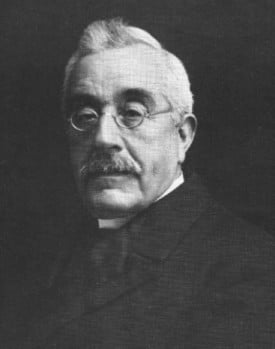
Jill Drower, author of a fascinating new book on the history of Cunningham’s Camp, set out to put the record straight - Butlin’s was not the first holiday camp.
In fact, the camp which Jill’s great grandfather Joseph founded was operating on a large scale while Billy Butlin was still in short trousers - and it set the standard for the others that followed, writes Adrian Darbyshire.
Her book ’Good Clean Fun: A Social History of Britain’s First Holiday Camp’ marks not only the 120th anniversary of the start of Cunningham’s but also another poignant personal anniversary - it’s 10 years since the death of her brother Roly, who was well-known in the island as a poet and satirist.
’Roly always said I should re-research Good Clean Fun, and so I have dedicated the book to his memory,’ said Jill from her home in Battersea.
.png?width=209&height=140&crop=209:145,smart&quality=75)


.jpeg?width=209&height=140&crop=209:145,smart&quality=75)
She first wrote a book about Cunningham’s back in the 1980s but has revisited the topic after noting that historians were again making the common mistake that holiday camps began in the 1930s with Billy Butlin and the Holiday with Pay Act.
Jill says: ’Over recent decades, Cunningham’s has once again, disappeared from view.
’Books on holiday camp history still confine Cunningham’s to a pioneer, small-scale role with the Holidays with Pay Act of 1938 being given as the reason holiday camps initially grew in popularity. Although way overdue, the Holidays with Pay Act does not explain the sudden large increase in holiday camp numbers before the First World War.
’It’s still the case that it is only really in the Isle of Man and in a few small academic circles that people are aware of the true origins of the British holiday camp.’
Joseph and Elizabeth Cunning started out in Liverpool as bakers to Cunard and other shipping lines.
The area of the city where the family settled - by the docks in the North End - was notorious for its destitution, beer houses and brothels.
Active Presbyterians, the Cunninghams believed in taking the Gospel out to the people and were involved in the Gordon Institute and later, the Florence Institute - known as the Florrie - which opened as Britain’s first purpose-built working lads’ club in 1890.
As a young married woman, Elizabeth Cunningham noticed a newspaper advertisement extolling the glories of Laxey as a holiday resort. She took her two boys there that summer, and was found lodgings.
Boys from the Florrie were later taken there by Joseph, paving the way, following a falling out with the Florence Institute committee, for the launch of the Cunningham’s Young Men’s Holiday Camp.
Cunningham’s changed from being a camping holiday to a holiday camp in 1898, 120 years ago.
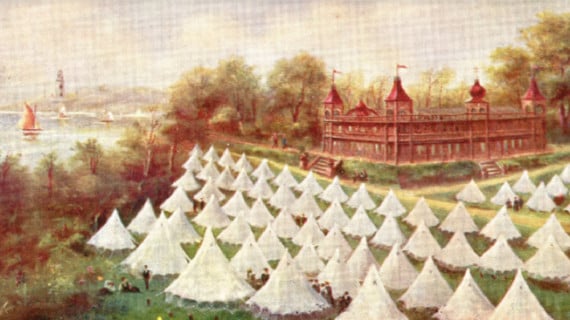
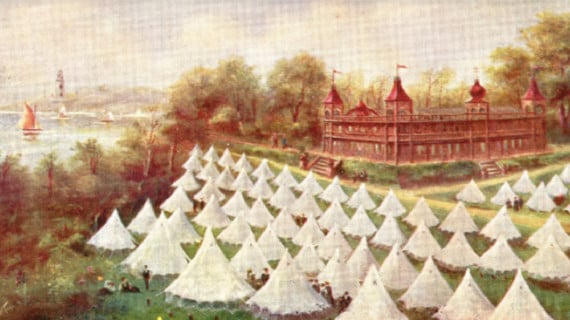
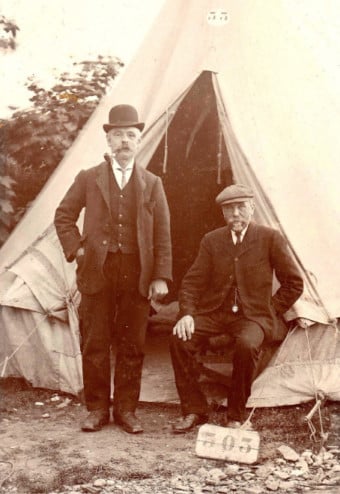
The original, all male, tented city was established at Howstrake, which attracted up to 600 men per week.
Its success led in 1904 to the acquisition of five acres of agricultural land at Victoria Road where some 1,500 tents and a 100ft dining pavilion were erected for the March-October season.
The appeal of Cunningham’s broadened almost immediately after the holiday camp was set up. It started with young lads - clerical workers and factory workers -and moved upmarket to the middle classes and through the generations, so that eventually grandfathers went to Cunningham’s with sons and grandsons.
In her book, Jill stressed the importance of Elizabeth’s role in the venture. ’In fact, Joseph could not have built up the holiday camp without her know-how,’ she said. ’Joseph was the one with the grand ideas but he needed Elizabeth’s organisational skills to make the camp a going concern.
’Her management was excellent, given her accountancy training, and her great head for figures.’ Jill is calling for blue plaques to be erected in honour of the Cunninghams.
Much has been said about Cunningham’s being a men-only and teetotal holiday camp.
But Jill says it is surprising that the men-only teetotal rule continued unchallenged for so long. She says: ’My uncle Joe did shifts at the entrance in the 1930s and said that after closing time, if a camper was able to walk through the gates supported by his friends, then he did not get stopped. By the late 1930s the teetotal rule was unworkable.
Jill says it is not true that women were never allowed to enter the camp.
She says: ’Women were not allowed into the camping grounds where the tents were pitched, but were free to roam the gardens, the palm court and roof terrace and were encouraged to come and join the morning dances.
’It became something of a local joke that women made a beeline for Douglas as the number one singleton tourist destination!’
In 1914 the Camp, cleared of its usual campers and staff, was requisitioned as an internment camp for enemy aliens. During the Second World War, the camp was again requisitioned, but this time to provide a training school for the Royal Navy, HMS St George. After the war, the site was sold to a Blackpool businessman and over the years became developed for housing and holiday accommodation.
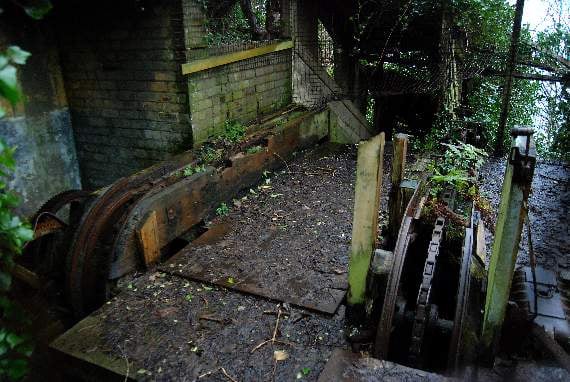
A long-lasting relic was the holiday camp escalator which lay almost forgotten for half a century until it was demolished on safety grounds in 2013. The lower station, an imposing structure complete with an archway and castellated turrets, still survives.
â?¢ Good Clean Fun: A Social History of Britain’s First Holiday Camp will be on sale in Manx bookshops in December, price £25. It will make an ideal Christmas present for anyone interested in social history.
Comments
This article has no comments yet. Be the first to leave a comment.