
The biggest news story of the moment is undoubtedly the spread of coronavirus, or Covid-19, with hourly bulletins advising us about its increasing impact around the world.
Currently there is no evidence that companion animals can be infected with, or spread, the Covid-19 virus although it is likely that it originated from an animal source.
However, there is a report of a dog in Hong Kong that tested with a ’weak positive’.
Its owner is infected with the virus and so it is still uncertain as to whether the dog, which has not developed any clinical symptoms, has acquired the virus through ’environmental contamination’.




It is worth noting that strains of the coronavirus, although not Covid-19, are found quite commonly in companion animals, and vaccines exist that can treat the symptoms very successfully.
While so little is known about Covid-19 the World Health Organisation (WHO) recommends that people who are sick with the virus should limit their contact with animals, just as they should do with people.
Where possible, they should have another member of their household care for their pets, and they should very definitely refrain from petting and kissing their animals.
Perhaps the only positive thing to arise from the Covid-19 outbreak is that the advice we’re being given about hygiene is good, old-fashioned common sense.
We should all wash our hands more frequently and be mindful of touching our faces, and this is particularly good practice whenever we’ve been contact with animals.
While we may be lucky in the Isle of Man and never have a confirmed case of someone being infected by Covid-19 (at the time of writing), it is useful to know what the WHO recommends in relation to companion animals.
If a pet develops an unexplained illness and has been exposed to a person with Covid-19, the owner should speak to their veterinary practice but they should not visit it unless told to do so.
Planning ahead, without panicking, it is advisable that pet owners should consider the following:
Identify a family member or friend who can care for your animal if someone in your household becomes ill with COVID-19.
Keep you animal’s vaccinations up-to-date in case you need to place them in a boarding establishment.
If your pet is on medication make sure the administration directions are written down alongside the prescription details.
And now for a good news story!
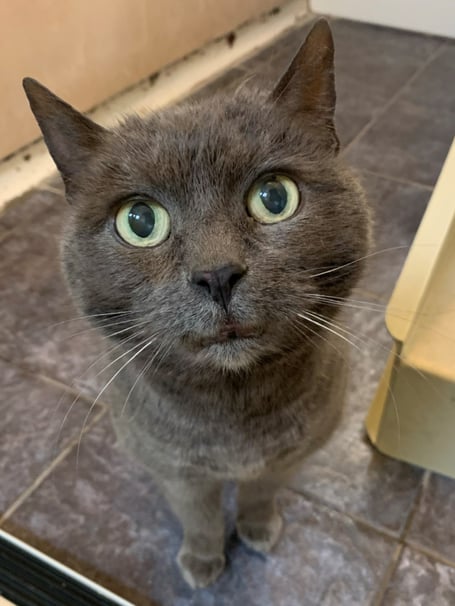
Suzie the cat was brought to us last week as a potential stray, and we were delighted when our microchip reader detected a chip. However, the owner’s details on the microchip company’s database were out of date and so we couldn’t get in touch with them straight away.
Luckily our social media post about Suzie worked wonders, and it wasn’t too long before her owners contacted us. We were amazed to be told that Suzie has been missing for two years, and that she had been found 13 miles from her home.
Please make sure you cat is microchipped, and don’t forget to keep your details up to date. If you’re unsure of your pet’s chip number or microchip company, get in touch with your vet or with the ManxSPCA and we’ll do what we can to help with updating your details.
Comments
This article has no comments yet. Be the first to leave a comment.