
There is overwhelming evidence to suggest that training animals using positive, reward-based training is not only better for the animals’ welfare, it also produces more effective, longer-lasting results.
So it is all the more surprising that electric shock collars (ESCs) are being increasingly marketed as training aids and mis-sold to dog owners, in particular, as a quick and humane method of training.
They can be easily purchased on the internet from well-known brands such as Garmin, with catchy names like ’Sport Dog’, and the latest models even link up with smartphones.
They are legally available in England and the Isle of Man, but they are banned in Wales and will shortly be banned in Scotland.

~2-(1).jpeg?width=209&height=140&crop=209:145,smart&quality=75)
-(1).jpeg?width=209&height=140&crop=209:145,smart&quality=75)

When fitted the ESC delivers an electric shock via a remote control or an automatic trigger such as a dog’s bark.
The theory is that, having received a shock, the dog is more likely to do what is asked.
Research commissioned by the UK’s Department for Environment, Food and Rural Affairs has shown that, perhaps unsurprisingly, many dogs show signs of stress when they are fitted with an ESC.
They also show signs of pain, with many yelping when they feel an electric shock.
The Isle of Man’s Animal Welfare Act should be making its way through Tynwald this year, and once the Act is in place it will enable ’orders’ to be drafted.
Such an order could prohibit the use of ESCs.
Meanwhile, what can we do?
If you come across a dog wearing an ESC (they are usually quite chunky with a tell-tale box attached) encourage its owner to speak to their vet, or to us, about the efficacy of the ESC as a humane training device.
We need to make the use of ESCs culturally unacceptable on the Isle of Man, and not wait for legislation to take effect.
Cat shock collars are also readily available and sold as a way of preventing unwanted behaviours such as scratching of carpets, or spraying on to furniture.
Cats are notoriously difficult to train and it is most likely that using an ESC on a cat will cause confusion and stress, and perhaps even exacerbate the unwanted behaviour.
A simple alternative is to place orange or lemon peel on the surface you wish to deter your cat from using, because cats don’t like citreous smells, or use lavender (another cat-repellent scent) fabric fresheners on rugs and curtains that are being used as scratching posts.
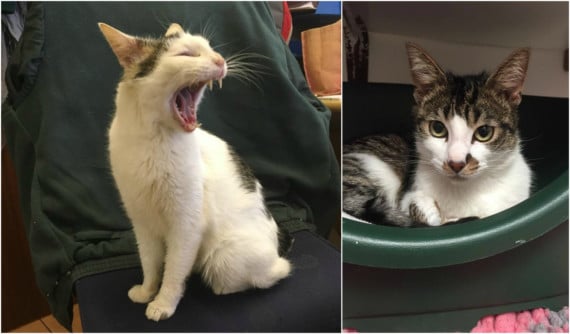
Our cattery staff are on hand to give advice and support to pet owners, and this week they have been ably assisted in the cattery office by a new receptionist, Tinker. He is very talkative and eager to please - a real ’people person’ - and he thoroughly enjoys sitting on a chair watching visitors coming and going.
His keyboard skills, however, leave a lot to be desired and so he really needs a new job, one that involves being someone’s companion and loyal friend.
As much as he loves human company, he is very bonded with another young male called Buttons who is a little bit more reserved and shy.
It is obvious that both Tinker and Buttons were very cherished and well cared for by their previous owner, whose increasing ill health meant that she needed to part with them.
We would love to be able to report back to her that her boys have found a wonderful new home together, and give her peace of mind - can you help?
Comments
This article has no comments yet. Be the first to leave a comment.