
Our rescue animals have such different and interesting personalities, and it’s easy to see why having a pet can enrich the life of an owner in so many ways.
The health benefits of owning a companion animal are scientifically proven.
Academic studies demonstrate that dog owners over the age of 65 have, on average, the activity levels of those 10 years younger and display lower levels of anxiety or depression.
A very recent study in Maryland in the United States studied 1,371 adults between the ages of 18 and 65.
.jpeg?width=209&height=140&crop=209:145,smart&quality=75)


.jpeg?width=209&height=140&crop=209:145,smart&quality=75)
It was undertaken by Johns Hopkins Medicine, a leading medical research organisation, and concluded that children who grow up with a pet dog are much less likely to develop schizophrenia as adults.
Living with man’s best friend before the age of 13 was linked to a 24% reduction in the risk of developing the condition. People who had grown up with a dog as a baby were even less likely to develop schizophrenia, with the risk dropping by an amazing 55%.
Schizophrenia is a severe mental health condition that causes a range of different symptoms, including hallucinations, delusions, and muddled thoughts.
More than a quarter of a million people suffer from the illness in England, Wales and the Isle of Man.
The Johns Hopkins researchers also concluded that there was no causal effect of growing up with a dog relating to the risk of bipolar disorder.
So why is the effect so significant in relation to schizophrenia?
The researchers have said that there need to be further studies to explore several possible explanations.
These include investigating whether there is something in the canine microbiome that can be passed to humans, which then bolsters the immune system against a predisposition towards schizophrenia.
Interestingly, the Maryland study showed that early exposure to pet cats had no impact on the likelihood of people developing either schizophrenia or bipolar disease.
However, in other studies cats have been proven to enhance the lives of their owners, particularly those who might have limited interaction with other people.
They provide companionship, a daily routine, stimulation and hours of entertainment - even the most dignified cat will have his moment of madness every day, rushing around like a lunatic.
An owner’s advancing years should not deter them from the rewards of pet ownership and the ManxSPCA will always be there to help should an owner sadly die before their pet.
To provide further peace of mind the Society has a special pet guardian scheme whereby owners can register their pets, free of charge, and leave instructions about their animals’ requirements and their likes and dislikes.
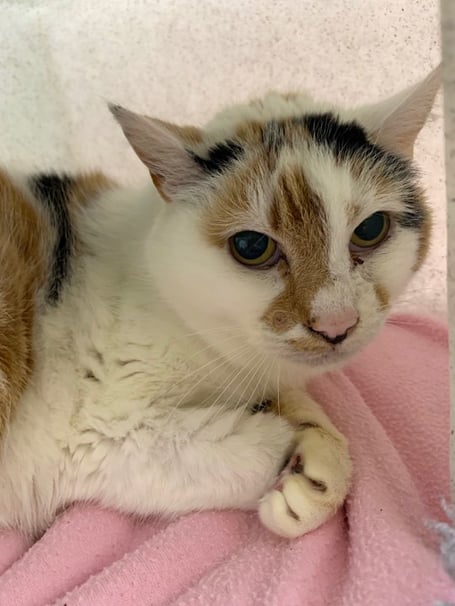
We have a very special Manx cat of advanced years (18 to be precise) who deserves a last chance of happiness - Georgie.
She has lived the past year as a stray, fending for herself on the streets of Douglas and surviving against all the odds.
She ran away from her previous home where she lived with other cats, but we think she didn’t get on with one of them and so she voted with her feet.
She is looking for a very quiet home, with a new owner who has lots of patience, and who will give Georgie the time and space she’ll need to come out of her shell.
Georgie is the sort of elderly, nervous cat who is often overlooked by prospective adopters, but her complexities are what make her so special.
We don’t think shell ever be a lap-cat, but she can be affectionate when she’s relaxed and feels unthreatened. She deserves to have a bed to call her own and food on demand, and to live out her last few years in a stable and loving environment.
Comments
This article has no comments yet. Be the first to leave a comment.