
Christmas is, perhaps, the one time of year when we can all indulge in a bit too much to eat and drink and not feel guilty about it.
However, if you’re planning to treat your pet to a ’festive diet’ over the next couple of weeks, please think again.
The British Veterinary Association (BVA) says that its members have reported a sharp rise in pet obesity.
The problem is becoming so bad that a growing number of vets are getting injured carrying obese animals, forcing many to buy lifting equipment.




In the UK more than 1.7 million dog owners, and a million cat owners, have been told that their pets are overweight by vets in the past year. This indicates that 12% of pets are too fat, up from 8% two years ago.
The recent study by Direct Line insurance found that pugs were the breed most likely to be overweight, with three quarters defined as fat by vets.
More than half of boxers were too heavy, with golden retrievers next most likely to be overweight. The pet insurance industry has a vested interest in this research because pet obesity causes joint issues, diabetes, and heart and respiratory problems.
These problems not only cause huge suffering for the animals concerned, but they result in substantial vets’ bills, many of which the insurance companies will need to cover.
The BVA defines pet obesity as a condition in which excess body fat has developed to the point that the animal’s health is adversely affected by it.
It says that overweight dogs, for example, have a shortened lifespan and are predisposed to painful and debilitating conditions such as osteoarthritis.
Pet owners must accept responsibility. All too often people give their pets human food, such as cheese and bacon which are high in fat and calories.
About 30 grams of cheese for a cat is the equivalent of three chocolate bars for a human.
The pet food industry also has to take its fair share of blame.
It actively markets calorie-filled, over-priced treats and is encouraging pet owners to spoil their beloved animals more than ever over Christmas.
Pet food now uses the same trigger words that drive us to buy human food - ’enriched’, ’all natural’, and ’superfood’ - disguising the fact that many foods are over-processed and made from cheap ingredients.
Gone are the days when eight out of 10 cats approving a certain brand of cat food was sufficient to promote it!
A certain pet food brand labels its tins and sachets with names that sound good enough for human consumption - wild campfire stew, lamb hotpot and fishy fish pie. This particular company has sales of more than £1m a week, and so its marketing strategy is evidently working.
As with overweight humans the answer is, of course, that if a pet takes sufficient exercise and has a calorie-controlled diet then he or she will have a healthy body weight.
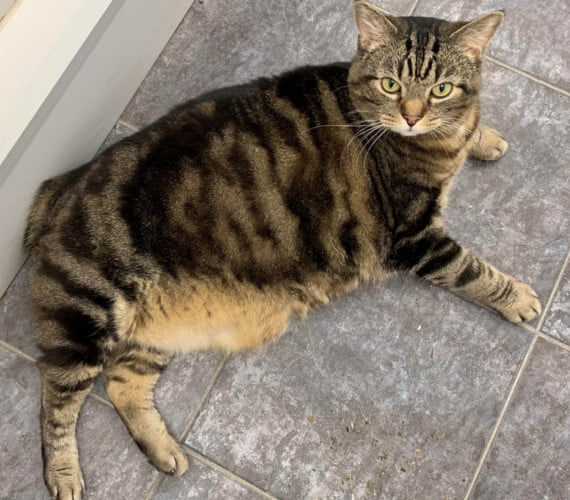
Luckily the overweight Manx cat pictured, Megatron, coped well with being put on a strict diet and was successfully rehomed earlier in the year to a home with a garden, enabling him to be more active.
He’d been so scared in his previous home by young children and a dog that he had spent most of his life hiding under a bed, just getting fatter and fatter.
While on the subject of food, please note that the ManxSPCA Tearooms will be closed from Monday, December 23, to Saturday, January 4, reopening on Sunday, January 5.
The animal sections are open throughout the festive period from 1pm to 4pm, apart from Christmas Day, Boxing Day and New Year’s Day.
Comments
This article has no comments yet. Be the first to leave a comment.