
Did you know that rabbits conceal any injuries or illness, unlike cats and dogs, because they are a prey species?
They instinctively keep going until the bitter end so that their vulnerability isn’t exposed to predators, who will target them as easy prey.
This means that rabbit owners have to be all the more vigilant about checking their pets for signs of injury or illness, with a daily examination of the rabbit’s teeth and body, and close observation of behaviours.
The two main causes of illness in rabbits are improper husbandry and poor nutrition.
-(1).jpeg?width=209&height=140&crop=209:145,smart&quality=75)
.jpg?width=209&height=140&crop=209:145,smart&quality=75)
.png?width=209&height=140&crop=209:145,smart&quality=75)
.jpg?width=209&height=140&crop=209:145,smart&quality=75)
There are lots of different foods on the market for them, but very few contain the correct nutrition.
Rabbits should be fed a plain, hay-based pellet in limited amounts, as directed on the bag of food, based on their weight.
any pre-packaged rabbit foods contain colourful pellets, seeds and a range of other treats which contain fat, salt and sugar and they provide little, if any, additional nutrition.
They are there merely to attract the eye of the owner.
Rabbits should have unlimited access to fresh hay, which plays an important role in both their diet and their physical health. A rabbit’s teeth grow continuously throughout their life, and providing them with unlimited hay to eat helps to wear down the teeth.
Greens are also an important part of a rabbit’s diet, and every day they should be given a mixture that is roughly the size of their body when loosely packed.
Green leaf and romaine lettuce, watercress, radicchio, dill and dandelion leaves are all excellent choices because they are low in calcium and oxalates which can cause urinary stones.
Iceberg lettuce, potatoes, onions and peas are all potentially poisonous for rabbits and so should be off the menu.
Rabbits drink a great deal of water and although water bottles are convenient because they don’t spill, or end up with food or poo in them, they should always be accompanied by a bowl of fresh water. Drinking from a bowl enables the rabbit to maintain a natural posture, and will encourage them to drink the correct amount of water they need to maintain a healthy digestive system.
Grooming your rabbit should also be a priority, particularly if the rabbit has long hair, to avoid urine scald and skin diseases, and to detect fly strike or fleas.
You should seek veterinary advice if you think your rabbit is unwell - maybe they’re not eating their regular food, not defecating or urinating routinely, being inactive, sitting hunched over, breathing heavily or have lost or gained a lot of weight.
Well-cared for domestic rabbits can live into their teens, and so they are a long-term commitment.
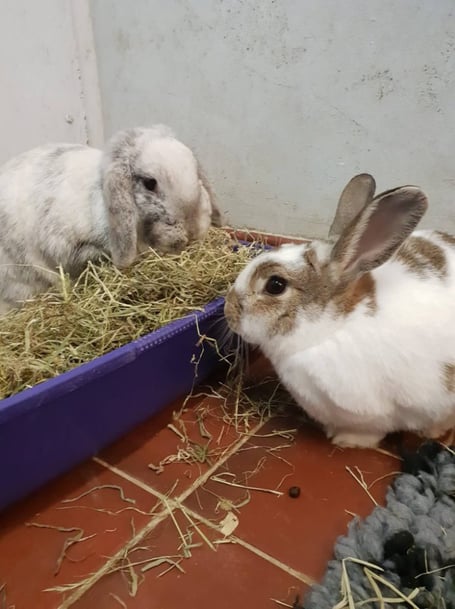
The ages of Rebecca and Munch (nine and seven respectively) seem to be putting off potential adopters, even though they are likely to have many happy years ahead of them.
As more mature rabbits they are litter-trained, very well socialised, and they love to interact with humans.
In fact, they are real characters and play games both with each other and with anyone who is passing.
They deserve a loving new home after being at Ard Jerkyll for almost 10 months.
If you have the time and the space for these adorable creatures, please come and meet them in our small animals unit.
We give our rabbits, and all the other animals who spend time with us, the very best husbandry and veterinary care, but we need the financial help of the Manx community to do this.
Please show your support by coming along to our car boot sale on Sunday, September 29.
It’s undercover at Shaw’s Brow car park in Douglas, and starts at 11am.
There will be plenty of stalls to browse around, and we’ll be selling our 2020 calendars there too for a minimum donation of just £3.
Comments
This article has no comments yet. Be the first to leave a comment.