
The Manx Wildlife Trust is the leading nature conservation charity in the Isle of Man, protecting the fragile local wildlife by creating living landscapes, living seas and encouraging and fostering a society where nature matters.
This month is an unusual request that we are making to all you citizen scientists out there, and it is one based on anecdotal evidence.
We are asking if you have seen any silverfish recently?
What are silverfish?



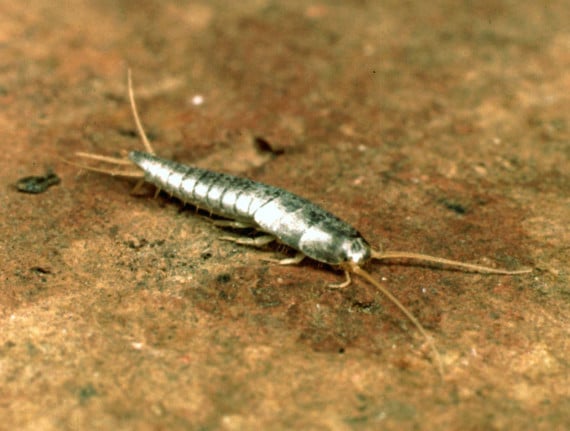
They are wingless, primitive looking insects with a silvery-coloured body and they move in a fish-like sinuous manner. They are up to two-and-a-half centimetres long with a tapered body and three long hair-like structures on their tails.
They are found in damp and dark areas such as bathrooms and sheds and are nocturnal, so you will need to search for them at night.
They can live up to eight years and are fast runners to avoid their predators.
They are not, however, all that good at climbing.
They feed on starch and sugars and are considered to be household pests.
However, they do not transmit disease.
The courtship ritual of the silverfish is fascinating and can take up to half an hour.
The first phase is the male and female standing face to face with antennae touching and quivering whilst repeatedly backing off each other. The next stage involves the male running away and the female chasing him.
In the final stage they stand side by side with the male vibrating his tail against the female before the female goes on to lay her eggs.
Why are we interested in them? With houses being more sealed and drier, thanks to improvements in central heating and insulation technologies, we suspect these insects are in decline.
We have no data on them and are keen to find out more. Please keep your eyes open for them and send your sightings to [email protected]
Remember to tell us the location, date, species and your name and a contact detail in case of queries. Photographs are always a bonus too.
We are lucky in the island to have several wildlife groups keen to collect this information, as well as databases such as NBN Atlas Isle of Man to use for research purposes and are available to the public.
Do have a browse on this website, as it provides a fascinating look at wildlife records going back many years.
For example, there are records from 1910 all about hedgehogs, plus there are maps to help you understand species distribution around the island as well as information on flora and fauna.
February of this year saw the one millionth record entered on NBN Atlas Isle of Man.
We think that is truly a fantastic achievement, and that includes information gathered by citizen scientists.
Your records are very important to us and are being used by researchers to help with their work. Plus more eyes means more things being observed.
If you get caught by the bug for spotting wildlife then we have many spotting sheets available online to download at manxwt.org.uk/discover-our-island/stuck-home
These sheets are Manx specific and only feature species that you will find in the island. They are a great family activity to download before going on a walk.
Try one this weekend!
by Dawn Dickens
Biodiversity education officer
www.mwtrust.org.uk
Comments
This article has no comments yet. Be the first to leave a comment.