

The ManxSPCA collaborates with Island Horse and Pony Aid (IHPA) to work with equine owners, giving them advice about correct husbandry and care, and checking that any necessary improvements take place.
We have a number of cases of equine cruelty and neglect on the island every year (more of that later) but more often issues arise because of ignorance, and an owner being ’over-horsed’ without sufficient funds or knowledge to care for the animal correctly.
Well-intended ignorance is also the cause of many of the complaints that both the ManxSPCA and IHPA receive, particularly at this time of year as winter approaches.
The most common complaint is that a horse or pony isn’t wearing a rug, when others in the same field have them on. In fact, the British Horse Society is concerned that too many owners are putting rugs on their equines without there being sufficient need to do so. Over-rugging causes problems with weight gain (the equine doesn’t use up enough calories in heating itself) and ill-fitting rugs are uncomfortable for the horse or pony wearing them.
.jpg?width=209&height=140&crop=209:145,smart&quality=75)
.jpeg?width=209&height=140&crop=209:145,smart&quality=75)
The owners of equines who are outdoors without a rug need to ensure that they don’t groom their horse or pony with an incorrect brush - a ’body’ brush will remove the grease from an equine’s coat, and grease is what makes the coat waterproof. They need to stick to using a ’dandy’ brush, and only brush the areas that need it such as where the saddle fits.
Another misconception that some concerned callers have about horses and ponies is that they always sleep standing up. It’s true that they can, and often do, sleep in this way, but most equines like to lie down for a snooze. They will do this at any time of day, and they can appear to be motionless. We’ve had quite a few calls about ’dead horses’ in fields and so we always urge the caller to watch and wait for the equine to wake up.
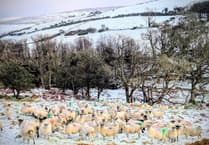
Equines don’t necessarily need a stable or field shelter, but they do need to be able to escape the worst of the elements by having trees or large hedges in their field that will afford them some protection from wind and rain. Of course, they also need fresh water, and a good supply of grass or other forage such as hay; and if their field is muddy they need to have access to an area that is not muddy to prevent ’mud-fever’ developing on their legs.
A recent case of animal cruelty concerned the horse pictured, and the owner was taken to court for failing to care correctly for him. This horse is a retired race horse, and looking after these hot-blooded thoroughbreds should only be undertaken by experienced equestrians. Thoroughbreds are prone to ulcers, they often struggle to retain a good weight, and their hooves are difficult to maintain.
That said, a UK-based charity called Retraining of Racehorses (RoR) has managed to find new homes for several thousand ex-racers. On average around 7,000 horses leave British racing each year. Some are retired to stud for breeding, some go on to race abroad, and some go point-to-pointing; but the highest percentage (over 40%) are retrained for an alternative equine discipline or recreational activity.
Many of these magnificent creatures are sold for just a few hundred pounds, and their ongoing welfare is a major concern for RoR, IHPA and the ManxSPCA.
Please support IHPA by donating unwanted tack and equestrian paraphernalia to it, by taking a table at its forthcoming tack sale (at the Corrin Hall in Peel, on Tuesday, October 29 starting at 7pm), and by coming and spending some money at the event.
Call 801688 (evenings) for further information.
Comments
This article has no comments yet. Be the first to leave a comment.