
Most people know that the ManxSPCA rescues and rehomes more than just dogs and cats - we will try to help any animal in distress whether it is wild or domestic.
However, farm animals are slightly different in that, in most instances, we can work with the Department of Environment, Food and Agriculture (DEFA) to contact the relevant farmer and ensure any welfare concerns are addressed.
There are rules and regulations about the keeping of livestock (in particular cattle, sheep, goats and pigs) and the DEFA’s vets and field officers are there to monitor and enforce them. But the ManxSPCA becomes involved when farm animals are not ear-tagged or marked in any way, and so it isn’t possible to track down a keeper or owner.
This is a particular issue with sheep and we usually have two or three a year brought to Ard Jerkyll who don’t seem to have anyone looking after them.



-(1).jpeg?width=209&height=140&crop=209:145,smart&quality=75)
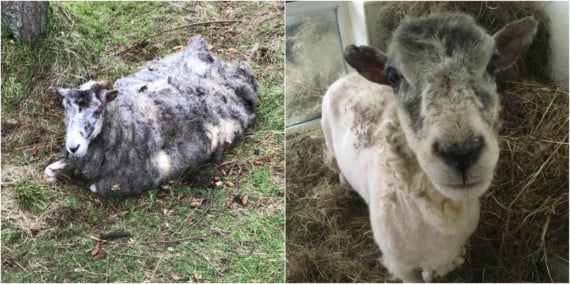
Tholt e Will is a ’feral’ sheep hot-spot and this is where our latest sheep, Willma, was found.
She was spotted by a member of the public as he was out walking and he observed her for several days before calling us.
Willma hadn’t been able to move for some time as a result of having a water-logged coat (due to not being annually sheared) and becoming tangled in undergrowth.
It took three men to haul her 500m up a steep embankment and into a ManxSPCA ambulance. She was then taken for a veterinary check-up, before coming to Ard Jerkyll for recuperation.
Willma has surprised us all by her determination to live, and she has a real character and personality of her own.
She was extremely underweight when she arrived, and in very poor condition. Her body was covered in sores and her old fleece had started to fall out.
After several weeks of moulting, and a diet of sheep nuts, fresh hay and carrots, Willma now looks like a completely different animal.
She can’t live outside until her fleece grows back, but we’re hoping that this won’t take too long.
Whereas our policy with wild and feral animals is to return them to their natural environment, once they have recovered, Willma is an exception.
She needs regular husbandry, not least shearing and worming, and so she will live out her days in a small, privately-owned flock.
Willma has defied death against all the odds (it is an often quoted saying that ’sheep are good at dying’) and when our pets die it can be as hard, if not harder, for us to deal with than the death of a relative.
Although you may find some people really don’t understand how you’re feeling, and may suggest unhelpful solutions such as ’Why don’t you go and get another dog/cat/rabbit, etc?’, many people do understand
You will need time to grieve and you may go through a mixture of emotions - sadness, loneliness and even anger. This is all quite normal and part of the process of coming to terms with your loss.
You should not feel guilty or blame yourself for your pet’s death. Treasure your memories - remember the good times and the joy that your companion brought you.
Losing a pet is often the first time that a child becomes aware of death.
It is usually better to be honest with a child and explain the truth as clearly as you can. Be careful when you use the term ’put to sleep’ as a child may expect their pet to wake up again later. Children may want time to say good-bye to their pet and seeing the body may help them understand what has happened.
Seeing the body of a dead companion is also important for our remaining pets - just like children they need to understand what has happened, rather than continue to search for a companion who isn’t there anymore.
Your vet will be able to give you advice and support, and if you are struggling with the decision about what’s best for your beloved horse, pony or donkey Island Horse and Pony Aid are there to help too - they can be contacted on 833922.
Comments
This article has no comments yet. Be the first to leave a comment.