
Vegetarianism and veganism are growing in popularity, with people not wanting to eat meat or wear animal-based products for health and/or ethical reasons.
But this growing trend isn’t limited to human diets, and one in six pet food suppliers has now extended their range to include vegetarian or vegan options.
These products use vegetable protein derived from soya, wheat, maize, rice and beet pulp substituted with synthetic vitamins and amino acids naturally found in meat.
Dogs are omnivores and so, theoretically, they can survive on a plant-based diet although, for most dogs, we would recommend a balanced diet of meat and some vegetables or cereals.



.jpeg?width=209&height=140&crop=209:145,smart&quality=75)
Cats, however, are carnivores and they need meat because they depend upon some very specific nutrients that are found in meat such a taurine and vitamin A. The RSPCA recently warned pet owners that they not only run the risk of making vegetarian cats very ill, they may be in breach of the UK’s Animal Welfare Act 2006.
The Act states that an animal’s keeper must legally provide it with the ’Five Freedoms’:
1. Freedom from hunger and thirst - with ready access to fresh water and a diet that maintains full health and vigour.
2. Freedom from discomfort - with an appropriate environment including shelter and a suitable resting area.
3. Freedom from pain, injury or disease - with rapid diagnosis and treatment.
4. Freedom to express normal behaviour - with sufficient space, proper facilities and company of the animal’s own kind.
5. Freedom from fear and distress - with conditions and treatment/handling that avoid mental suffering.
And so a healthy diet is a requirement, and a failure to provide it could result in a hefty fine or even a prison sentence.
The Isle of Man is still working towards its own Animal Welfare Act and so there isn’t quite the same legal imperative to feed meat to a cat, but there is a moral one.
The cats in our cattery tuck into two meals a day, which consist of both hard biscuits and soft cat food meat (ideally from pouches rather than tins - the meat in the pouches seems to taste better!). Occasionally some cats need special food to help with a renal or digestive problem, but most are ’good doers’ and don’t show the fussiness that some of our beloved, and spoilt, pets do at home.
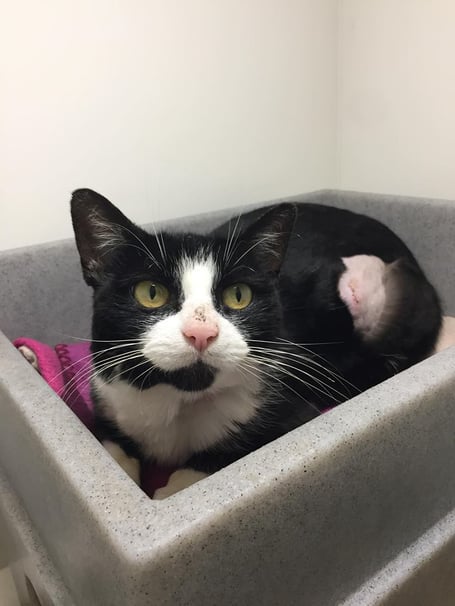
Take Friday, for example.
She has a very good appetite and seems grateful for all the food and attention she can get, which is quite a surprise given she came to us as a feral cat. She gave birth to five kittens under a bush at the bottom of a large garden several weeks ago, and we had to use a cat trap to catch her once we had gathered up her babies.
But after just a few days she started to respond to staff and volunteers, and decided she liked being stroked and fussed over. She also seems to like other cats and so she will probably be happy living with them in her new home.
Friday is a young cat, no more than two years old, and she deserves to have a new life full of security and comfort given these have been so lacking in her life so far. She’s been a great mum to her kittens (who have all been adopted), and now she’s been spayed it’s her turn to be the centre of attention.
If you are interested in giving Friday, or any of our other rescue cats, a ’forever home’ please complete a home finder questionnaire, which you can find on the adoption pages of our website or collect from the cattery.
Comments
This article has no comments yet. Be the first to leave a comment.