

The operation of the island’s state-owned abattoir has come under fire in another damning report on the role a government department plays in the food industry.
An investigation into the meat plant questions whether the annual £2million subvention represents value for money for the taxpayer.
There’s a call for the financing of Isle of Man Meats to be examined ’as a matter of urgency’ by the soon to be appointed Auditor General.
A spotlight is thrown on the failed tender process to find a private operator.
 New organ donation law to come into force as island urged to ‘make informed choice’
 Department outlines new education priorities as Tynwald receives updated plan
.jpeg?width=209&height=140&crop=209:145,smart&quality=75) Tynwald rejects referendum on Isle of Man's Net Zero policy
Tynwald rejects referendum on Isle of Man's Net Zero policy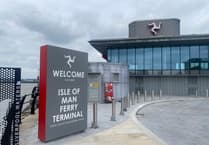 Operating the Isle of Man’s Liverpool ferry terminal costs more than £710,000 a year
And the current strategy is criticised for failing to recognise the value of Manx meat, relying too heavily on wholesale export.
The report comes from the same select committee of Tynwald that has criticised the regulation of the dairy industry, claiming that the Department of Environment, Food and Agriculture should not be both the regulator and the promoter of food.
As last week’s Manx Independent revealed, DEFA Minister Geoffrey Boot tried to prevent the publication of that report.
In its examination of the meat industry, the committee states: ’At the heart of the issues we discuss in this report are the multiple roles played by the DEFA.’
Fear of reprisals from the DEFA led to ’several individuals’ involved in the meat industry asking to remain anonymous when giving evidence. Some evidence, including commercially sensitive information, has been withheld from the published report but made available to Tynwald members.
There’s cause for concern over the conduct of a tender process in 2017 that resulted in the setting up of a government-owned company, Isle of Man Meats.
The report states: ’It remains unclear to us how and why the decision was made to reject the tenders received and set up Isle of Man Meats with the Department for Environment, Food and Agriculture as the majority shareholder.
’Putting any commercial enterprise into government ownership is a major policy decision which should be scrutinised and voted on by Tynwald.’
Instead, Tim Baker MHK was appointed chairman of Isle of Man Meats. Mr Baker, along with two others subsequently appointed as directors of the new company, was also involved in the tender process.
The report states: ’We are aware that one of Mr Baker’s political aims at the start of this administration was to "go into DEFA and sort out the meat plant".
’However, we find this level of political involvement in the procurement process and the formation of a government-owned commercial enterprise to be inappropriate.
concerning
’The lack of clarity about Mr Baker’s role as chairman is also concerning.’
Evidence was given to the committee describing Mr Baker, MHK for Ayre and Michael, as the ’no numbers accountant’ because of his reluctance to disclose any financial information relating to Isle of Man Meats.
The committee goes on to say the Council of Ministers must develop a formal, transparent policy on government ownership of enterprises, rather than decisions being made ’piecemeal, department by department’. The current structure of the meat plant is ’incredibly worrying’, says the committee, and could prevent whistle-blowers from coming forward.
Isle of Man Meats supplies the local marketplace with around 20 to 30% of the meat it processes, so the subvention is largely enabling the off-island market, the committee says.
’We are concerned that both the minister and the chairman of Isle of Man Meats appear to be resigned to the inevitability of a substantial subvention for the company, despite their unwillingness to give a private operator the opportunity to run the plant or find an alternative public-private partnership model,’ states the report.
It recommends addressing the dominance of the DEFA as the ’golden shareholder’ by increasing the number of Fatstock Marketing Association board members and transferring ownership to the Treasury, and states: ’Political interference in the board should be minimised: Members of Tynwald should not be appointed to the board, and the DEFA minister should not be responsible for appointments.’
A potential conflict of interest demonstrates an ’urgent need for a separate and depoliticised regulatory structure,’ says the report, adding, ’Isle of Man Meats’ current strategy does not recognise the value of Manx meat.’
The report calls for a clear strategy to increase the amount of Manx meat sold on-island, and develop off-island markets for premium and speciality Manx meats.
The subvention is currently used to cover operating costs but should be used to help farmers increase the size and quality of their herds or by developing new products and routes to market.
Although the dairy industry has come in for criticism over its regulatory system in a separate report, the committee says the government should consider the successes of the milk industry, that is run as a co-operative, ’to ensure there will be a vibrant market for Manx meat in the future’.
The committee states: ’As we discuss in our report on the regulation of milk, we believe that the regulation of any industry should be separated from its promotion. The situation at the meat plant clearly demonstrates the need for an alternative regulatory system that is separate from central government and depoliticised.’
The select committee is chaired by Clare Barber MHK and includes Chris Robertshaw MHK and Rob Mercer MLC.
Comments
This article has no comments yet. Be the first to leave a comment.