
After a tumultuous week in the House of Commons, there’s still no guessing how the Brexit deadlock will end.
Over the next few weeks Food & Farming page will be looking at some of our food exporters and asking them about the challenges, and opportunities, that leaving the EU is likely to bring.
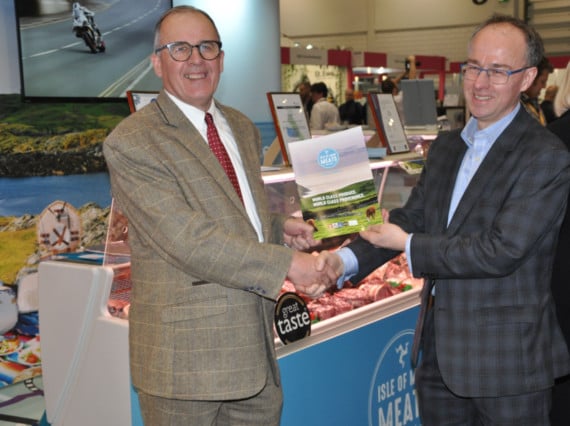
This week we have been speaking to Tim Baker MHK, chair of Isle of Man Meats, and Phil Parsons, the company’s plant director, about how they see the future market for Manx meat, both on and off the island.
Getting the balance right


The Meat Plant is a vital part of the Manx farming sector and running it successfully has a lot to do with getting the balance right between the price paid to farmers and the price achieved for the end product.
Mr Baker said: ’This administration has recognized the Meat Plant as a strategic asset and, if you’ve got a strategic asset, you look after it but that doesn’t mean a blank cheque.’
For those not in the farming industry it’s important to understand that the plant has to compete for the farmers’ business by offering them a competitive price for their animals.
If they don’t then farmers have the option of shipping their animals to the UK, if they can get a better price there.
Tim Baker says that, when the current board took over the operation of the Meat Plant, pricing was one of the ’key building blocks’ they wanted to put in place.
’It was getting the price back to farmers correct, which had been reduced so we weren’t making it attractive for farmers to supply the plant,’ he said.
’We have fixed that and we are now the destination of choice for most Manx farmers.’
However in order to give farmers a fair price the plant has to be able to sell what it produces.
The plant does not freeze and stockpile meat, it is sold fresh.
All the pork produced locally is used in the island but more beef and lamb is produced here than the plant can sell to the local market so much of it is exported.
This means that having sales and marketing expertise in the UK is vital.
Mr Baker said: ’This is a professionally managed supply chain.
’The farmers are now working to a schedule and we’re controlling the flow of animals into the plant, very much linked to our sales team who are out in the UK and on the island.
’Earlier this year we appointed Northgate Foods in the UK as a strategic partner and that’s working really, really well.
’We’ve got people out there who are representing the island and they’re out talking to customers who are making purchasing decisions.
’They are selling the value of the product we have here and we’re seeing good growth coming from that.’
Brexit - the challenges
The current supply chain throughout the EU is based on being able to sell across borders without tariffs and without friction so it’s likely that any changes to that are going to have a disrupting effect.
But, as Brexit has been such a long drawn out process, this effect is already being felt in the market, particularly for beef.
When the initial date for Brexit was set for the end of March, Irish beef producers sent around 200,000 extra cattle for slaughter which has flooded the market in the UK and has had an impact on prices.
Phil Parsons said: ’For selling the same product now we’re probably anywhere in the region from £2.50 to £4 a kilo less now than we were in 2012 and we’re still paying [the farmers] more, though not much more, for the beef.’
Then there are other costs to take into consideration.
If Brexit goes ahead, from October 31 all the Meat Plant’s labelling will need to be changed and then there may be supply problems with the packaging: most cardboard is made in Holland and imported as blank sheets.
Mr Parsons said: ’The big thing for me is all the cleaning chemicals: they are made in Belgium and [the manufacturers] got onto us and said: "We don’t know what’s going to happen so make sure you’ve got at least three months’ supply".’
â?¦ and the opportunities
When it comes to possible opportunities that Brexit might bring, there is clearly the possibility that a disrupted supply chain to the UK might mean less meat being imported into the island.
Mr Baker said: ’There’s going to be far less risk in sourcing locally provided if it’s got the quality and the assurance around it and we have that already.’
Mr Parsons agreed, saying: ’We tick a lot of boxes before we even start.’
Mr Baker went on: ’Brexit is an opportunity for the Manx public to open their eyes to what they’re eating and get behind Manx meat and produce and to understand, not just that it’s Manx, but actually why that means it’s great.
’It’s low food miles, it’s high animal welfare standards it’s the provenance of knowing, not just that it’s come from Isle of Man Meats, but we can trace it back to the farm and we can probably trace it back to the individual field that it’s been reared in and we know the person who’s done it: there’s full traceability around the island.
’We’ve got a great product and people have to realise you get what you pay for.’
The threat from China and the US
The bigger cloud looming on the horizon is the possibility of future trade deals being done with China and the US.
Mr Baker’s view is stark: ’The long term potential impact of cheap imports from China and the USA is something that is really adverse.
’The EU is often seen as being bureaucratic but that might not be a bad thing when it comes to food.
’You have to have control, for instance, of what chemicals you put in the food chain: that’s not bureaucracy that’s basic public health and the EU is also high welfare.
’If you’re eating food that you don’t know where it’s come from, you don’t know what’s in it and there’s no proper labelling around it, and you combine that without the guarantees of animal welfare and food hygiene: I wouldn’t want my kids eating that.’
Looking for more pork
Intensively farmed pork tends to be heavy on antibiotics but the majority of pork produced in the island is antibiotic-free and of the highest quality.
Local pork producers are unlikely to be affected by Brexit as their meat is all sold on-island but demand is currently outstripping supply and requests from off-island too.
’The export market is definitely there - I am asked for pork weekly,’ said Mr Parsons, pictured right.
This means a possible opportunity for the farming sector, as Mr Baker explained: ’We’ve successfully built a business on pork and we’re going to be looking for new producers in coming months.
’We’re going to go out pro-actively: we’ve got a profitable market, it’s a quality product and it may be a really good opportunity for new entrants to farming or diversification of existing farmers and it would be fantastic to see young farmers stepping into that.’
Welfare standards
Mr Parsons, who has long experience in the industry working in meat plants in the UK, says that ensuring high welfare standards in the way the animals are killed is not just the right thing to do, it also means better quality meat.
He said: ’You can see when we’re processing the meat, with the low miles of travel you see a difference in the animals and we’re quite a sedate process.
’It’s very important to us that we treat them with the reverence they deserve. We’ve gone on and beyond the standards that have been set in the past: staff are even taught how to speak to the animals calmly.
’I want to do this job because I want to make sure it’s done properly and that comes from all the management and staff here.’
This is endorsed by the Meat Plant having Red Tractor certification which covers animal welfare, food safety, traceability and environmental protection and having achieved a BRC (British Retail Consortium) A grade on standards for best practices for the food and manufacturing industries.
What can the Manx public do?
At a time when we are being told to cut down on the amount of meat we eat maybe now is the time to consider buying less but paying a bit more when we do.
And also paying closer attention to quality, welfare, food miles and traceability.
Mr Baker said: ’It’s all about choices that you make: are you better off having one quality thing rather than three cheap and cheerful things.
’We position ourselves as a quality jurisdiction in other sectors - you can always go down and dirty and cheap but that’s not where the Isle of Man should be and that’s not where we want to be with the Meat Plant.
’The Isle of Man’s got the opportunity to be the best place to be a farm animal in the world - the short food miles, the welfare standards, the farm to fork and the educated consumer - it’s a long term vision but it’s what we should be pushing towards.’
Comments
This article has no comments yet. Be the first to leave a comment.