
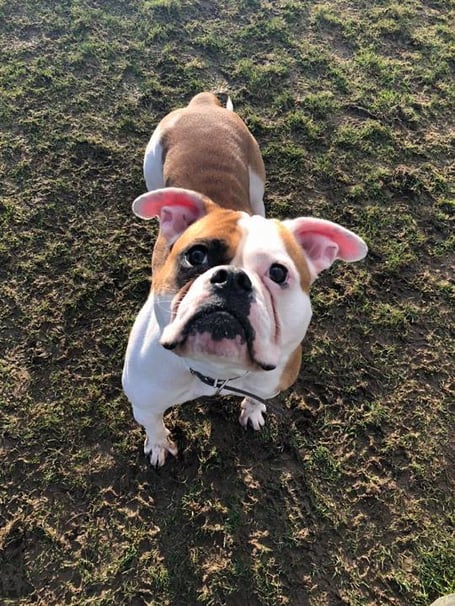
Meet Isla. She is an American bulldog and the type of dog that seems to polarise opinion.
Some people adore ’bull breeds’, and once they have had this type of dog they never have anything else but other people find the dogs’ muscular appearance unattractive and they worry about the breed being predisposed to aggressive behaviour.
The truth is that most bull breed dogs are incredibly affectionate, but irresponsible ownership and questionable legislation in the UK has led to their reputation becoming tarnished.
Breed specific legislation (BSL) was introduced in the UK as part of the Dangerous Dogs Act 1991 to restrict ownership of certain types of dogs deemed to be dangerous to people. In the UK BSL bans four different types of dog traditionally bred for fighting: the pitbull terrier/pitbull type, Japanese Tosa, Dogo Argentino and Fila Braziliero.
.jpeg?width=209&height=140&crop=209:145,smart&quality=75)


.jpeg?width=209&height=140&crop=209:145,smart&quality=75)
However, breed is not a reliable predictor of the risk of aggression and there is no research to demonstrate that the banned breeds are any more aggressive than other types of dog.
Whether a dog is aggressive is mostly influenced by factors such as how they are bred and reared, and experiences they have in their life - nurture rather than nature. But the law is the law, whether we are comfortable with it or not.
In the Isle of Man legislation is slightly different - the Dogs Act 1990 has a section that cover ’dogs causing danger, nuisance, etc’ but it does not ban specific breeds.
However, it is illegal to import a banned breed from the UK.
In the UK if a dog is classified as being a banned breed it then has to be licenced. This involves the dog’s keeper being registered with the authorities and the dog being muzzled when it is in public. Additionally, the dog cannot be bred from, sold or given away.
Back to Isla, she is very definitely not a banned breed and she is a wonderful example of an American bulldog.
They are renowned for being gentle giants, with loyal and loving personalities, and they make great family pets. She is only two years old and despite being a big softie she can be a bit boisterous at times, as she grows out of puppyhood, which means we recommend that she is rehomed with older children.
Isla’s only vice is that she doesn’t like cats, and she is likely to give chase to any she sees, which means her new owner will need a degree of physical strength to control any wayward behaviour.
She lived with another (very dominant) dog in her previous home, and so the kennels team feel that she would be happiest as the only dog in a household, where she can be the centre of attention.
She also needs to be rehomed some distance from her previous home and so her new owners will need to live outside of Douglas.
We don’t think Isla will be with us for long because she is such a gorgeous dog, but some very damaged dogs can spend more than 12 months in our kennels while staff and volunteers work with them to develop their behaviours.
Unlike many UK rescue centres, such as the RSPCA and the Dogs Trust, we take in any dog that is given to us, even if that dog has a long rehabilitation journey ahead if it.
Every day, every dog is given training, enrichment activities and at least three exercise walks, and the annual cost for a dog that stays with us for this amount of time is more than £6,000.
Comments
This article has no comments yet. Be the first to leave a comment.