
The island offers a rich assortment of bird species, several of which are rarities in other parts of the British Isles.
Our native owls are not easy to spot, though, because they fly and hunt mainly (although not exclusively) at night.
The plantations are the best places to catch a glimpse of the long-eared owl and the short-eared owl but these birds are notoriously difficult to survey because of the large year-on-year variation in breeding
pairs present in a particular area.

.jpeg?width=209&height=140&crop=209:145,smart&quality=75)
.jpeg?width=209&height=140&crop=209:145,smart&quality=75)
Barn owls are particularly difficult to spot on the island because there are thought to be very few breeding pairs.
The Manx Barn Owl Project, organised by Manx BirdLife, aims to improve the species’ fortunes by better understanding the population, assessing its needs, and increasing the number of nesting opportunities.
The project needs members of the public to report sightings of barn owls via its website - http://manxbirdlife.im/manx-birds/barn-owl-project/
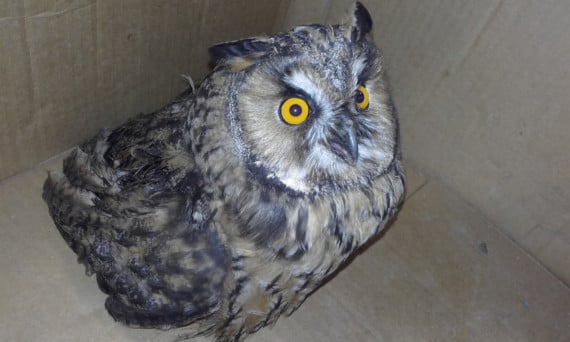
The bird pictured is a short-eared owl and it was brought to us having damaged its wing in overhead cables.
We took it straight to the vet for treatment, and this is what we urge anyone finding an injured bird to do.
Vets are obliged to treat wild animals brought to them without charging the person who has transported the animal. If its injuries are able to be treated, the vet will provide the necessary care and then the animal will recuperate at the ManxSPCA before being released back into the wild.
We make daily trips to the vets because there is always an animal needing treatment - our dogs, cats and rabbits are all neutered or spayed before they are rehomed and this adds up to a sizeable number of operations (and associated costs).
Babe, a nine-year-old brindle lurcher, came to us already spayed which may explain why she is such a gentle and affectionate dog with a laid-back attitude to life (spaying and neutering usually improve a dog’s
temperament).
Babe’s previous owner developed health problems and simply could not look after her properly, not that Babe needs much exercise.
She likes to run in short bursts, as do most lurchers, and she is renowned for her mad five minutes in the exercise field. She is selective about her fellow canines and so she would have to be introduced carefully to another dog, and she can’t be rehomed with young children.
If a very small dog is more suited to you then Alfie may be the one - he is a seven-year-old chihuahua who came to us because his previous owner’s work commitments meant that he was being left on his own for too long.
Like Babe, Alfie is selective about which dogs he does and doesn’t like, and we’re not sure about his reaction to cats, but he definitely isn’t used to small children. He is very playful and bouncy and he loves attention, and he rewards you with the biggest doggy smile ever (he really does smile)!
We have several cats who do like children, in particular Izzy and Fizzy. They are a young pair of ’matching’ females - mainly white with fawn and black splodges. Really stunning and unusual. Their previous owners have moved abroad and couldn’t take the cats with them.
Izzy and Fizzy are well socialised and they will make the prefect addition to a family home - they won’t be with us long and so come and meet them at Ard Jerkyll soon.
And come and meet some of the Ard Jerkyll team at the Royal Manx Agricultural Show, at Knockaloe Farm in Patrick, on August 11 and 12.
We have a fairly sizeable pitch this year to enable us to bring lots of dog agility equipment with us for your dog(s) to try; and don’t forget that dogs are now allowed at the Royal on both days.
We look forward to seeing you
Comments
This article has no comments yet. Be the first to leave a comment.