
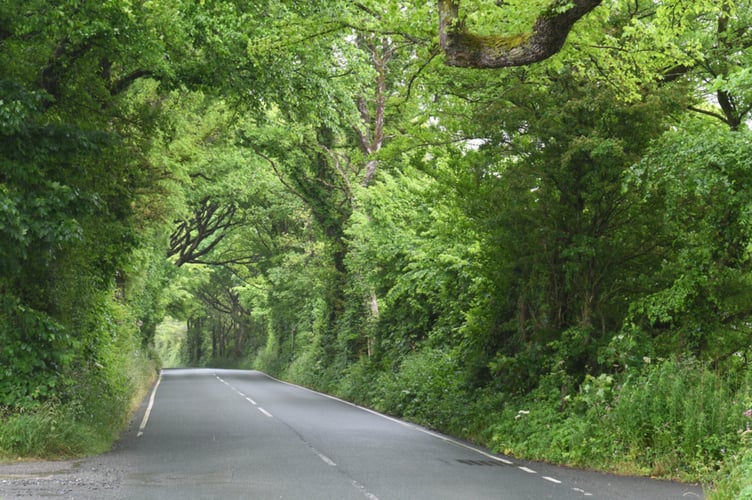
The environment minister has said there is no requirement for neighbours to be notified when a tree-felling licence is granted.
Clare Barber added that any system of notification for neighbours would be a ’huge administrative burden on the department’ which, in many cases - for example, where small trees are involved - would be ’disproportionate to the benefit of undertaking that process’.
However, the Department for Environment, Food and Agriculture has said that it will publish applications submitted or licences issued for tree work monthly from February 2022. These will be published on the government website.
Mrs Barber said in the House of Keys on Tuesday that the Tree Preservation Act has no requirement for the department or the applicant to inform any neighbouring properties of an intention to apply for a licence to undertake tree work. Where the impact to amenities is judged to be ’severe’, DEFA has and will issue a public notice in the newspapers prior to determining the application.



This House of Keys question, from Arbory, Castletown and Malew MHK Jason Moorhouse, follows the controversy in St Mark’s regarding the proposed felling of 25 elm trees last year. The tunnel of elm trees was planned to be felled to improve vehicular access to the properties off of the road and was granted following road safety concerns in the planning application.
Plans were changed after a number of protests took place against the measure and an alternative solution was sought.
The application for this was accessible online and a planning notice was pinned to one of the trees but neighbours were not specifically notified.
Then MHK for the area Graham Cregeen complained at the time that the planning notice could not easily be seen.
Mrs Barber said that the length of time a licence can be held for the felling of a tree ’should not be less than one year or greater than five years’ from the date it’s granted.
The minister said that in 2020, more than 90% of licences issued had a term of one year, 73 licences were issued with a term of two years, and two licences were issued with a term of five years.
She added: ’When determining an application for the removal of a tree, qualified officers will weigh the visual amenity value against the reasons for removal.
’In this context, "the amenities of the area" refers to the public visual amenity value rather than the private amenity provided to immediate neighbours.
’The department’s officers therefore consider the impact on the general population, rather than the impact to any particular individual.
’The impact of proposed tree work to the character or amenities of an area is partly subjective, as people’s perceptions of visual amenity can be subjective. There are, however, established systems of evaluating the public visual amenity value of trees.’
The minister explained the government uses the Helliwell system, which identifies six main factors which contribute to a tree delivering amenity value, including the size of the tree and the expected length of time that the tree will contribute to the visual amenity at its location.
Comments
This article has no comments yet. Be the first to leave a comment.