
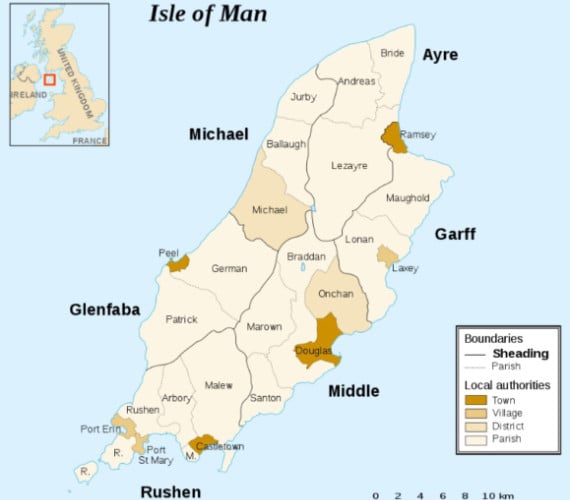
One of the island’s less celebrated heritage features is its framework of local government, which is a genuine relic from the 19th century.
The antiquated edifice has survived many attempts at modernisation in the 80 years since it first started to look out of date.
Today the local authority structure remains unreformed, and stands as a crumbling monument to decades of political impotence.
Commissioners were established in the four towns - Douglas, Castletown, Ramsey and Peel - by legislation of 1852. Their responsibilities included lighting, paving, cleansing and sewerage. Villages followed suit in the 1880s and parishes in the 1890s.

.png?width=209&height=140&crop=209:145,smart&quality=75)

.jpeg?width=209&height=140&crop=209:145,smart&quality=75)
Thus the template for local government was laid down in the days before motorised transport extended the horizons of rural communities. It also preceded income tax and the development of central government provision of services and infrastructure.
Over time various functions were transferred to an all-island basis; Douglas, for example, used to be responsible for its own water supply, buses and electricity. But the local authority superstructure stayed essentially the same.
From the mid-1930s onwards there have been calls to rationalise the system. Not much has changed, apart from the added complication of combination authorities for specific purposes, and three village/parish mergers (in Onchan and Michael in the 1980s and in Garff in 2016, the latter unifying three authorities).
The big push for reform came in the 1990s, cheered on by urban ratepayers who complained they were subsidising their rural counterparts. The country cousins were accused of enjoying the facilities of the towns without paying for them.
In 1992 the then Department for Local Government and the Environment (DLGE) launched the infamous ’Time for Change’ initiative. This was an ambitious but entirely logical project that was doomed to fail.
DLGE argued, quite reasonably, that local government was important but it needed to be reorganised into fewer, larger units to be viable and carry meaningful responsibilities. But the bigger picture proved unpersuasive out in the parishes, which feared loss of identity and higher rates bills.
The department’s first proposal was for the creation of six district authorities, merging towns or larger villages with neighbouring parishes. Following protests it suggested 12 authorities, then 13, but nothing was resolved as the 1996 general election loomed.
DLGE tried again in 1997 with a report called ’Securing a Future for Local Government’. When this met with the inevitable mixed reaction from local authorities, the department produced the wonderfully entitled ’Further Alternative Approach’, which also bombed.
In 1999 the Council of Ministers finally called a halt to the struggle, explaining that there appeared to be no solution that was acceptable to all parties.
Since then there have been occasional further rumblings about rationalisation, but nothing that has gained traction. It seems the political lesson learned from ’Time for Change’ is that central reform of the local authority structure is as achievable as herding cats.
Comments
This article has no comments yet. Be the first to leave a comment.