
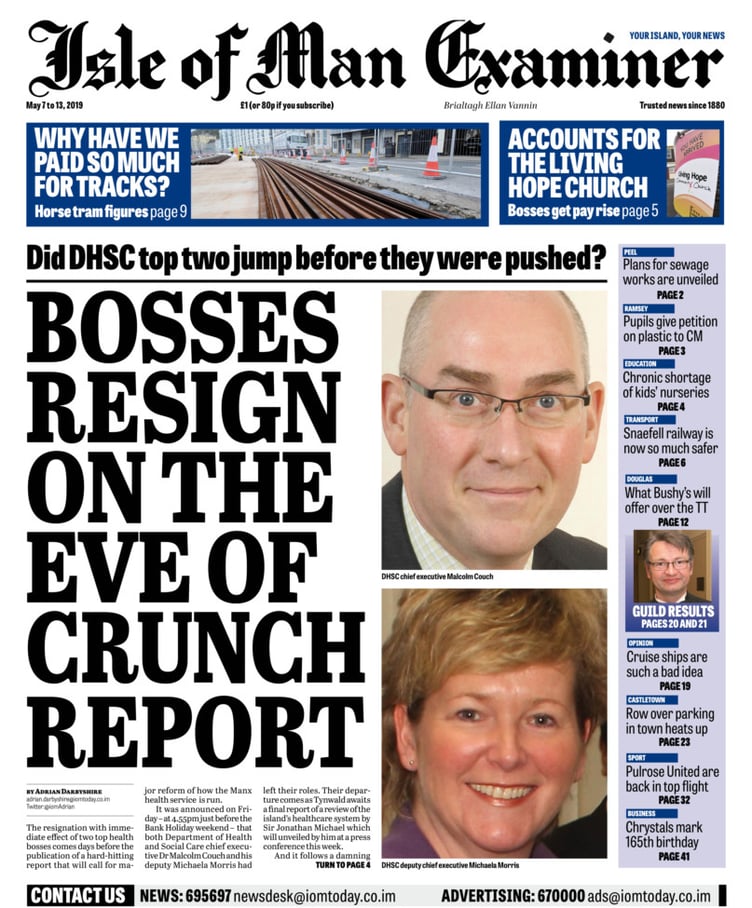
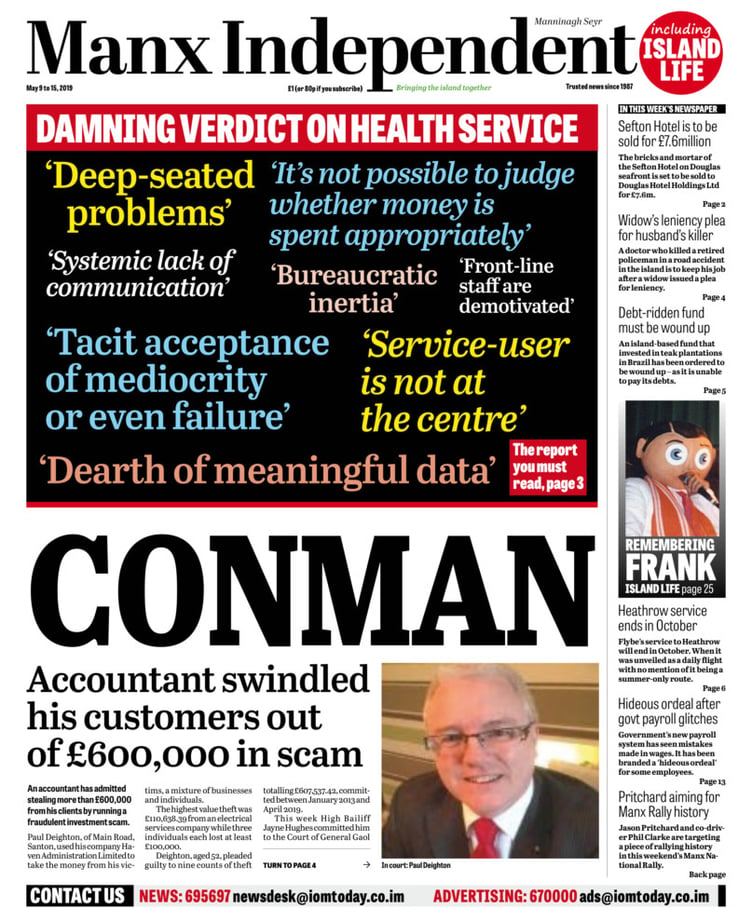
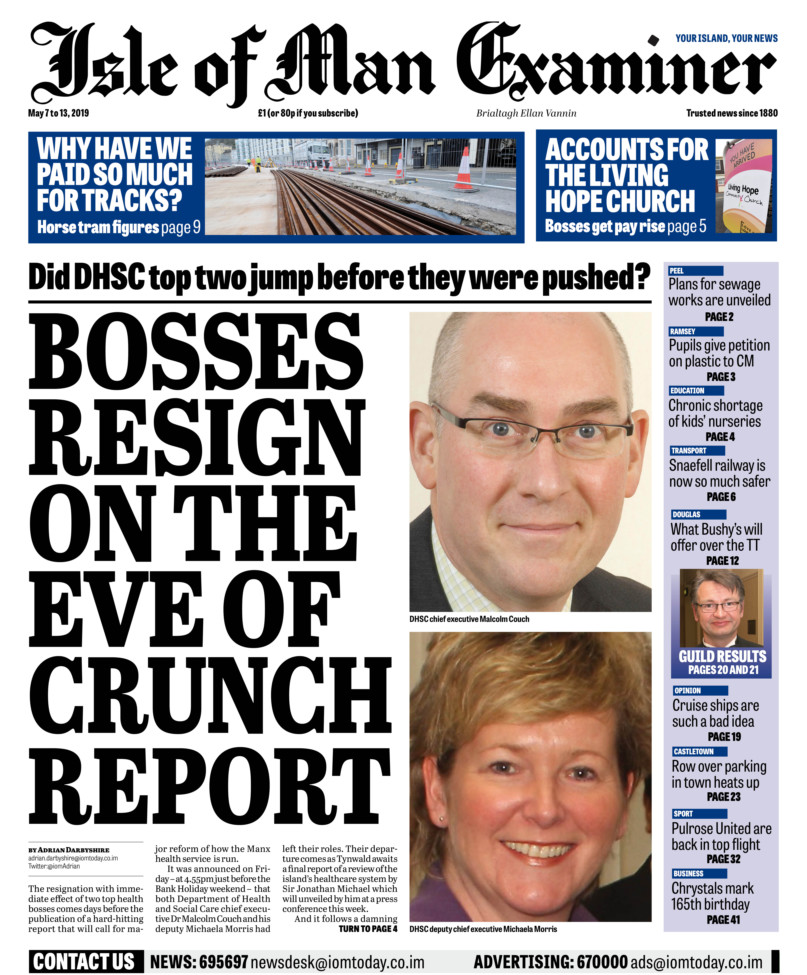
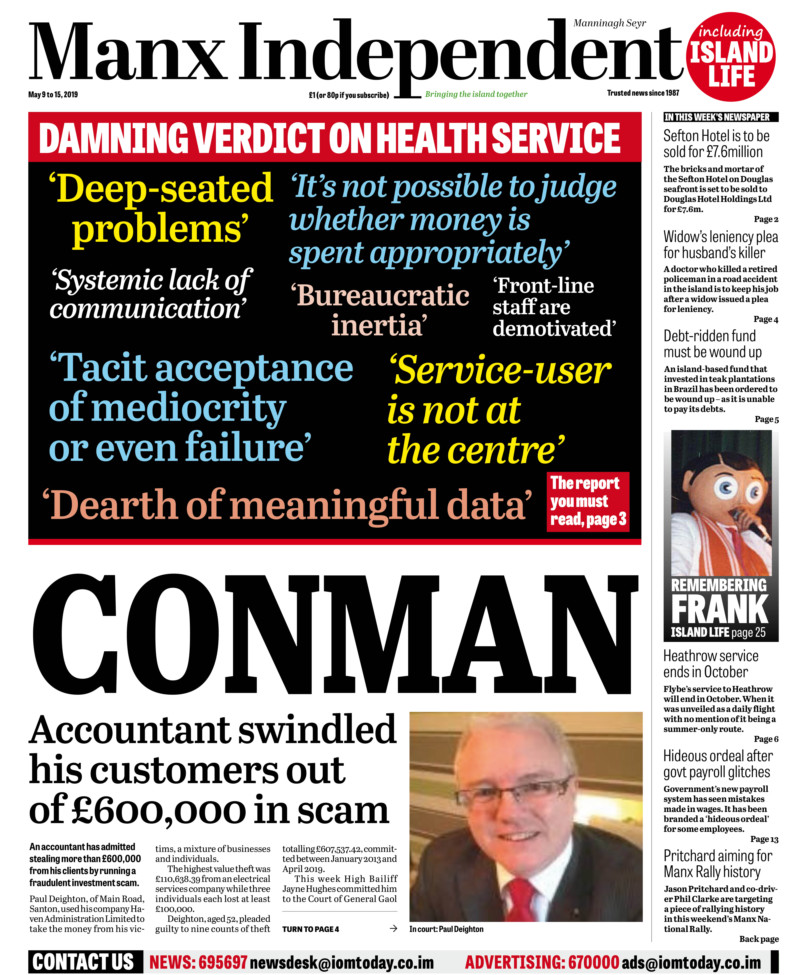
The publication of the independent Michael report on the island’s health and social care system has been overshadowed by the resignation of the DHSC’s chief executive and his deputy.
Their departure just prior to the appearance of the report may have suggested to some that the department’s problems were to do with its recent management.
Yet the system, particularly the health service, has long been ailing with a condition that is surely chronic rather than acute.
Over the years a succession of well meaning politicians and officers have failed to achieve a cure. This indicates that the problems are structural and cultural, not the product of any particular regime.
 New organ donation law to come into force as island urged to ‘make informed choice’
 Department outlines new education priorities as Tynwald receives updated plan
.jpeg?width=209&height=140&crop=209:145,smart&quality=75) Tynwald rejects referendum on Isle of Man's Net Zero policy
Tynwald rejects referendum on Isle of Man's Net Zero policy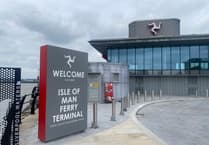 Operating the Isle of Man’s Liverpool ferry terminal costs more than £710,000 a year
The report from Sir Jonathan Michael, due to be debated in Tynwald this week, is certainly a sobering read, especially for anyone who still believes in the inherent superiority of Manx public services.
In 2017/18, for example, the Isle of Man spent £3,300 per head on health and care. That was 28% more than in England, where outcomes are the same as the island’s or better.
Despite the higher expenditure, the island has fewer GPs per head than England - one for every 2,000 patients compared with one for every 1,650 patients.
Meanwhile Noble’s hospital has continued to overspend its budget. And there has been only limited progress towards the full integration of health and social care in the eight years since this first became a government policy priority.
Sir Jonathan makes 26 recommendations for change and the Council of Ministers is asking Tynwald to approve them all.
A key recommendation is to separate the delivery of services from policy making through the creation of a new arm’s length board, provisionally entitled ’Manx Care’, which would be appointed by government but operationally independent. The split would allow the DHSC to concentrate on strategy, policy development, regulation and finance.
Describing this as ’a fundamental change in the governance of health and care’, the report explains: ’At present the DHSC sets the policy as well as taking responsibility for delivering, and/or contracting others to deliver, health and care services.
’This dual role is problematic. If policymakers become too involved in operational matters, it is almost certain to lead them to concentrate on apparently urgent day-to-day business at the expense of the really important strategic decisions.’
Providers should be free to focus on the delivery of high quality care ’based on clinical need as opposed to any undue external influence’.
One of the reasons our health service is dysfunctional, it seems, is that politicians interfere in operational issues while neglecting questions of strategy and policy.
This should come as no surprise, as political micro-management is a characteristic of governance in the Isle of Man, along with strategic myopia and a dearth of relevant data.
Traditional Manx politicians will not be deterred from intervening by the mere fact that they are unqualified to do so. Their status as members of Tynwald, conferring an almost divine omniscience, gives them authority in all areas.
The Michael report is not the first to prescribe a separation of policy and delivery in health. In 2013 a review by the management consultants Beamans concluded that Noble’s should be run at arm’s length from government, but like so many previous recommendations the proposal stayed on the shelf.
Keeping their hands off the daily operations of health and social care will be difficult for members in such an ingrained ’hands on’ political culture.
But a greater challenge will be taking the tough decisions needed to ensure that the services are adequately resourced in future.
The report identifies plenty of scope for efficiency savings, but even if these are achieved there will still be a funding gap growing to around £120 million over the next 15 years. That is more than half as much again on top of the current DHSC budget of £223 million.
Mounting costs will continue to be driven by an ageing population, technological advancements, rising public expectations, and high healthcare inflation.
’Unless the Isle of Man decides to reduce the range of services offered, it will need to find a sustainable a way to meet the remaining funding gap’, warns Sir Jonathan.
He sets out a range of options for bridging the gap but rightly makes no recommendations as to which would be best. That choice has to be a political decision, touching upon some fundamental questions including how a low-tax jurisdiction can afford high-cost public services.
The options include: increasing income tax and/or national insurance rates by three to five percentage points; a new five per cent tax on income ’hypothecated’ or ring-fenced for health and care; restricting free care to low income groups, requiring everyone else to take out private insurance; compulsory social insurance for all; extending charging, e.g. for hospital and GP appointments; reducing the budgets of other government departments to boost funding for the DHSC.
Nothing on this list is politically attractive, though a ring-fenced special tax might be acceptable to the public if they could be confident its proceeds would be wisely spent. That is a big ’if’ at present.
The Michael report has already been hailed as a ’landmark’ but it will only be an historic turning point if our politicians have the courage and commitment to make it so. Warm rhetoric is not enough.
The current Tynwald has just two years left to take the difficult decisions necessary and lock in the changes through legislation. Otherwise the matter will drift over into the next administration and the initiative will be lost, as has happened too often in the past.
The run-in to a general election does not look like the ideal time to tackle such controversy, but voters may want to punish members who squander this opportunity to secure the future of health and social care.
These services are by far the most important to the people of the Isle of Man and that should put them at the top of the government’s priority list.
Assuming Tynwald approves the Michael report recommendations, we look forward to the Council of Ministers producing a clear timetable showing how and when they will be progressed.
Comments
This article has no comments yet. Be the first to leave a comment.